

Google Pixel 8 Pro Vs iPhone 13 Pro Max

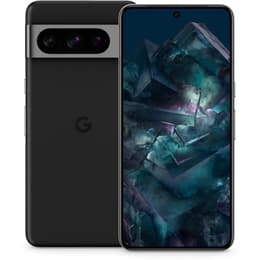
Google Pixel 8 Pro
Google Pixel 8 Pro
Starting at

Refurbished price:293.00

Versus €1,099.00 new

See options
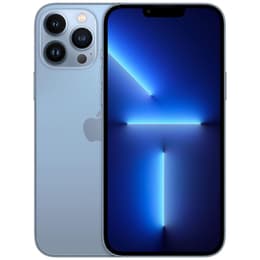
iPhone 13 Pro Max
iPhone 13 Pro Max
Starting at

Refurbished price:369.00

Versus €1,249.00 new

See options

Ratings

The Google Pixel 8 Pro (2023) and the iPhone 13 Pro Max (2021) represent distinct approaches to high-end smartphone design and functionality. While both offer premium experiences, the Pixel 8 Pro emphasizes advanced computational photography and a long software support window, running on Android. The iPhone 13 Pro Max, powered by iOS, focuses on robust performance and a highly integrated ecosystem.

Scores

Durability

The longevity of a smartphone is influenced by its release date, software support, and physical resilience. These two devices offer different timelines for updates and varying degrees of repairability.

  • Release Timeline: The Google Pixel 8 Pro, released in October 2023, benefits from a more recent launch, offering a longer period before it reaches the end of its software support cycle. The iPhone 13 Pro Max, launched in September 2021, is an older model, meaning its remaining software update period is shorter.
  • Software Support: Google has committed to an extensive seven years of operating system and security updates for the Pixel 8 Pro, ensuring it remains current with the latest features and security patches for a considerable duration. The iPhone 13 Pro Max typically receives major iOS updates for approximately five to six years from its release, with security updates often extending beyond that.
  • Repairability: The Pixel 8 Pro has been noted for a repairability score that some sources place around 7 out of 10, with Google providing public service manuals and OEM replacement parts. However, other assessments suggest a lower score, citing difficulties with battery and screen access due to strong adhesives and complex disassembly. While specific repairability scores for the iPhone 13 Pro Max are not readily available, iPhones generally present challenges for DIY repairs due to proprietary components and design.

Year of Release

2023

2021

Compatible with latest Update

Yes

Yes

Foldable

No

No

Performance

Both devices deliver smooth performance for daily tasks, but their underlying architectures and optimization strategies lead to different strengths in demanding scenarios.

  • Everyday Responsiveness: The Pixel 8 Pro handles demanding applications and multitasking smoothly, providing a fluid user experience. The iPhone 13 Pro Max also offers a highly responsive experience, capable of running complex applications and games without noticeable slowdowns.
  • Processing Capabilities: The Pixel 8 Pro's processor is optimized for artificial intelligence tasks and efficiency, contributing to its advanced software features. While it provides strong performance for general use, its raw processing power may not match the highest-tier competitors in synthetic benchmarks. The iPhone 13 Pro Max features a powerful processor known for its robust performance across a wide range of applications, including intensive gaming and video editing.
  • Storage and Multitasking: The Pixel 8 Pro is available with various storage options, including up to 1TB in some regions, and comes with 12GB of RAM, supporting efficient multitasking. The iPhone 13 Pro Max also offers multiple storage configurations up to 1TB and includes 6GB of RAM, which is well-optimized for iOS's multitasking capabilities.

Memory (GB)

12 GB

6 GB

Screen quality

The visual experience on both smartphones is characterized by vibrant displays, though they differ in specific technologies and brightness levels.

  • Display Technology and Clarity: The Google Pixel 8 Pro features a 6.7-inch LTPO OLED display with a resolution of 1344 x 2992 pixels, offering sharp visuals and deep blacks. The iPhone 13 Pro Max sports a 6.7-inch Super Retina XDR OLED display with a resolution of 2778 x 1284 pixels, also providing excellent clarity and color accuracy.
  • Brightness and Outdoor Visibility: The Pixel 8 Pro's display can reach a peak brightness of up to 2400 nits, making it highly visible even in bright outdoor conditions. The iPhone 13 Pro Max offers a typical maximum brightness of 1000 nits and a peak HDR brightness of 1200 nits, which provides good visibility in various lighting environments.
  • Refresh Rate and Smoothness: Both devices feature adaptive refresh rates for smoother scrolling and animations. The Pixel 8 Pro's display can dynamically adjust from 1Hz to 120Hz, optimizing for both fluidity and power efficiency. The iPhone 13 Pro Max utilizes ProMotion technology, offering an adaptive refresh rate that ranges from 10Hz to 120Hz.

Resolution

1344 x 2992

1284 x 2778

Screen type

LTPO OLED

Super Retina XDR OLED

Audiovisual

Both smartphones are recognized for their advanced camera systems, employing different strategies to capture high-quality photos and videos.

  • Camera System Configuration: The Google Pixel 8 Pro features a versatile triple-camera setup on the rear, including a 50MP main sensor, a 48MP ultrawide lens with autofocus, and a 48MP telephoto lens capable of 5x optical zoom. The iPhone 13 Pro Max also has a triple 12MP camera system, comprising a wide, an ultrawide with autofocus and macro capabilities, and a telephoto lens offering 3x optical zoom.
  • Photography Performance: The Pixel 8 Pro is highly praised for its computational photography, delivering consistent image quality, excellent low-light performance, and balanced colors. It also introduces a new Pro mode for manual controls and AI-powered editing features like Magic Editor and Best Take. The iPhone 13 Pro Max is known for producing crisp, clear images with strong HDR performance and accurate color reproduction. Its larger main sensor and wider aperture contribute to improved light gathering.
  • Video Capabilities: The Pixel 8 Pro supports 4K video recording at up to 60 frames per second, with improvements in video quality and audio capture. The iPhone 13 Pro Max offers 4K video recording at up to 60 frames per second and introduced Cinematic mode, which provides a shallow depth of field effect with automatic focus transitions.

Main camera

50 megapixels

12 megapixels

Front camera

10.5 megapixels

12 megapixels

Miscellaneous

Beyond core features, several practical elements contribute to the overall user experience and daily usability of these devices.

  • Connectivity Options: The Google Pixel 8 Pro supports 5G, Wi-Fi 6E and Wi-Fi 7, and Bluetooth 5.3, offering advanced wireless connectivity. The iPhone 13 Pro Max also supports 5G, Wi-Fi 6, and Bluetooth 5.0.
  • Ports and Sensors: The Pixel 8 Pro features a USB-C 3.2 port and includes an in-display optical fingerprint scanner for secure unlocking. The iPhone 13 Pro Max uses Apple's Lightning port and relies on Face ID for biometric authentication. Neither device includes a 3.5mm headphone jack.
  • Design and Build: The Pixel 8 Pro has dimensions of 162.6 x 76.5 x 8.8 mm and weighs 213g, featuring a flat display protected by Gorilla Glass Victus 2. The iPhone 13 Pro Max measures 160.8 x 78.1 x 7.65 mm and weighs 240g, with a Ceramic Shield front cover and a matte glass back.

Weight

213 g

238 g

Screen size (in)

6.7

6.7

Network

5G

5G

SIM card

Physical SIM + eSIM

Physical SIM + eSIM

Carrier compatibility

Unlocked

Unlocked

User feedback for the Google Pixel 8 Pro frequently highlights its exceptional camera capabilities, particularly its computational photography and AI-driven features, as a major strength. Users also appreciate the extended software support, ensuring the device remains up-to-date for many years. Some discussions point to its everyday performance as smooth and reliable, though not always matching the raw benchmark scores of some competitors. Occasional concerns about cellular connectivity have been noted by some users.

The iPhone 13 Pro Max is consistently praised for its outstanding battery life, often cited as one of the best in its class at the time of its release. Its display quality, robust performance for all tasks, and high-quality video recording capabilities, including Cinematic mode, also receive frequent commendation. Users generally find the iOS ecosystem to be highly integrated and user-friendly.

Users prioritizing cutting-edge camera technology, advanced AI features, and a long-term software commitment may find the Google Pixel 8 Pro well-suited to their needs. Those who value exceptional battery endurance, a highly refined operating system experience, and strong overall performance for a wide range of tasks might lean toward the iPhone 13 Pro Max. Both devices offer premium experiences, and choosing between them often comes down to individual preferences for operating system, camera philosophy, and long-term support. For those considering a quality-assured refurbished option, both models are available, offering a sustainable choice for acquiring high-performance technology.


See all articles

Our recent comparisons