

Google Pixel 7A Vs Xiaomi 14T Pro

Google Pixel 7A
Google Pixel 7A
Starting at

Refurbished price:172.00

Versus €649.99 new

See options
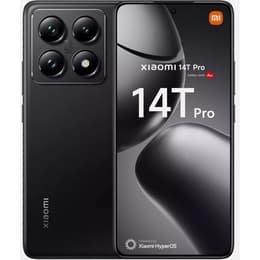
Xiaomi 14T Pro
Xiaomi 14T Pro
Starting at

Refurbished price:394.00

Versus €900.00 new

See options

Ratings

The Google Pixel 7A, released in May 2023, and the Xiaomi 14T Pro, launched in September 2024, represent distinct approaches to smartphone design and functionality. Both devices operate on the Android platform, offering users a range of features for daily tasks and entertainment. The Pixel 7A emphasizes a streamlined software experience and computational photography, while the Xiaomi 14T Pro focuses on high-end specifications, rapid charging capabilities, and a larger display. These differences cater to varying user preferences in the competitive smartphone market.

Scores

Durability

When considering the long-term usability of a smartphone, factors such as software support, physical resilience, and repairability are key. The Pixel 7A and Xiaomi 14T Pro offer different profiles in these areas.

  • Software Longevity: The Google Pixel 7A, released in May 2023, is expected to receive approximately five years of major OS and security updates from its launch, ensuring continued access to new features and security patches until around 2028. The Xiaomi 14T Pro, launched in September 2024, benefits from a later release date, offering a longer period of software support, typically extending its functional lifespan further into the future.
  • Physical Durability: The Pixel 7A features Corning Gorilla Glass 3 on its front display and carries an IP67 rating for dust and water resistance, providing protection against splashes and submersion in shallow water. The Xiaomi 14T Pro offers enhanced protection with an IP68 rating, indicating a higher level of resistance to dust ingress and water immersion.
  • Repairability Considerations: While specific repairability scores can vary, both devices are designed with modern smartphone construction. Users considering a quality-assured refurbished option for either model can benefit from devices that have undergone professional inspection and repair, extending their practical lifespan.

Year of Release

2023

2024

Compatible with latest Update

Yes

Yes

OS

Android

Android

Foldable

No

No

Performance

The performance of a smartphone is crucial for handling applications, multitasking, and demanding tasks. Both the Pixel 7A and Xiaomi 14T Pro are equipped to deliver responsive user experiences, though with different underlying hardware configurations.

  • Processing Power: The Google Pixel 7A is powered by a processor designed to optimize Google's AI and machine learning features, resulting in smooth navigation and efficient handling of everyday applications. The Xiaomi 14T Pro incorporates a more recent, high-performance processor, which provides substantial power for intensive gaming, complex video editing, and seamless multitasking with numerous applications open simultaneously.
  • Memory and Storage: The Pixel 7A comes with 8GB of RAM and 128GB of internal storage, which is suitable for most users' app and data needs. The Xiaomi 14T Pro typically offers 12GB of RAM and larger storage options, including 256GB, 512GB, and 1TB, providing more headroom for power users and those who store extensive media libraries. Neither device supports expandable storage.
  • Battery Behavior: The Pixel 7A features a 4385 mAh battery, designed to provide a full day of typical use, with adaptive battery features to optimize power consumption. The Xiaomi 14T Pro includes a larger 5000 mAh battery, which, combined with its efficient processor, aims to deliver extended usage times. The Xiaomi device also supports significantly faster wired and wireless charging, allowing for quicker power replenishment.

Memory (GB)

8 GB

16 GB

Screen quality

The display is a primary interface for smartphone interaction, and both devices offer vibrant viewing experiences with distinct characteristics.

  • Display Technology and Size: The Google Pixel 7A features a 6.1-inch OLED display, known for its deep blacks and excellent contrast, providing a compact viewing area. The Xiaomi 14T Pro boasts a larger 6.67-inch AMOLED display, offering an expansive canvas for media consumption and productivity.
  • Resolution and Clarity: The Pixel 7A's OLED screen has a resolution of 2400 x 1080 pixels (FHD+), delivering sharp images and text. The Xiaomi 14T Pro's AMOLED display offers a slightly higher resolution of 2712 x 1220 pixels, contributing to even finer detail and clarity across its larger screen.
  • Refresh Rate and Brightness: The Pixel 7A provides a 90Hz refresh rate, resulting in smoother scrolling and more fluid animations compared to standard 60Hz displays. The Xiaomi 14T Pro elevates this with a 144Hz refresh rate, offering an exceptionally smooth visual experience, particularly noticeable in fast-paced content and gaming. Additionally, the Xiaomi 14T Pro's display can reach a peak brightness of 4000 nits, making it highly visible even in bright outdoor conditions, while the Pixel 7A also offers good brightness for outdoor use.

Resolution

1080 x 2400

1220 x 2712

Screen type

OLED

AMOLED

Audiovisual

Camera capabilities are a significant consideration for many smartphone users, and both the Pixel 7A and Xiaomi 14T Pro offer advanced photographic tools.

  • Rear Camera Systems: The Google Pixel 7A features a dual-camera setup with a 64 MP main sensor with optical image stabilization (OIS) and a 13 MP ultrawide lens. This system is renowned for its computational photography, producing detailed images with accurate colors and strong low-light performance. The Xiaomi 14T Pro includes a 50 MP main camera, often featuring advanced sensors and Leica optics, which aims to deliver professional-grade photography with rich detail and versatile shooting modes.
  • Video Recording and Front Camera: The Pixel 7A can record 4K video at up to 60 frames per second with its rear camera and 4K at 30 frames per second with its 13 MP front camera. The Xiaomi 14T Pro offers more advanced video capabilities, including 8K recording at 24 or 30 frames per second, and its 32 MP front camera can also record in 4K at 30 or 60 frames per second, providing more options for high-resolution video content creation.
  • Audio Experience: Both devices are equipped with stereo speakers, providing an immersive audio experience for media consumption. The microphone quality on both is suitable for clear calls and voice recordings. The Xiaomi 14T Pro does not include a 3.5mm headphone jack, a common trend in modern smartphones, while the Pixel 7A also omits this feature.

Main camera

64 megapixels

50 megapixels

Front camera

13 megapixels

32 megapixels

Miscellaneous

Beyond core features, several practical elements contribute to the overall user experience of a smartphone.

  • Connectivity and Ports: Both the Pixel 7A and Xiaomi 14T Pro support 5G connectivity for fast mobile data speeds and include modern Wi-Fi standards (Wi-Fi 6E for Pixel 7A, likely Wi-Fi 7 or 6E for Xiaomi 14T Pro) and Bluetooth for wireless accessories. Both devices utilize a USB-C port for charging and data transfer.
  • Biometric Security: The Pixel 7A incorporates an under-display fingerprint sensor for secure unlocking and authentication. The Xiaomi 14T Pro also features an under-display fingerprint sensor, offering a convenient and secure method for accessing the device.
  • Design and Handling: The Pixel 7A has dimensions of 152 x 72.9 x 9 mm and weighs 193.5g, offering a more compact and potentially easier-to-handle form factor. The Xiaomi 14T Pro is larger and slightly heavier at 160.4 x 75.1 x 8.4 mm and 209g, which can be beneficial for users who prefer a larger screen but might require a two-handed grip. The Xiaomi 14T Pro also includes an infrared (IR) blaster, allowing it to function as a universal remote control for various home appliances.

Weight

193 g

209 g

Screen size (in)

6.1

6.67

Network

5G

5G

SIM card

Physical SIM + eSIM

Dual Physical SIM

Carrier compatibility

Unlocked

Unlocked

The Google Pixel 7A and Xiaomi 14T Pro cater to different user priorities, each excelling in specific areas. Users often praise the Pixel 7A for its consistent camera performance, particularly its computational photography capabilities, and its clean, bloatware-free Android experience with timely updates. Some users, however, might find its battery life to be adequate rather than exceptional for heavy usage, and its charging speeds are not as rapid as some competitors.

The Xiaomi 14T Pro is frequently lauded for its impressive display, featuring a high refresh rate and exceptional brightness, making it suitable for media consumption and gaming. Its fast charging technology and larger battery capacity are also common points of praise, addressing concerns about device uptime. Potential criticisms might revolve around the software experience, which, while feature-rich, can sometimes be perceived as less streamlined than stock Android.

Users prioritizing a compact device with a strong emphasis on camera quality and a pure Android experience may find the Google Pixel 7A well-suited to their needs. Its consistent software support and Google's AI integrations offer a reliable and intelligent smartphone experience. Conversely, users who value a large, vibrant display, top-tier performance for demanding applications, and exceptionally fast charging will likely lean towards the Xiaomi 14T Pro. Its hardware specifications are geared towards power users and those who consume a lot of media on their device.

For individuals seeking a more sustainable choice, considering a refurbished version of either device can be an eco-friendly alternative that provides access to these technologies while extending product lifecycles.


See all articles

Our recent comparisons