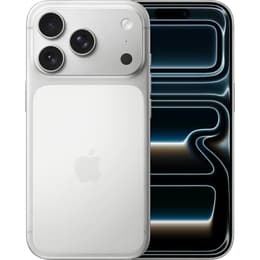


Google Pixel 7A Vs iPhone 17 Pro

Google Pixel 7A
Google Pixel 7A
Starting at

Refurbished price:177.00

Versus €649.99 new

See options
iPhone 17 Pro
iPhone 17 Pro
Starting at

Refurbished price:1,064.00

Versus €1,339.00 new

See options

Ratings

The Google Pixel 7A, released in May 2023, and the Apple iPhone 17 Pro, launched in September 2025, represent distinct approaches to the smartphone experience. While the Pixel 7A offers a compelling Android experience with a focus on computational photography and Google's software ecosystem, the iPhone 17 Pro delivers Apple's latest advancements in performance, camera technology, and display quality within the iOS environment. These devices cater to different user preferences, primarily differing in their operating systems, core processing power, and advanced camera capabilities.

Scores

Durability

When considering the longevity of a smartphone, several factors come into play, including software support, physical durability, and the overall build quality designed to withstand daily use.

  • Software Support: The Google Pixel 7A, running on Android, is expected to receive approximately five years of major OS upgrades and security updates from its release date in May 2023, extending its software relevance until around 2028. The iPhone 17 Pro, operating on iOS, benefits from Apple's typically longer software support, likely receiving updates for six to seven years from its September 2025 launch, offering an extended period of access to new features and security patches. [11, 16]
  • Physical Durability: The Pixel 7A features Corning Gorilla Glass 3 for screen protection and carries an IP67 rating for dust and water resistance, meaning it can withstand immersion in up to 1 meter of water for 30 minutes. [1, 7, 11, 22] The iPhone 17 Pro steps up with Ceramic Shield 2 on the front, which Apple states offers enhanced scratch resistance, and Ceramic Shield on the back, alongside an aerospace-grade aluminum unibody. It boasts an IP68 rating, allowing for submersion in up to 6 meters of water for 30 minutes. [8, 12, 23, 30, 42, 43]
  • Expected Lifespan: Both devices are built to last, but the iPhone 17 Pro's newer release and more robust materials, coupled with Apple's longer software commitment, suggest a slightly longer practical lifespan for users who prioritize the latest software and maximum physical resilience.

Year of Release

2023

2025

Compatible with latest Update

Yes

Yes

OS

Android

iOS

Foldable

No

No

Performance

The performance of a smartphone dictates how smoothly applications run, how quickly tasks are completed, and the overall responsiveness of the user interface. These two devices offer different levels of processing power tailored to their respective ecosystems.

  • Processing Power: The Google Pixel 7A is powered by the Google Tensor G2 chip, paired with 8GB of RAM. This configuration ensures smooth operation for everyday tasks, efficient multitasking, and capable handling of mobile gaming and demanding applications. [1, 4, 7, 11, 15, 37, 38] The iPhone 17 Pro features Apple's A19 Pro chip, which includes a hexa-core CPU and a 6-core GPU with Neural Accelerators, alongside 12GB of RAM. This advanced chip is designed for sustained high performance, making it well-suited for intensive tasks like professional video editing, graphically demanding games, and complex AI computations. [2, 3, 8, 12, 21, 23, 24, 28, 40]
  • Real-World Responsiveness: Users of the Pixel 7A will experience a fluid interface and quick app loading times, with the Tensor G2 optimizing for Google's AI-driven features. [15] The iPhone 17 Pro offers a noticeably faster and more responsive experience, particularly in scenarios requiring significant graphical processing or heavy multitasking, where its more powerful chip and increased RAM provide greater headroom. [21, 39]
  • Storage Options: The Pixel 7A comes with 128GB of internal storage. [4, 7, 11, 16] The iPhone 17 Pro offers more flexible storage options, starting at 256GB and extending to larger capacities, catering to users with extensive media libraries or numerous applications. [2, 3, 24]

Memory (GB)

8 GB

12 GB

Screen quality

The display is a primary interface for any smartphone, influencing everything from media consumption to daily interactions. Both devices offer vibrant displays, but with key differences in technology and capabilities.

  • Display Technology and Clarity: The Google Pixel 7A features a 6.1-inch OLED display with a 1080x2400 pixel resolution, providing clear and colorful visuals for everyday use. [1, 7, 11] The iPhone 17 Pro boasts a 6.3-inch Super Retina XDR OLED display with a higher 2622x1206 pixel resolution, resulting in a slightly sharper image with finer detail. [8, 9, 12, 23]
  • Refresh Rate and Brightness: The Pixel 7A offers a 90Hz refresh rate, contributing to smoother scrolling and a more fluid visual experience compared to standard 60Hz displays. [1, 7, 11] The iPhone 17 Pro elevates this with ProMotion technology, offering an adaptive refresh rate up to 120Hz, which dynamically adjusts for optimal smoothness and power efficiency. [8, 9, 12, 23] In terms of brightness, the Pixel 7A provides good visibility, while the iPhone 17 Pro reaches significantly higher peak brightness levels of up to 3000 nits for outdoor viewing and 1600 nits for HDR content, ensuring excellent readability even in bright sunlight and a more impactful HDR experience. [8, 9, 12, 23]
  • Additional Features: The iPhone 17 Pro also includes an Always-On display and the Dynamic Island, which integrates notifications and activities into a fluid, interactive area at the top of the screen. [8, 10, 12, 23]

Resolution

1080 x 2400

2622x1206

Screen type

OLED

Super Retina XDR

Audiovisual

Camera capabilities are a significant differentiator for modern smartphones, with both Google and Apple employing advanced hardware and software to capture high-quality images and videos.

  • Rear Camera System: The Google Pixel 7A features a dual-camera setup on the rear, comprising a 64MP main sensor with optical image stabilization (OIS) and a 13MP ultrawide lens with a 120-degree field of view. [1, 7, 11, 18, 20, 34] The iPhone 17 Pro comes with a more comprehensive triple 48MP Pro Fusion camera system, including a main, ultrawide, and a telephoto lens. The telephoto lens offers 4x optical zoom and can achieve an 8x optical-grade zoom through sensor cropping. [8, 12, 19, 23, 24, 28, 41]
  • Photography Performance: The Pixel 7A is renowned for its computational photography, delivering consistently good results in various lighting conditions, with strong HDR and decent low-light performance for stills. [20, 27, 34] The iPhone 17 Pro's larger sensors and advanced processing, including a new 48MP telephoto sensor, contribute to sharper images, improved detail, and enhanced low-light capabilities across all lenses. [19, 41]
  • Video Recording and Front Camera: Both devices support 4K video recording, with the Pixel 7A capable of 4K at 30/60fps on its main camera and 4K at 30fps on its 13MP front camera. [1, 27, 31] The iPhone 17 Pro offers more advanced video features, including 4K Dolby Vision video recording at up to 120fps and ProRes video recording up to 4K at 120fps, along with spatial video recording. Its front-facing 18MP Center Stage camera is designed for enhanced video calls and selfies. [8, 10, 12, 19]

Main camera

64 megapixels

48 megapixels

Front camera

13 megapixels

18 megapixels

Miscellaneous

Beyond the core specifications, several practical elements contribute to the overall user experience, from how a device connects to other technologies to its physical feel in hand.

  • Connectivity and Ports: The Google Pixel 7A supports 5G, Wi-Fi 6E, and Bluetooth 5.3, and features a USB-C 3.2 port for charging and data transfer. [11] The iPhone 17 Pro offers more advanced connectivity with 5G, Wi-Fi 7 (tri-band), and Bluetooth 6.0, along with a USB-C port that supports 10Gbps data transfer speeds. [9, 12]
  • Biometric Security and Sensors: The Pixel 7A utilizes an under-display fingerprint sensor for secure unlocking. [11] The iPhone 17 Pro relies on Face ID for biometric authentication and includes a LiDAR scanner for enhanced augmented reality experiences and improved low-light focusing. [9, 12]
  • Design and Handling: The Pixel 7A measures 152.4 x 72.9 x 9.0mm and weighs 193g, offering a relatively compact and manageable form factor. [7, 11, 34] The iPhone 17 Pro is slightly larger and heavier at 150mm H x 71.9mm W x 8.75mm D and 206g, featuring an aerospace-grade aluminum unibody construction. [23] Both devices offer stereo speakers, with the iPhone 17 Pro also supporting spatial audio for a more immersive listening experience. [9, 12]

Weight

193 g

206 g

Screen size (in)

6.1

6.3

Network

5G

5G

SIM card

Physical SIM + eSIM

Physical SIM + eSIM

Carrier compatibility

Unlocked

Unlocked

Connector

USB-C

USB-C

The Google Pixel 7A and iPhone 17 Pro cater to distinct user needs and preferences, reflecting their different operating systems and market positioning. Users often praise the Pixel 7A for its exceptional camera performance, particularly its computational photography capabilities that deliver impressive stills, and its clean, user-friendly Android experience. Its consistent software updates and solid everyday performance are also frequently highlighted. Some common criticisms, however, include its battery life, which, while adequate for many, may require more frequent charging for heavy users, and its slightly slower charging speeds compared to some rivals. [5, 14, 16, 32]

The iPhone 17 Pro, on the other hand, receives acclaim for its powerful processing capabilities, which handle demanding applications and games with ease, its vibrant and bright ProMotion display, and its highly advanced and versatile camera system, especially for video recording. Its robust build quality and extended software support are also significant advantages. User discussions often focus on its premium features and the seamless integration within the Apple ecosystem. [8, 12, 19, 21, 23, 39]

Users prioritizing a streamlined Android experience with a strong emphasis on photography and a more compact design may find the Google Pixel 7A well-suited to their needs. It offers a quality experience for daily tasks and capturing memories without needing the absolute latest in raw processing power. Conversely, users who demand top-tier performance for intensive applications, professional-grade camera features, a superior display, and a longer software support window will likely lean towards the iPhone 17 Pro. Its advanced hardware and software integration make it ideal for power users and those deeply invested in the Apple ecosystem.

For those considering either device, exploring quality-assured refurbished options can provide an eco-friendly alternative, allowing access to these technologies while making a sustainable choice.


See all articles

Our recent comparisons





