
Google Pixel 7 Vs iPhone 15 Plus

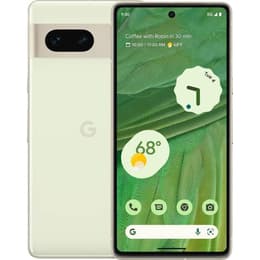
Google Pixel 7
Google Pixel 7
Starting at

Refurbished price:160.00

Versus €756.00 new

See options
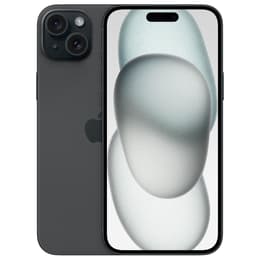
iPhone 15 Plus
iPhone 15 Plus
Starting at

Refurbished price:421.00

Versus €979.00 new

See options

Ratings

The Google Pixel 7 (released in October 2022) and the iPhone 15 Plus (released in September 2023) represent distinct approaches to the modern smartphone experience. While both offer robust performance and advanced camera systems, they differ significantly in their operating systems and display technologies. The Pixel 7 runs on Google's Android, emphasizing AI-driven features and computational photography, whereas the iPhone 15 Plus operates on Apple's iOS, known for its integrated ecosystem and user-friendly interface.

Scores

Durability

When considering the long-term usability of a smartphone, software support and physical resilience are key factors. The Pixel 7 and iPhone 15 Plus offer different timelines for software longevity and varying degrees of repairability.

  • Software Support: The Google Pixel 7 is guaranteed to receive five years of OS and security updates from its release date, extending its support to Android 18 and security updates until 2027. The iPhone 15 Plus, following Apple's typical support cycle, can expect approximately 5-6 years of major iOS updates from its launch in late 2023.
  • Physical Durability: Both devices feature IP68 ratings for dust and water resistance, indicating protection against submersion. The iPhone 15 Plus incorporates a Ceramic Shield front cover and a color-infused glass back, designed for enhanced resilience. The Pixel 7 uses Corning Gorilla Glass Victus for its display protection.
  • Repairability: The Google Pixel 7 has been noted to have a repairability score around 6 out of 10, with some components like the battery and charging port being more challenging to replace due to strong adhesive or soldering. Information on the iPhone 15 Plus's specific repairability score is less widely available, but Apple devices generally require specialized tools and knowledge for repairs.

Year of Release

2022

2023

Compatible with latest Update

Yes

Yes

OS

Android

iOS

Foldable

No

No

Performance

The performance of a smartphone is crucial for daily tasks, from browsing to demanding applications. Both the Google Pixel 7 and iPhone 15 Plus deliver smooth experiences, though they achieve this through different hardware and software optimizations.

  • Everyday Responsiveness: The iPhone 15 Plus handles demanding applications and multitasking with fluidity, ensuring a responsive user experience across various activities like gaming and video editing. The Pixel 7 also provides a smooth user experience, capable of handling demanding apps and multitasking effectively.
  • Battery Behavior: The iPhone 15 Plus is recognized for its excellent battery life, often lasting through a full day of heavy use, with Apple estimating up to 26 hours of video playback. The Google Pixel 7 features an adaptive battery designed to last over 24 hours, and up to 72 hours with extreme battery saver mode activated, though some users have reported inconsistencies with heavy usage.
  • Storage and Multitasking: The iPhone 15 Plus offers storage options up to 512GB, paired with 6GB of RAM, which supports efficient app switching and background processes. The Google Pixel 7 comes with 8GB of RAM and storage options up to 256GB, providing ample space and memory for most users' needs.

Memory (GB)

8 GB

6 GB

Screen quality

The display is a primary interface for any smartphone, and both the Pixel 7 and iPhone 15 Plus offer vibrant viewing experiences with distinct characteristics.

  • Display Technology and Clarity: The iPhone 15 Plus features a 6.7-inch Super Retina XDR OLED display, offering a resolution of 2796x1290 pixels at 460 pixels per inch (ppi). This OLED technology provides deep blacks, vibrant colors, and excellent contrast. The Google Pixel 7 has a 6.3-inch AMOLED display with a 2400x1080 pixel resolution at 416 ppi, also delivering vibrant colors and deep blacks.
  • Brightness and Outdoor Visibility: The iPhone 15 Plus boasts impressive brightness levels, reaching up to 1000 nits typical, 1600 nits peak for HDR content, and an outstanding 2000 nits peak for outdoor use, ensuring excellent visibility even in direct sunlight. The Pixel 7 offers up to 1000 nits HBM (High Brightness Mode) and 1400 nits peak brightness, which is also sufficient for most outdoor conditions.
  • Refresh Rate and Smoothness: The iPhone 15 Plus features a standard 60Hz refresh rate. In contrast, the Google Pixel 7 offers a 90Hz refresh rate, which provides a slightly smoother scrolling experience and more fluid animations, particularly noticeable in gaming and general navigation.

Resolution

1080 x 2400

1290 x 2796

Screen type

AMOLED

Super Retina XDR OLED

Audiovisual

Both the Google Pixel 7 and iPhone 15 Plus are highly regarded for their camera capabilities, each leveraging advanced hardware and software to produce high-quality images and videos.

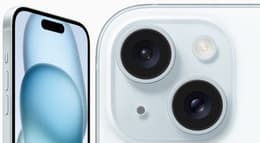
  • Rear Camera Systems: The iPhone 15 Plus features a dual-camera system with a 48MP main sensor (f/1.6) and a 12MP ultra-wide lens (f/2.4). The 48MP main sensor also enables a 2x telephoto option through a sensor crop, providing optical-quality zoom. The Google Pixel 7 also has a dual-camera setup, comprising a 50MP main sensor (f/1.85) and a 12MP ultrawide lens (f/2.2).
  • Photography Performance: The Pixel 7 is highly praised for its computational photography, excelling in detail, exposure, and low-light performance with its Night Sight mode. The iPhone 15 Plus also delivers excellent photos with great detail and sharpness, showing significant improvements in low-light conditions and vibrant colors.
  • Video Recording and Audio: Both devices offer high-quality video recording, with the iPhone 15 Plus supporting 4K Dolby Vision video up to 60 frames per second, known for its excellent stabilization. The Pixel 7 also records 4K video at 60 frames per second, with strong video quality, especially from its main sensor. Both phones provide clear microphone quality for calls and recordings, and offer a good media consumption experience through their speakers.

Main camera

50 megapixels

48 megapixels

Front camera

10.8 megapixels

12 megapixels

Miscellaneous

Beyond core features, several practical elements contribute to the overall user experience, including connectivity, physical design, and additional functionalities.

  • Connectivity and Ports: The iPhone 15 Plus supports 5G, Wi-Fi 6, and Bluetooth 5.3, and notably features a USB-C port for charging and data transfer, replacing the proprietary Lightning port. The Google Pixel 7 also offers 5G, Wi-Fi 6, and Bluetooth 5.2 (or 5.3 depending on specific region/update), and uses a USB-C port. However, the iPhone 15 Plus's USB-C port operates at USB 2.0 speeds, similar to the Pixel 7.
  • Biometric Security and Sensors: The iPhone 15 Plus relies on Face ID for secure facial recognition. The Pixel 7 offers both an under-display fingerprint sensor and Face Unlock for biometric authentication. Both devices include a range of sensors for navigation and functionality, such as accelerometers, gyroscopes, and ambient light sensors.
  • Design and Handling: The iPhone 15 Plus measures 160.9 x 77.8 x 7.8mm and weighs 201 grams, featuring an aluminum design with a Ceramic Shield front and color-infused glass back. The Google Pixel 7 is slightly more compact and lighter at 155.6 x 73.2 x 8.7mm and 197 grams, with a design that integrates its camera bar into the aluminum frame.

Weight

197 g

171 g

Screen size (in)

6.3

6.7

Network

5G

5G

SIM card

Physical SIM + eSIM

eSIM

Carrier compatibility

Unlocked

Unlocked

User feedback for the Google Pixel 7 often highlights its exceptional camera capabilities, particularly its computational photography features and Night Sight, which consistently produce impressive images. Users also appreciate its smooth performance and the clean Android experience. Common criticisms sometimes point to inconsistent battery life for heavy users and the absence of a dedicated telephoto lens on the base model.

The iPhone 15 Plus receives praise for its outstanding battery life, often exceeding a full day of use, and its vibrant Super Retina XDR display with high peak brightness. The camera system, with its improved low-light performance and the 2x telephoto option, is also a strong point. The integration of the Dynamic Island and the switch to USB-C are generally well-received. Some users express disappointment with the 60Hz refresh rate, especially compared to many Android counterparts.

Users prioritizing an advanced camera with strong AI features and a pure Android experience may find the Google Pixel 7 well-suited to their needs. Those who value extended battery life, a larger and brighter display, and a deeply integrated ecosystem with consistent software updates might lean towards the iPhone 15 Plus. Both devices offer compelling features, and choosing between them often comes down to personal preference for operating system and specific feature priorities. For those seeking a quality-assured refurbished option, both models are available, providing an eco-friendly alternative to purchasing new.

See all articles

Our recent comparisons