

Galaxy S24 FE Vs Xiaomi Redmi Note 11

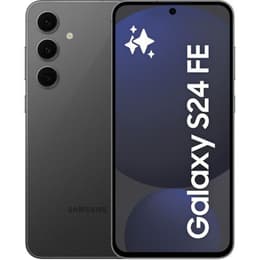
Galaxy S24 FE
Galaxy S24 FE
Starting at

Refurbished price:329.00

Versus €991.15 new

See options
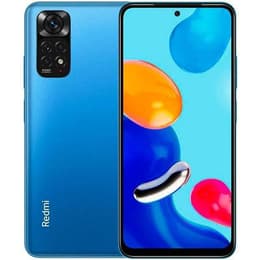
Xiaomi Redmi Note 11
Starting at

Refurbished price:108.00

Versus €249.99 new

See options

Ratings

The Samsung Galaxy S24 FE, released in late 2024, and the Xiaomi Redmi Note 11, launched in early 2022, represent different segments and release timelines within the smartphone market. While both devices operate on the Android platform, the Galaxy S24 FE offers a more recent hardware and software experience, including a longer commitment to software updates and advanced camera capabilities, compared to the Redmi Note 11's focus on essential features and battery longevity.

Scores

Durability

The expected lifespan and software support differ significantly between these two devices, largely due to their respective release dates and manufacturer policies.

  • Release Timeline: The Galaxy S24 FE was released in October 2024, making it a much newer device compared to the Redmi Note 11, which launched in February 2022. This age difference directly impacts their remaining support cycles.
  • OS Support Duration: Samsung has committed to an extensive seven years of operating system and security updates for the Galaxy S24 FE, meaning it is expected to receive updates until at least 2031. In contrast, the Redmi Note 11, which launched with Android 11, has a more limited update promise, with some variants already reaching their End-of-Life (EOL) for security updates.
  • Practical Lifespan: Users prioritizing long-term software relevance and security will find the Galaxy S24 FE offers a considerably extended practical lifespan. The Redmi Note 11, while still functional, will see its software support diminish, potentially exposing it to security vulnerabilities over time.

Year of Release

2024

2022

OS

Android

Android

Foldable

No

No

Performance

Performance capabilities vary between the two smartphones, reflecting their different hardware generations and target user experiences.

  • Processing Power: The Galaxy S24 FE is equipped with a current-generation processor, enabling it to handle demanding applications, complex multitasking, and graphics-intensive games with fluidity. The Redmi Note 11 features a processor designed for efficient everyday use, capably managing common tasks and lighter applications.
  • System Responsiveness: Users of the Galaxy S24 FE can expect a highly responsive interface and quick app loading times, contributing to a smooth overall user experience. The Redmi Note 11 provides an acceptable level of responsiveness for its class, suitable for general navigation and social media.
  • Multitasking and Storage: The Galaxy S24 FE typically comes with 8GB of RAM, facilitating seamless transitions between multiple open applications. It also offers various storage options, including 128GB, 256GB, and 512GB. The Redmi Note 11 is available with 4GB or 6GB of RAM and 64GB or 128GB of internal storage, with the added flexibility of expandable storage via a microSD card.

Memory (GB)

8 GB

4 GB

Screen quality

Both devices feature vibrant displays, but there are distinctions in their technology and capabilities that impact the viewing experience.

  • Display Technology and Clarity: The Galaxy S24 FE boasts a 6.7-inch Dynamic AMOLED 2X display, offering deep blacks, rich colors, and sharp visuals with a 1080x2340 pixel resolution. The Redmi Note 11 features a 6.43-inch AMOLED display with a 1080x2400 pixel resolution, also providing good contrast and color reproduction for its category.
  • Brightness and Smoothness: The Galaxy S24 FE's display supports a 120 Hz refresh rate, resulting in smoother scrolling and more fluid animations, and can reach a peak brightness of up to 1900 nits, enhancing visibility in bright outdoor conditions. The Redmi Note 11 offers a 90 Hz refresh rate for a noticeably smoother experience than standard displays and a peak brightness of up to 1000 nits, which is adequate for most indoor and some outdoor viewing.
  • Viewing Experience: The larger screen size of the Galaxy S24 FE provides a more expansive canvas for media consumption and productivity. While slightly smaller, the Redmi Note 11's display still offers an immersive experience for everyday tasks.

Resolution

1080 x 2340

1080 x 2400

Screen type

Dynamic AMOLED 2X

AMOLED

Audiovisual

The camera systems on these smartphones cater to different photography needs, with the Galaxy S24 FE offering more advanced features.

  • Rear Camera System: The Galaxy S24 FE features a versatile triple camera setup, including a 50-megapixel main sensor with optical image stabilization (OIS), a 12-megapixel ultrawide lens, and an 8-megapixel telephoto lens capable of 3x optical zoom. This configuration allows for detailed shots across various focal lengths. The Redmi Note 11 comes with a quad-camera array, highlighted by a 50-megapixel main sensor, an 8-megapixel ultrawide, and two 2-megapixel sensors for macro and depth sensing.
  • Photography Performance: The Galaxy S24 FE generally delivers solid image quality, particularly from its main sensor, with good performance in various lighting conditions and enhanced stability due to OIS. The Redmi Note 11 performs well in bright daylight, capturing clear images, but its low-light performance and the utility of its macro and depth sensors are more limited.
  • Video Recording and Front Camera: The Galaxy S24 FE supports high-resolution video recording up to 8K at 30 frames per second and features a 10-megapixel front camera. The Redmi Note 11 records video at up to 1080p at 30 frames per second and includes a 13-megapixel front camera.

Miscellaneous

Beyond core specifications, several practical elements differentiate the user experience of these two devices.

  • Connectivity and Ports: The Galaxy S24 FE supports 5G connectivity, offering faster mobile data speeds, along with Wi-Fi 6E and Bluetooth 5.3. It features a USB Type-C port for charging and data transfer. The Redmi Note 11 is a 4G device, supporting Wi-Fi and Bluetooth, and includes a USB Type-C port, a 3.5mm headphone jack, and an IR blaster.
  • Build Materials and Handling: The Galaxy S24 FE is constructed with an aluminum frame and glass panels, providing a more premium feel and IP68 water and dust resistance for enhanced durability. It weighs 213g and measures 162 x 77.3 x 8 mm. The Redmi Note 11 features a plastic back and offers IP53 dust and splash protection. It is lighter at 179g and has dimensions of 159.87 x 73.87 x 8.09 mm.
  • Security and Audio: The Galaxy S24 FE incorporates an in-display fingerprint sensor for secure unlocking and includes stereo speakers. The Redmi Note 11 also features stereo speakers and offers a side-mounted fingerprint sensor.

Weight

213 g

179 g

Screen size (in)

6.7

6.43

Network

5G

4G

SIM card

Dual Physical SIM

Dual Physical SIM

Carrier compatibility

Unlocked

Unlocked

User feedback for the Samsung Galaxy S24 FE often highlights its robust software support, with many appreciating the commitment to seven years of updates, a feature typically reserved for flagship devices. Its bright, high-refresh-rate display and capable main camera are also frequently praised. Some users have noted that while the main camera is strong, the ultrawide and telephoto lenses might not match the quality of the primary sensor. The device's weight has also been mentioned as a point of adjustment for some.

For the Xiaomi Redmi Note 11, common praise points include its impressive battery life, often lasting more than a full day of moderate use, and its vibrant AMOLED display with a 90Hz refresh rate. Users also appreciate the inclusion of a 3.5mm headphone jack and an IR blaster. Criticisms often revolve around its limited software update longevity and the performance of its ultrawide and macro cameras, particularly in challenging lighting conditions.

Users prioritizing long-term software support, advanced camera features including optical zoom and higher video resolution, and a more powerful processing experience will find the Galaxy S24 FE well-suited to their needs. Its enhanced durability features also cater to those seeking a more resilient device. Conversely, users who prioritize exceptional battery life, expandable storage, and the convenience of a headphone jack, and who do not require the latest software updates or top-tier performance, may lean toward the Redmi Note 11. Both devices offer a quality-assured refurbished option, providing an eco-friendly alternative for consumers.


See all articles

Our recent comparisons