

Google Pixel 7 Pro Vs iPhone 16 Pro Max

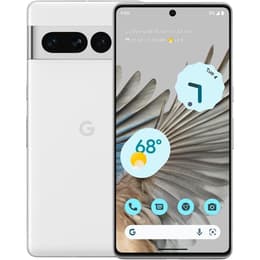
Google Pixel 7 Pro
Google Pixel 7 Pro
Starting at

Refurbished price:201.00

Versus €640.98 new

See options
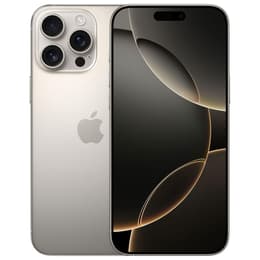
iPhone 16 Pro Max
iPhone 16 Pro Max
Starting at

Refurbished price:821.00

Versus €1,489.00 new

See options

Ratings

The Google Pixel 7 Pro, released in October 2022, and the Apple iPhone 16 Pro Max, launched in September 2024, represent distinct approaches to high-end smartphone design and functionality. While both devices offer premium experiences, they differ significantly in their operating systems, release timelines, and core hardware, leading to varied user experiences. The Pixel 7 Pro operates on Google's Android platform, emphasizing AI-driven features and a clean interface, whereas the iPhone 16 Pro Max runs on Apple's iOS, known for its integrated ecosystem and robust performance.

Scores

Durability

When considering the longevity of these devices, their respective release dates and software support policies are key factors.

  • Software Support: The Google Pixel 7 Pro is expected to receive major Android OS updates until October 2025 and security updates until October 2027, providing a total of five years of security support from its release. The iPhone 16 Pro Max, being a newer device, benefits from Apple's typically longer software support, generally receiving iOS updates for five to six years from its launch. This means the iPhone 16 Pro Max will likely receive software support for a significantly longer period than the Pixel 7 Pro.
  • Repairability: The Pixel 7 Pro has received repairability scores ranging from 5.5 to 7.0 out of 10, with some reports indicating challenges with battery removal due to strong adhesive and a soldered charging port. In contrast, the iPhone 16 Pro Max boasts an improved repairability score of 7 out of 10, featuring a more modular design and easier access for common repairs like battery replacement, partly due to new adhesive methods and front/back access.
  • Practical Lifespan: Both devices are built with durable materials and feature IP68 ratings for water and dust resistance. However, the iPhone 16 Pro Max's newer release, extended software support, and enhanced repairability suggest a potentially longer practical lifespan for users who prioritize keeping their device updated and easily maintainable.

Year of Release

2022

2024

Compatible with latest Update

Yes

Yes

Foldable

No

No

Performance

The performance of a smartphone is crucial for daily tasks, from app usage to demanding multimedia experiences.

  • Processing Power: The Google Pixel 7 Pro is powered by Google's Tensor G2 processor, which delivers a smooth experience for everyday applications and multitasking. Users generally find it responsive, though some reviews note it may not match the raw power of contemporary rival chipsets for the most intensive tasks. The iPhone 16 Pro Max features Apple's A18 Pro chip, which provides substantial processing power, ensuring demanding applications and graphics-intensive games run smoothly and efficiently.
  • Multitasking and Responsiveness: The Pixel 7 Pro typically comes with 12GB of RAM, contributing to capable multitasking. The iPhone 16 Pro Max, with 8GB of RAM, is optimized by iOS to manage background processes effectively, resulting in fluid transitions and app handling. Both devices offer ample storage options, with the Pixel 7 Pro available in 128GB, 256GB, and 512GB, and the iPhone 16 Pro Max starting at 256GB and going up to 1TB.
  • Battery Performance: The Pixel 7 Pro houses a 5000 mAh battery, offering approximately 9-10 hours of screen-on time with moderate use, though heavy usage can reduce this. Charging speeds are noted as being slower compared to some competitors. The iPhone 16 Pro Max, with a 4685 mAh battery, is widely praised for its exceptional battery life, often lasting 17-25 hours in various real-world tests, making it one of the longest-lasting smartphones available.

Memory (GB)

12 GB

8 GB

Screen quality

The visual experience is a primary consideration for many users, and both devices offer high-quality displays with distinct characteristics.

  • Display Technology and Resolution: The Google Pixel 7 Pro features a 6.7-inch LTPO AMOLED display with a Quad HD+ resolution of 3120x1440 pixels, resulting in a sharp 512 pixels per inch (ppi). The iPhone 16 Pro Max sports a slightly larger 6.9-inch Super Retina XDR OLED display with a resolution of 2868x1320 pixels, yielding 460 ppi. Both displays offer vibrant colors and deep blacks characteristic of OLED technology.
  • Brightness and Clarity: The Pixel 7 Pro can reach a peak brightness of 1500 nits, with typical brightness around 1000 nits, ensuring good visibility in various lighting conditions. The iPhone 16 Pro Max offers higher peak brightness, reaching up to 2000 nits for outdoor use and 1600 nits for HDR content, with a typical brightness of 1000 nits, providing excellent clarity even in bright sunlight.
  • Refresh Rate and Smoothness: Both devices feature adaptive refresh rates up to 120Hz, which dynamically adjusts based on content to provide smooth scrolling and animations while conserving power. The Pixel 7 Pro's display can scale from 10Hz to 120Hz, and the iPhone 16 Pro Max's ProMotion technology also offers a similar adaptive range.

Resolution

1440 x 3120

1320 x 2868

Screen type

LTPO AMOLED

LTPO Super Retina XDR OLED

Audiovisual

For many users, the camera system is a deciding factor, and both smartphones offer advanced photographic capabilities.

  • Rear Camera Systems: The Google Pixel 7 Pro features a triple-camera setup, including a 50MP main sensor, a 12MP ultrawide lens with a wide field of view, and a 48MP telephoto lens capable of 5x optical zoom and up to 30x Super Resolution Zoom. The iPhone 16 Pro Max also comes with a Pro camera system, featuring a 48MP Fusion main camera, a 48MP ultrawide camera with a 120-degree field of view, and a 12MP telephoto lens offering 5x optical zoom.
  • Photography Performance: The Pixel 7 Pro is known for its computational photography, delivering consistent and detailed images, particularly in everyday scenarios. The iPhone 16 Pro Max offers upgraded wide and ultrawide cameras, with a focus on capturing stunning photos and videos, and is praised for its overall image quality.
  • Video Recording and Audio: The Pixel 7 Pro supports 4K video recording at 30 frames per second. The iPhone 16 Pro Max elevates video capabilities with 4K video recording at up to 120 frames per second, offering high resolution and frame rate for professional-grade content. Both devices provide quality microphone performance for calls and recordings, and their stereo speakers offer a good media consumption experience.

Main camera

50 megapixels

48 megapixels

Front camera

10.8 megapixels

12 megapixels

Miscellaneous

Beyond core features, several practical elements contribute to the overall user experience and device utility.

  • Connectivity: Both the Google Pixel 7 Pro and the iPhone 16 Pro Max support 5G connectivity for fast mobile data. The Pixel 7 Pro includes Wi-Fi 6e and Bluetooth 5.2, while the iPhone 16 Pro Max features the newer Wi-Fi 7 and Bluetooth 5.3 standards, along with Ultra-wideband and Thread support.
  • Ports and Biometrics: The Pixel 7 Pro utilizes a USB-C port for charging and data transfer and includes an in-display fingerprint scanner and facial scanning for security. The iPhone 16 Pro Max also features a USB-C port, offering faster data transfer speeds (10Gbps), and relies on Face ID for secure facial recognition. Neither device includes a traditional 3.5mm headphone jack.
  • Design and Build: The Pixel 7 Pro has dimensions of 162.9 x 76.6 x 8.9 mm and weighs 212g. The iPhone 16 Pro Max is slightly larger and heavier at 163.0 x 77.6 x 8.25 mm and 227g. The iPhone 16 Pro Max features a durable titanium design and Ceramic Shield front cover, contributing to its robust build.

Weight

212 g

227 g

Screen size (in)

6.7

6.9

Network

5G

5G

SIM card

Physical SIM + eSIM

Physical SIM + eSIM

Carrier compatibility

Unlocked

Unlocked

The Google Pixel 7 Pro and the iPhone 16 Pro Max cater to different user preferences, largely influenced by their operating systems and release timelines. Users often praise the Pixel 7 Pro for its exceptional camera capabilities, clean Android experience, and the integration of Google's AI features. However, some criticisms include its battery life not always meeting expectations under heavy use and charging speeds being slower than some competitors. The iPhone 16 Pro Max, on the other hand, receives high marks for its outstanding battery life, powerful performance, and advanced video recording features. Common user concerns for the iPhone 16 Pro Max include its iterative design changes and some initial underwhelming experiences with new AI features or the Camera Control button.

Users prioritizing a long-lasting battery, cutting-edge performance, and a highly integrated ecosystem with extensive software support may find the iPhone 16 Pro Max well-suited to their needs. Conversely, those who value Google's unique AI features, a pure Android experience, and a strong computational photography focus might lean towards the Pixel 7 Pro. Both devices offer premium smartphone experiences, and for those considering a more sustainable choice, quality-assured refurbished options for either model provide an eco-friendly alternative to purchasing new.


See all articles

Our recent comparisons