

Compare models

Galaxy Z Fold7 Vs iPhone 16 Plus

  • 1-year minimum warranty
  • Free delivery on all orders
  • Free 30-day returns
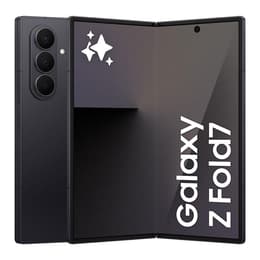
Galaxy Z Fold7
Starting at

Refurbished price:€907.00

Versus €2,236.37 new

See options
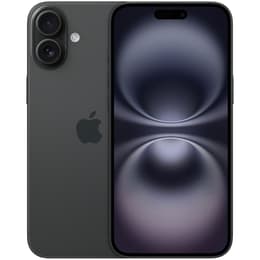
iPhone 16 Plus
Starting at

Refurbished price:€565.00

Versus €979.00 new

See options

Differences at a glance

The Samsung Galaxy Z Fold7 (2025) and the iPhone 16 Plus (2024) represent two distinct approaches to large-screen mobile device design. While the Galaxy Z Fold7 features an innovative book-style foldable format with dual displays, the iPhone 16 Plus relies on a traditional slate form factor built around a expansive single screen. Operating on Android and iOS respectively, these smartphones cater to users looking for maximal viewing workspace but through entirely different hardware philosophies.

Available Models

Colour

Storage

Scores

Durability

Both devices are built to support long-term software cycles and daily wear, though their physical construction introduces different durability considerations.

  • Software Support and Updates: Both manufacturers provide extensive multi-year software and security update schedules, ensuring long-term system stability and feature compatibility.
  • Physical Construction: The iPhone 16 Plus utilizes a rigid glass-and-aluminum slab construction with standard drop resistances, whereas the Galaxy Z Fold7 employs a complex folding hinge mechanism that requires careful handling alongside its protective outer layers.
  • Repairability and Lifespan: Traditional slate devices typically present straightforward repair pathways, while foldable devices involve specialized screen components that require dedicated servicing approaches over their operational lifespan.

Year of Release

2025

2024

Compatible with latest Update

Yes

Yes

Foldable

Yes

No

Performance

Handling demanding daily tasks, heavy multitasking, and graphic-intensive applications comes easily to both models, though their internal memory architectures and energy management differ.

  • Multitasking and App Switching: Generous random access memory allocations allow both phones to keep numerous apps active simultaneously without unexpected reloads or system stutter.
  • Speed and Responsiveness: Advanced processing hardware ensures rapid app loading times, smooth frame rates during gaming, and instant execution of complex background tasks.
  • Battery Behavior: Daily battery endurance varies based on screen usage patterns, with the folding device balancing power across two separate displays while the standard model optimizes energy across a single large panel.

Screen quality

Visual immersion is a primary focus for both models, though they deliver content through fundamentally contrasting display architectures.

  • Display Technology: The iPhone 16 Plus features a bright, fixed organic light-emitting diode panel with high contrast and sharp resolution, while the Galaxy Z Fold7 offers a flexible inner screen that expands into a tablet-sized workspace alongside a functional outer cover display.
  • Brightness and Outdoor Legibility: Both screens reach high peak luminance levels, allowing for clear visibility and readable text under bright sunlight conditions.
  • Motion and Refresh Rate: Fluid scrolling and responsive touch tracking are maintained through high refresh rate capabilities across all active display surfaces on both devices.

Resolution

1968x2184

1290 x 2796

Audiovisual

Capturing everyday moments and recording video content is handled through capable multi-lens configurations designed for diverse shooting scenarios.

  • Imaging Hardware: The iPhone 16 Plus utilizes a dual-lens rear system tailored for reliable everyday clarity, while the Galaxy Z Fold7 incorporates a versatile triple-lens setup including a high-resolution primary sensor and optical zoom capabilities.
  • Video and Audio Quality: High-definition video recording features advanced stabilization across both devices, paired with clear microphone arrays that isolate voice input effectively during calls and video captures.
  • Media Consumption: Stereo speaker configurations on both models deliver balanced audio output for music playback, video streaming, and casual gaming sessions.

Miscellaneous

Practical daily usability is shaped by physical dimensions, connectivity standards, and biometric security features.

  • Connectivity and Ports: Both models support modern fifth-generation cellular networks, fast wireless protocols, and standardized cable connections for charging and data transfer.
  • Size and Weight: The iPhone 16 Plus offers a slim, uniform profile that rests comfortably in standard pockets, whereas the Galaxy Z Fold7 provides a narrower folded footprint that thickens slightly before unfolding into a much wider surface area.
  • Security and Biometrics: Fast authentication is achieved via secure facial recognition on the Apple device and a side-mounted fingerprint sensor integrated into the power button on the Samsung foldable.

Weight

215 g

199 g

Screen size (in)

8.0

6.7

Network

5G

5G

SIM card

Dual Physical SIM + eSIM

eSIM

Carrier compatibility

Unlocked

Unlocked

Connector

USB-C (USB 3)

USB-C (USB 2)

What the community thinks

Choosing between the Galaxy Z Fold7 and the iPhone 16 Plus depends heavily on individual workflow preferences and daily device habits. Users who prioritize expansive multitasking workspaces, split-screen productivity, and flexible viewing formats will find the Galaxy Z Fold7 well-suited to their needs. Conversely, users who prefer a traditional, streamlined smartphone experience with straightforward handling and consistent single-screen ergonomics will lean toward the iPhone 16 Plus. Real-world feedback notes that while foldables require adjustment to physical creases and specialized care, standard slate models offer predictable durability. For those exploring sustainable purchasing routes, choosing a quality-assured refurbished option provides an eco-friendly alternative that extends device lifecycles without compromising on modern performance standards. Ultimately, evaluating how you interact with your phone daily will clarify which design philosophy fits your routine best.