

Samsung

Compare models
Differences at a glance
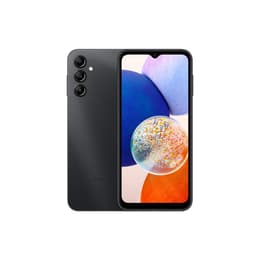
The Samsung Galaxy A14, released in early 2023, and the Google Pixel 7, launched in late 2022, are both Android smartphones designed to cater to different user priorities. While the Galaxy A14 focuses on essential features and extended battery life, the Pixel 7 emphasizes advanced camera capabilities and a streamlined software experience. Both devices operate on the Android platform, offering distinct approaches to user interaction and performance.
Colour
Storage
When considering the long-term usability of these devices, their release timelines and software support policies are key differentiators. The Google Pixel 7, launched in October 2022, benefits from Google's commitment to providing five years of both OS and security updates, extending its support until Android 18, which is expected around 2027. This ensures a longer period of access to the latest Android features and security enhancements. The Samsung Galaxy A14, released in early 2023, typically receives two major Android OS updates and four years of security updates, meaning its software support will likely conclude around 2027 for security patches and Android 15 for OS updates.
Year of Release
Compatible with latest Update
OS
Foldable
The performance capabilities of the Galaxy A14 and Pixel 7 cater to different user expectations, primarily influenced by their internal components. The Pixel 7 is equipped with a more advanced processing unit, designed for demanding applications and efficient multitasking, resulting in a consistently smooth and responsive user experience. The Galaxy A14, while capable of handling everyday tasks, may exhibit occasional slowdowns or stutters, particularly when switching between multiple applications or running graphically intensive content.
The visual experience on these two smartphones differs significantly due to their display technologies and specifications. The Google Pixel 7 features a 6.3-inch AMOLED display, known for its deep blacks, vibrant colors, and excellent contrast. It also offers a 90Hz refresh rate, contributing to smoother scrolling and a more responsive feel. In contrast, the Samsung Galaxy A14 comes with a larger 6.6-inch PLS LCD panel, which provides good clarity but may not match the color richness or brightness levels of an AMOLED screen, especially in bright outdoor conditions.
Resolution
Screen type
The camera systems on the Google Pixel 7 and Samsung Galaxy A14 are designed with different photographic strengths in mind. The Pixel 7 is renowned for its advanced computational photography, delivering consistently high-quality images, particularly from its 50MP main sensor, and excelling in low-light conditions. The Galaxy A14 also features a 50MP main camera, which performs well in good lighting, but its overall camera performance, especially in challenging conditions or with its secondary lenses, is more modest.
Main camera
Front camera
Beyond core performance and camera, several practical elements distinguish the Galaxy A14 and Pixel 7, influencing daily usability and connectivity. The Pixel 7, being a more premium device, incorporates advanced connectivity standards and a more robust build, while the Galaxy A14 focuses on providing essential features in a more accessible package.
Weight
Screen size (in)
Network
SIM card
Carrier compatibility
User feedback for the Google Pixel 7 frequently praises its exceptional camera performance, particularly its ability to capture detailed and vibrant photos in various lighting conditions, often outperforming devices in higher price brackets. Users also appreciate its smooth software experience and the timely delivery of Android updates. Common criticisms sometimes point to its battery life, which, while generally sufficient for a full day, may not be as long-lasting as some competitors, and the absence of a telephoto lens.
The Samsung Galaxy A14 is often lauded for its impressive battery longevity, with many users reporting multiple days of use on a single charge. Its large display and the inclusion of a headphone jack are also frequently highlighted as positive aspects. However, some users note that its performance can be modest, with occasional stutters during heavy multitasking, and its camera system, while good in bright light, may struggle in more challenging scenarios.
Users prioritizing a top-tier camera experience, consistent software updates, and a premium build will find the Google Pixel 7 well-suited to their needs. Its advanced processing capabilities also make it ideal for those who demand smooth performance for demanding applications. Conversely, individuals who value extended battery life, a larger screen for media consumption, and the practicality of a headphone jack may prefer the Samsung Galaxy A14. It is a solid choice for users seeking reliable everyday functionality without needing the most advanced features. Both devices offer compelling options, and considering a quality-assured refurbished option for either model can provide an eco-friendly alternative for making an informed choice.