

Compare models
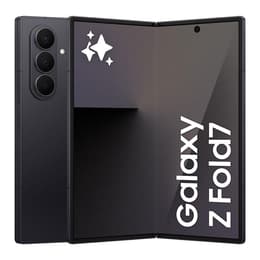
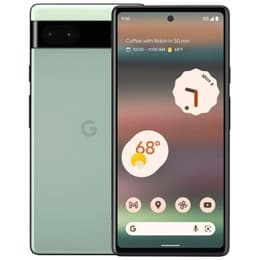
Galaxy Z Fold7 Vs Google Pixel 6A
- 1-year minimum warranty
- Free delivery on all orders
- Free 30-day returns
Differences at a glance
The Samsung Galaxy Z Fold 7 (2025) and the Google Pixel 6a (2022) represent two entirely different approaches to smartphone engineering, contrasting an advanced book-style foldable device with a compact, traditional candy-bar form factor. While the Galaxy Z Fold 7 runs on Android with an interface tailored for large, flexible screens, the Google Pixel 6a utilizes clean software optimized for a standard single-screen layout. Both devices serve distinct user habits, differing fundamentally in physical structure, release timeline, and everyday utility.
Available Models
Colour
Storage
Scores
Durability
When evaluating the long-term outlook of these two devices, differences in their release timelines, software maintenance schedules, and physical construction play major roles in determining their operational lifespans.
- Software Support and Updates: The Galaxy Z Fold 7 benefits from a much later release year, positioning it to receive major operating system upgrades significantly further into the future compared to the Pixel 6a, which relies on an older software support timeline.
- Hardware Resilience: The Pixel 6a utilizes a rigid glass-and-composite construction with standard water resistance, whereas the foldable nature of the Galaxy Z Fold 7 requires careful handling of its flexible inner display mechanism despite modern reinforcement efforts.
- Expected Lifespan: Users seeking extended software longevity will find that the newer release window of the Galaxy Z Fold 7 provides prolonged viability, while the Pixel 6a offers a predictable, stable hardware lifecycle typical of traditional smartphone builds.
Year of Release
2025
2022
Compatible with latest Update
Yes
Yes
OS
Android
Android
Foldable
Yes
No
Performance
Underneath their contrasting exteriors, both smartphones handle daily computing tasks, app loading, and multitasking with capabilities tailored to their respective hardware classes and memory configurations.
- Speed and Multitasking: The Galaxy Z Fold 7 features generous RAM and a current-generation processor that executes heavy app switching, split-screen workflows, and demanding mobile games with high fluidity, while the Pixel 6a handles standard browsing, messaging, and media streaming reliably using its mid-range processing architecture.
- Battery Behavior: The Pixel 6a relies on a moderate battery capacity that comfortably manages standard daily use, whereas the larger dual-screen setup of the Galaxy Z Fold 7 demands more power, resulting in variable battery consumption depending on whether the inner or outer display is active.
- Storage Capacity: The Galaxy Z Fold 7 starts with higher baseline storage options and scalable tiers to accommodate large media libraries, whereas the Pixel 6a provides a fixed storage allocation suited for everyday application files and cloud storage reliance.
Screen quality
Display technology represents one of the most significant divergences between these two devices, changing how users interact with visual content, media, and productivity apps.
- Display Configuration: The Galaxy Z Fold 7 offers a flexible inner screen that opens into a tablet-sized workspace accompanied by an outer cover display, contrasted against the Pixel 6a and its traditional single flat screen panel.
- Panel Technology and Clarity: Both models utilize vibrant organic light-emitting diode technology that produces deep black levels and high contrast, though the Z Fold 7 adds higher refresh rate capabilities for smoother scrolling motions compared to the fixed standard refresh rate of the Pixel 6a.
- Outdoor Usability: High peak brightness levels on both devices ensure that text and images remain legible under direct sunlight, though larger foldable surfaces may catch more ambient reflections during outdoor use.
Resolution
1968x2184
1080 x 2400
Audiovisual
Imaging hardware and audio output setups cater to different multimedia preferences, ranging from versatile multi-lens arrays to streamlined single-task configurations.
- Camera Array Versatility: The Galaxy Z Fold 7 incorporates a high-resolution primary sensor and an expansive multi-lens setup designed for flexible framing and detailed landscape photography, while the Pixel 6a relies on computational photography algorithms to deliver balanced everyday shots from a simpler dual-rear camera configuration.
- Video and Low-Light Capture: Both devices manage dim lighting conditions effectively using software stabilization and exposure correction, though the newer processing hardware in the Z Fold 7 allows for faster image rendering and advanced video recording formats.
- Media Consumption: Stereo speakers on both smartphones provide clear dialogue for calls and videos, with the expansive folding screen of the Samsung device creating an immersive environment for watching films or reading digital documents.
Miscellaneous
Practical daily usability is shaped by physical dimensions, connectivity standards, security authentication methods, and structural materials.
- Dimensions and Portability: The Pixel 6a offers a lightweight, narrow profile that fits easily into small pockets and single-handed grips, whereas the Galaxy Z Fold 7 provides a compact folded footprint that unfolds into a much broader surface area, carrying a heavier overall weight.
- Security and Authentication: The Pixel 6a features an under-display fingerprint sensor alongside facial recognition, while the Galaxy Z Fold 7 integrates its fingerprint reader directly into the side power button for quick access in both folded and unfolded states.
- Connectivity: Both models support modern wireless standards including fifth-generation cellular networks and high-speed Wi-Fi protocols, utilizing universal USB-C ports for charging and data transfer.
Weight
215 g
178 g
Screen size (in)
8.0
6.1
Network
5G
5G
SIM card
Dual Physical SIM + eSIM
Physical SIM + eSIM
Carrier compatibility
Unlocked
Unlocked
Connector
USB-C (USB 3)
USB-C
What the community thinks
Users prioritizing a compact, pocket-friendly device for basic communication, reliable everyday snapshots, and traditional smartphone handling will find the Google Pixel 6a well-suited to their needs. Conversely, individuals who require an expansive multitasking workspace, tablet-scale viewing, and advanced processing capabilities will lean toward the Galaxy Z Fold 7. Real-world user feedback often praises the Pixel 6a for its straightforward ergonomics and reliable everyday simplicity, while the Galaxy Z Fold 7 receives favorable attention for its innovative dual-screen versatility and modern internal hardware, alongside occasional discussions regarding the careful handling required for foldable screens.
When making a final decision, consider whether a traditional single-screen layout or a flexible multi-surface display aligns better with daily routines. For those exploring sustainable hardware choices, a quality-assured refurbished option provides an eco-friendly alternative that extends device lifecycles without compromising on performance standards.










