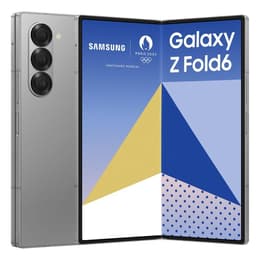
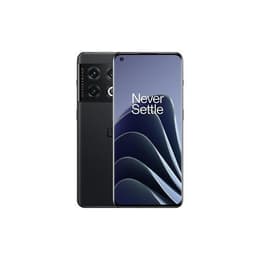


Galaxy Z Fold6 Vs OnePlus 10 Pro

Galaxy Z Fold6
Galaxy Z Fold6
Starting at

Refurbished price:750.00

Versus €1,973.53 new

See options
OnePlus 10 Pro
OnePlus 10 Pro
Starting at

Refurbished price:228.00

Versus €999.00 new

See options

Ratings

The Samsung Galaxy Z Fold6 and the OnePlus 10 Pro represent distinct approaches to the modern smartphone experience. Released in July 2024, the Galaxy Z Fold6 is a cutting-edge foldable device, offering a unique form factor that transforms from a compact smartphone into a larger tablet-like display. In contrast, the OnePlus 10 Pro, launched in January 2022, is a traditional high-end slab smartphone known for its robust performance and display. Both devices operate on the Android ecosystem, with the Z Fold6 featuring Samsung's One UI and the OnePlus 10 Pro running OxygenOS, each offering a customized user interface and feature set.

Scores

Durability

When considering the long-term usability of these devices, their release timelines and software support policies are key differentiators.

  • Release Timeline and Software Support: The Galaxy Z Fold6, being a 2024 release, benefits from Samsung's commitment to providing 7 years of operating system and security updates, ensuring extended software longevity. The OnePlus 10 Pro, released in 2022, typically receives 3 major Android OS updates and 4 years of security updates, meaning its software support window is shorter and nearing its conclusion by 2026.
  • Physical Durability: The Galaxy Z Fold6 features an IP48 rating for dust and water protection, an improvement for foldable devices, and utilizes Corning Gorilla Glass Victus 2 on its cover screen and back panel, with an Ultra-Thin Glass (UTG) for the inner foldable display. The OnePlus 10 Pro's display is protected by Gorilla Glass Victus, and while its T-Mobile US variant has an IP68 rating, international versions generally lack an official IP certification.
  • Expected Practical Lifespan: Users prioritizing the longest possible software support and the latest advancements in foldable durability will find the Galaxy Z Fold6 more aligned with their needs. The OnePlus 10 Pro, while physically robust for a traditional smartphone, will reach its end-of-life for major software updates sooner.

Year of Release

2024

2022

Compatible with latest Update

Yes

Yes

OS

Android

Android

Foldable

Yes

No

Performance

The performance capabilities of these two smartphones reflect the generational gap in their underlying hardware.

  • Processing Power: The Galaxy Z Fold6 is equipped with a current-generation processor, the Qualcomm Snapdragon 8 Gen 3 for Galaxy, which provides substantial power for demanding applications, advanced multitasking, and graphically intensive gaming. The OnePlus 10 Pro features the Qualcomm Snapdragon 8 Gen 1 processor, which was a high-end chip at its 2022 release, capable of handling everyday tasks and most applications smoothly.
  • Multitasking and Responsiveness: With 12 GB of RAM, the Galaxy Z Fold6 is designed to manage numerous applications simultaneously and switch between them with fluidity, especially beneficial when utilizing its large internal display for productivity. The OnePlus 10 Pro offers 8 GB or 12 GB of RAM, providing a responsive experience for general use and moderate multitasking.
  • Battery Behavior: The Galaxy Z Fold6 houses a 4400 mAh battery, which, despite its dual-screen configuration, is optimized for a full day of mixed usage, with some users reporting around 10-11 hours of screen-on time. The OnePlus 10 Pro comes with a larger 5000 mAh battery, and its efficient display technology contributes to a strong battery life, often lasting beyond a single day for many users.

Memory (GB)

12 GB

8 GB

Screen quality

The display experience is a primary distinction between the foldable Galaxy Z Fold6 and the traditional OnePlus 10 Pro.

  • Display Technology and Form Factor: The Galaxy Z Fold6 offers a dual-screen setup: a 6.3-inch Dynamic AMOLED 2X cover display and a large 7.6-inch Dynamic AMOLED 2X foldable main display. This allows for a versatile experience, shifting from a compact phone to an expansive tablet-like canvas. The OnePlus 10 Pro features a single 6.7-inch Fluid AMOLED curved display.
  • Resolution and Clarity: Both devices offer high-resolution displays for sharp visuals. The Z Fold6's main display has a resolution of 2160 x 1856 pixels, while its cover screen is 2376 x 968 pixels. The OnePlus 10 Pro provides a QHD+ resolution of 1440 x 3216 pixels.
  • Brightness and Smoothness: Both phones feature adaptive refresh rates up to 120Hz for smooth scrolling and responsiveness. The Z Fold6's displays can reach a peak brightness of 2600 nits, offering excellent visibility in bright conditions. The OnePlus 10 Pro's display utilizes LTPO 2.0 technology, allowing its refresh rate to dynamically adjust from 1Hz to 120Hz for power efficiency, and it achieves a peak brightness of 1300 nits.

Resolution

1856 x 2160

1440 x 3216

Audiovisual

Both smartphones offer capable camera systems, though with different strengths and features.

  • Rear Camera Systems: The Galaxy Z Fold6 features a triple rear camera setup consisting of a 50 MP wide-angle lens with optical image stabilization (OIS), a 12 MP ultra-wide lens with a 123° field of view, and a 10 MP telephoto lens with 3x optical zoom and OIS. The OnePlus 10 Pro also has a triple rear camera system, developed in partnership with Hasselblad, including a 48 MP wide-angle lens with OIS, a 50 MP ultra-wide lens with a wide 150° field of view, and an 8 MP telephoto lens with 3.3x optical zoom and OIS.
  • Photography Performance: The Z Fold6 benefits from Samsung's ProVisual Engine and Galaxy AI editing tools, enhancing photo quality in various lighting conditions and offering advanced post-capture adjustments. The OnePlus 10 Pro, with its Hasselblad partnership, focuses on natural color calibration and offers features like a 150° ultra-wide mode and a Pro Mode for manual controls, including 12-bit RAW+ capture.
  • Video Recording and Front Cameras: The Z Fold6 supports 8K video recording at 30fps and 4K at 60fps from all its main cameras, and includes a 10 MP front-facing camera on the cover screen and a 4 MP under-display camera on the main screen. The OnePlus 10 Pro can record 8K video at 24fps and 4K at 30/60/120fps, and features a 32 MP front-facing camera.

Front camera

4 megapixels

32 megapixels

Miscellaneous

Beyond core specifications, several practical elements contribute to the overall user experience of these devices.

  • Connectivity and Ports: Both smartphones support 5G connectivity, ensuring access to the latest mobile network speeds. The Galaxy Z Fold6 features USB-C for charging and data transfer, along with Wi-Fi 6 and Bluetooth. The OnePlus 10 Pro also uses USB-C and supports Wi-Fi 6 and Bluetooth 5.2.
  • Biometric Security: The Galaxy Z Fold6 incorporates a side-mounted fingerprint sensor and facial recognition for secure unlocking. The OnePlus 10 Pro features an in-display optical fingerprint sensor.
  • Design and Handling: The Galaxy Z Fold6 has a folded dimension of 153.5 x 68.1 x 12.1 mm and weighs 239 g, offering a compact yet thick profile when closed, and a larger, thinner profile when unfolded. The OnePlus 10 Pro, as a traditional smartphone, measures 163 x 73.9 x 8.9 mm and weighs 200.5 g, providing a more conventional in-hand feel.

Weight

239 g

201 g

Screen size (in)

7.6

6.7

Network

5G

5G

SIM card

Physical SIM + eSIM

Physical SIM

Carrier compatibility

Unlocked

Unlocked

Connector

USB-C

USB-C

The Samsung Galaxy Z Fold6 and the OnePlus 10 Pro cater to different user preferences, primarily due to their distinct form factors and release timelines. Users frequently praise the Galaxy Z Fold6 for its innovative foldable design, which offers unparalleled screen real estate for productivity and media consumption. Its extended software support commitment is also a significant advantage for those seeking a device with a long lifespan. Some common criticisms, however, include its bulkier folded profile compared to traditional phones and the inherent considerations of foldable screen durability, though Samsung has made strides in this area.

The OnePlus 10 Pro, while an older model, is often lauded by users for its strong overall performance, vibrant display, and notably fast charging capabilities. Its traditional slab design appeals to those who prefer a familiar and robust smartphone experience without the complexities of a foldable. User feedback often highlights its reliable battery life and capable camera system, especially with the Hasselblad color tuning. Some common concerns at its release included the lack of an official IP rating for international models and software optimization issues, though updates have addressed some of these.

Ultimately, users prioritizing the latest technology, a versatile large screen for multitasking, and long-term software support will find the Galaxy Z Fold6 well-suited to their needs. Its unique form factor and advanced features make it ideal for professionals, power users, and those who enjoy a tablet-like experience in a pocketable device. Conversely, users who prefer a more conventional smartphone design, a strong and consistent performance for everyday tasks, and excellent battery life will find the OnePlus 10 Pro a compelling option. For those considering either device, exploring quality-assured refurbished options can provide a sustainable choice, extending the life cycle of these advanced electronics.


See all articles

Our recent comparisons






