

Galaxy Z Fold6 Vs iPhone 16 Pro Max

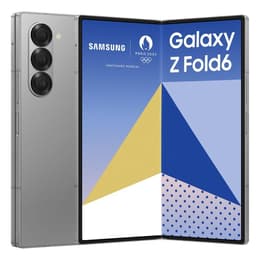
Galaxy Z Fold6
Galaxy Z Fold6
Starting at

Refurbished price:750.00

Versus €1,973.53 new

See options
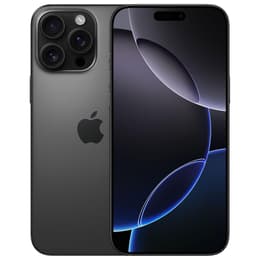
iPhone 16 Pro Max
iPhone 16 Pro Max
Starting at

Refurbished price:812.00

Versus €1,489.00 new

See options

Ratings

The Samsung Galaxy Z Fold6, released in July 2024, and the Apple iPhone 16 Pro Max, launched in September 2024, represent distinct approaches to high-end smartphone design. The Galaxy Z Fold6 offers a unique foldable form factor that transforms from a traditional smartphone into a larger tablet-like display, running on Android. In contrast, the iPhone 16 Pro Max maintains a conventional slate design, powered by Apple's iOS, focusing on maximizing performance and camera capabilities within a single, expansive screen. These devices cater to different user preferences, primarily differing in their physical design and operating system ecosystems.

Scores

Durability

When considering the long-term usability of these devices, both the Galaxy Z Fold6 and the iPhone 16 Pro Max offer substantial software support and robust build qualities, though their approaches to durability differ.

  • Software Longevity: The Galaxy Z Fold6 launched with Android 14 and is promised seven years of software updates, ensuring a long period of access to the latest features and security patches. The iPhone 16 Pro Max, running iOS 18, typically receives five to six years of major iOS updates, providing consistent software evolution.
  • Physical Durability: The iPhone 16 Pro Max features a Ceramic Shield front, a titanium frame, and an IP68 rating for dust and water resistance, allowing submersion up to 6 meters for 30 minutes. The Galaxy Z Fold6 utilizes an enhanced Armor Aluminum frame, Corning Gorilla Glass Victus 2 on its cover screen and back, and an IP48 rating, marking Samsung's first foldable with certified dust protection. Its inner display uses ultra-thin flexible glass, which is more susceptible to scratches than traditional smartphone glass.
  • Repairability Considerations: The foldable design of the Galaxy Z Fold6 inherently presents more complex repair scenarios compared to the iPhone 16 Pro Max's traditional form. However, Samsung offers programs like Galaxy Z Assurance for discounted screen repairs. The iPhone's design, while not foldable, also requires specialized tools and expertise for repairs.

Year of Release

2024

2024

Compatible with latest Update

Yes

Yes

Foldable

Yes

No

Performance

Both devices are equipped with advanced processors designed to handle demanding applications and multitasking with ease, though their underlying architectures differ.

  • Processing Power: The Galaxy Z Fold6 is powered by the Qualcomm Snapdragon 8 Gen 3 for Galaxy, providing efficient performance for a wide range of tasks, from everyday browsing to intensive gaming and AI features. The iPhone 16 Pro Max features Apple's A18 Pro chip, which is optimized for iOS and Apple Intelligence, delivering smooth operation and high-speed processing for complex applications and graphics-intensive content.
  • Multitasking and Responsiveness: With 12GB of RAM, the Galaxy Z Fold6 is well-suited for extensive multitasking, especially when utilizing its large inner display for multiple applications simultaneously. The iPhone 16 Pro Max, with 8GB of RAM, leverages iOS's efficient memory management to maintain fluid performance and quick app switching.
  • Storage Options: Both devices offer ample internal storage, with the Galaxy Z Fold6 available in 256GB, 512GB, and 1TB configurations, and the iPhone 16 Pro Max also offering 256GB, 512GB, and 1TB options. Neither device supports expandable storage via microSD cards.
  • Battery Performance: The iPhone 16 Pro Max features a 4685 mAh battery, providing up to 33 hours of video playback and generally offering extended usage times, often lasting more than a full day for many users. The Galaxy Z Fold6 has a 4400 mAh battery, which, despite its larger screen, is optimized to deliver a full day of mixed usage, averaging around 10 to 11 hours of screen-on time in various tests.

Memory (GB)

12 GB

8 GB

Screen quality

The display experience is a primary differentiator between these two flagship devices, with the Galaxy Z Fold6 offering a versatile foldable screen and the iPhone 16 Pro Max providing a large, high-quality traditional display.

  • Display Technology and Clarity: The Galaxy Z Fold6 features Dynamic AMOLED 2X displays on both its 6.3-inch cover screen and its 7.6-inch main foldable screen, offering vibrant colors and deep blacks. The iPhone 16 Pro Max boasts a 6.9-inch Super Retina XDR OLED display, known for its exceptional color accuracy, contrast, and clarity.
  • Brightness and Outdoor Visibility: Both devices offer impressive brightness levels, with the Galaxy Z Fold6's displays reaching a peak brightness of 2600 nits, ensuring good visibility even in bright outdoor conditions. The iPhone 16 Pro Max also achieves high brightness, with a typical maximum of 1000 nits and a peak outdoor brightness of 2000 nits, providing excellent readability in various lighting environments.
  • Refresh Rate and Smoothness: Both phones incorporate adaptive refresh rate technologies for smooth scrolling and responsive interactions. The Galaxy Z Fold6's displays feature an adaptive 1-120Hz refresh rate. The iPhone 16 Pro Max includes ProMotion technology, offering adaptive refresh rates up to 120Hz.
  • Screen Size and Aspect Ratio: The Galaxy Z Fold6's cover screen has a 6.3-inch display, and when unfolded, it reveals a 7.6-inch main screen, providing a tablet-like experience. The iPhone 16 Pro Max offers a large 6.9-inch display, maximizing screen real estate within a single form factor.

Resolution

1856 x 2160

1320 x 2868

Audiovisual

Both the Galaxy Z Fold6 and the iPhone 16 Pro Max are equipped with advanced camera systems designed to capture high-quality photos and videos, though their sensor configurations and computational photography strengths vary.

  • Rear Camera Systems: The Galaxy Z Fold6 features a triple rear camera setup: a 50MP main wide-angle lens, a 12MP ultra-wide lens, and a 10MP telephoto lens with 3x optical zoom. The iPhone 16 Pro Max also has a triple Pro camera system, including a 48MP main Fusion lens, a 48MP ultra-wide lens, and a 12MP 5x telephoto lens with a tetraprism design for extended optical zoom.
  • Low-Light and Everyday Photography: The iPhone 16 Pro Max's larger sensors and advanced image processing, including features like Photonic Engine and Deep Fusion, contribute to strong low-light performance and detailed everyday shots. The Galaxy Z Fold6 utilizes Nightography and AI-based image processing (ProVisual Engine) to enhance photo quality in various lighting conditions, though some reviews note its low-light ultra-wide performance can be noisy.
  • Video Recording Capabilities: The iPhone 16 Pro Max offers extensive video features, including 4K Dolby Vision recording up to 120fps, Cinematic mode, Action mode, ProRes, and spatial video recording. The Galaxy Z Fold6 supports 8K video recording at 30fps from its primary camera and 4K 60fps from most of its lenses, along with Super HDR video.
  • Front-Facing Cameras: The Galaxy Z Fold6 includes a 10MP camera on its cover screen and a 4MP under-display camera on its main screen. The iPhone 16 Pro Max features a 12MP TrueDepth front camera with autofocus and OIS, capable of 4K Dolby Vision video.

Front camera

4 megapixels

12 megapixels

Miscellaneous

Beyond core performance and display, several practical elements contribute to the overall user experience of these devices.

  • Connectivity Standards: Both devices support advanced connectivity. The Galaxy Z Fold6 includes 5G and Wi-Fi 6E, while the iPhone 16 Pro Max steps up to Wi-Fi 7, offering potentially faster wireless speeds and improved network efficiency. Both support Bluetooth 5.3.
  • Ports and Biometrics: The iPhone 16 Pro Max features a USB-C port, aligning with modern universal charging standards. The Galaxy Z Fold6 also uses USB-C. For security, the iPhone relies on Face ID (facial recognition), while the Galaxy Z Fold6 uses a side-mounted fingerprint sensor and facial recognition.
  • Physical Design and Handling: The Galaxy Z Fold6, when folded, measures 153.5 x 68.1 x 12.1 mm and weighs 239g, offering a narrower, thicker profile. Unfolded, it becomes a larger, thinner device at 153.5 x 132.6 x 5.6 mm. The iPhone 16 Pro Max, with its traditional form factor, measures 163 x 77.6 x 8.25 mm and weighs 227g, making it slightly taller and wider but thinner than the folded Z Fold6. The Z Fold6 supports S Pen input, though the stylus is sold separately.
  • Unique Features: The iPhone 16 Pro Max introduces an Action Button for customizable shortcuts and integrates Apple Intelligence for enhanced AI capabilities. The Galaxy Z Fold6 also heavily features Galaxy AI, with specific optimizations for its foldable display, such as multi-window translation.

Weight

239 g

227 g

Screen size (in)

7.6

6.9

Network

5G

5G

SIM card

Physical SIM + eSIM

eSIM

Carrier compatibility

Unlocked

Unlocked

Connector

USB-C

USB-C (USB 3)

The Samsung Galaxy Z Fold6 and iPhone 16 Pro Max cater to distinct user needs, each excelling in its specialized design and ecosystem. Users often praise the Galaxy Z Fold6 for its innovative foldable display, which offers unparalleled multitasking capabilities and a versatile viewing experience, effectively combining a phone and a tablet into one device. Its robust software support and integrated Galaxy AI features are also frequently highlighted as strong points. Some common criticisms, however, revolve around the durability of the inner foldable screen and the perceived bulkiness when folded, despite efforts to make it lighter and thinner.

The iPhone 16 Pro Max is widely lauded for its exceptional camera system, delivering professional-grade photos and videos, and its industry-leading battery life, which provides extended usage throughout the day. Its powerful processor ensures smooth performance across all applications, and the integration of Apple Intelligence enhances user experience. User feedback often points to its consistent performance and premium build quality. Some users might find its large size less convenient for one-handed use.

Users prioritizing a versatile device that can transform from a compact phone to a large screen for productivity and media consumption may find the Galaxy Z Fold6 well-suited to their needs. Its unique form factor and Android's open ecosystem offer flexibility for power users. Conversely, individuals who value a consistently high-performing, durable, and long-lasting device with a top-tier camera system and a streamlined user experience within the Apple ecosystem may lean toward the iPhone 16 Pro Max. Both devices represent the pinnacle of smartphone technology in their respective categories, and choosing between them often comes down to a preference for form factor and operating system. For those considering either of these advanced devices, exploring quality-assured refurbished options can be an eco-friendly alternative.


See all articles

Our recent comparisons