

Galaxy Z Fold6 Vs Google Pixel 8a

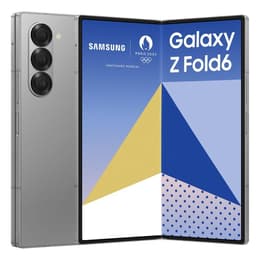
Galaxy Z Fold6
Galaxy Z Fold6
Starting at

Refurbished price:750.00

Versus €1,973.53 new

See options
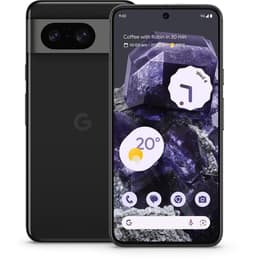
Google Pixel 8a
Google Pixel 8a
Starting at

Refurbished price:229.00

Versus €489.75 new

See options

Ratings

The Samsung Galaxy Z Fold6, released in July 2024, represents the pinnacle of foldable smartphone technology, offering a unique dual-screen experience. In contrast, the Google Pixel 8A, launched in May 2024, is a traditional slab smartphone known for its advanced computational photography and integrated artificial intelligence features. These devices cater to different user needs, with the Z Fold6 prioritizing screen real estate and multitasking capabilities, while the Pixel 8A focuses on a streamlined user experience and camera performance within a more compact form factor. Both run on the Android operating system, offering extensive software support.

Scores

Durability

When considering the long-term usability of these devices, both the Galaxy Z Fold6 and the Pixel 8A offer substantial software support, contributing to their practical lifespan.

  • Software Longevity: Both the Galaxy Z Fold6 and the Google Pixel 8A are committed to providing seven years of operating system upgrades, security updates, and feature drops from their respective release dates. This extended support ensures that both devices will remain current and secure for a considerable period, with the Pixel 8A's support extending until at least 2031.
  • Physical Durability: The Galaxy Z Fold6 features an IP48 rating for dust and water resistance, along with Corning Gorilla Glass Victus 2 on its cover screen and back panel, and an Armor Aluminum frame. Its internal foldable display, however, uses ultra-thin flexible glass, which is more delicate than traditional smartphone screens. The Pixel 8A comes with Corning Gorilla Glass 3 for screen protection and an IP67 rating for dust and water resistance.
  • Repairability: Both devices present challenges for repair. The Galaxy Z Fold6 has a low repairability score, often rated around 4.5 to 5 out of 10, due to its complex foldable screen and hinge mechanism, and adhesive-heavy construction. Similarly, the Pixel 8A also has a relatively low repairability score, around 4.5 out of 10, attributed to strong adhesives and a soldered charging port.

Year of Release

2024

2024

Compatible with latest Update

Yes

Yes

OS

Android

Android

Foldable

Yes

No

Performance

The performance of these two smartphones is driven by different processors, leading to distinct real-world experiences in terms of speed and multitasking.

  • Processing Power: The Galaxy Z Fold6 is equipped with a current-generation processor designed for high-end performance, enabling smooth operation across demanding applications and complex multitasking scenarios. The Pixel 8A utilizes Google's Tensor G3 processor, which provides efficient performance for everyday tasks and powers its advanced AI features.
  • Multitasking and Responsiveness: With 12 GB of RAM, the Galaxy Z Fold6 is well-suited for heavy multitasking, running multiple applications simultaneously, and handling intensive productivity tasks on its large internal display. The Pixel 8A, with 8 GB of RAM, offers a responsive experience for typical smartphone usage, including app switching and gaming, benefiting from its optimized software.
  • Storage Options: The Galaxy Z Fold6 offers a range of internal storage capacities, including 256 GB, 512 GB, and 1 TB, providing ample space for extensive files and media. The Pixel 8A is available with either 128 GB or 256 GB of internal storage, catering to users with more moderate storage needs.

Memory (GB)

12 GB

8 GB

Screen quality

The display experience is a primary differentiator between these two devices, with the Galaxy Z Fold6 offering a unique foldable design and the Pixel 8A providing a vibrant traditional screen.

  • Display Technology and Size: The Galaxy Z Fold6 features two Dynamic AMOLED 2X displays: a 7.6-inch foldable inner screen and a 6.3-inch cover screen. This allows for a versatile viewing experience, transitioning from a compact smartphone to a larger tablet-like interface. The Pixel 8A has a single 6.1-inch OLED Actua display, offering a consistent and immersive viewing area.
  • Brightness and Clarity: Both devices offer high brightness levels, with the Galaxy Z Fold6's displays reaching up to 2600 nits peak brightness, ensuring visibility even in bright outdoor conditions. The Pixel 8A's display can achieve up to 2000 nits peak brightness, providing clear visuals. Both screens feature high resolutions (2160x1856 for Z Fold6 inner, 1080x2400 for Pixel 8A) for sharp text and images.
  • Refresh Rate and Smoothness: Both smartphones incorporate a 120Hz adaptive refresh rate, contributing to smooth scrolling, fluid animations, and a more responsive user interface. This feature enhances the visual experience, particularly during gaming or when navigating content-rich applications.

Resolution

1856 x 2160

1080 x 2400

Audiovisual

The camera systems on the Galaxy Z Fold6 and the Pixel 8A approach photography with different strengths, catering to varied user preferences.

  • Rear Camera Capabilities: The Galaxy Z Fold6 features a versatile triple-camera system on the rear, including a 50 MP wide-angle lens, a 12 MP ultra-wide lens, and a 10 MP telephoto lens with 3x optical zoom. This setup provides flexibility for various photographic situations, including distant subjects. The Pixel 8A offers a dual-camera system with a 64 MP wide-angle lens and a 13 MP ultra-wide lens, excelling in capturing detail and wide scenes.
  • Photography Features and AI: The Pixel 8A leverages Google's computational photography and AI features such as Magic Editor, Best Take, Magic Eraser, Photo Unblur, and Night Sight, which enhance image quality and offer creative editing possibilities. The Galaxy Z Fold6 also includes advanced features like Super HDR, Nightography, Pro mode, and AI editing tools, with its Flex Mode offering unique shooting angles.
  • Video Recording and Front Cameras: Both devices are capable of high-quality video recording, with the Galaxy Z Fold6 supporting 8K video at 30 frames per second from its main camera and 4K at 60 frames per second from most cameras. The Pixel 8A records 4K video at 30 or 60 frames per second from its rear cameras. For selfies, the Z Fold6 has a 10 MP camera on its cover screen and a 4 MP under-display camera on the inner screen, while the Pixel 8A features a 13 MP front-facing camera.

Front camera

4 megapixels

13 megapixels

Miscellaneous

Beyond core performance and camera, several practical elements contribute to the overall user experience of these smartphones.

  • Connectivity and Ports: Both the Galaxy Z Fold6 and the Pixel 8A support 5G connectivity, along with modern Wi-Fi standards (Wi-Fi 6 for Z Fold6) and Bluetooth for wireless accessories. Both devices utilize a USB-C port for charging and data transfer. The Pixel 8A does not include a traditional headphone jack.
  • Biometrics and Design: The Galaxy Z Fold6 incorporates a side-mounted fingerprint sensor for secure unlocking. The Pixel 8A offers both an under-display fingerprint sensor and face recognition for convenient access. The Z Fold6 features a refined, more squared-off design with an Armor Aluminum frame and Gorilla Glass Victus 2 on its exterior. The Pixel 8A maintains Google's minimalist aesthetic with a reinforced aluminum frame and Gorilla Glass 3.
  • Dimensions and Handling: The Galaxy Z Fold6, when folded, measures 153.5 x 68.1 x 12.1 mm and weighs 239 g, offering a compact yet substantial feel. When unfolded, it transforms into a larger device at 153.5 x 132.6 x 5.6 mm. The Pixel 8A is a more traditional smartphone size, measuring 152.1 x 72.7 x 8.9 mm and weighing 188 g, making it lighter and potentially easier for one-handed use.

Weight

239 g

188 g

Screen size (in)

7.6

6.1

Network

5G

5G

SIM card

Physical SIM + eSIM

Physical SIM + eSIM

Carrier compatibility

Unlocked

Unlocked

The Samsung Galaxy Z Fold6 and the Google Pixel 8A cater to distinct user preferences, each excelling in different areas. The Z Fold6 is often praised for its innovative foldable design, offering a large, immersive screen for productivity and media consumption, effectively combining a smartphone and a tablet experience. Users appreciate its powerful performance and versatile camera system, which includes a telephoto lens for zoom capabilities. However, some common criticisms revolve around its bulkier form factor when folded and the inherent delicacy of a foldable display compared to traditional phones. The under-display camera on the inner screen is also noted for its lower resolution.

The Google Pixel 8A receives frequent acclaim for its exceptional camera performance, driven by advanced computational photography and AI features that simplify capturing high-quality images in various conditions. Its long-term software support and consistent performance for everyday tasks are also highly regarded. Users generally find its compact size and comfortable handling appealing. Some common observations include its relatively thicker bezels compared to more premium devices and the absence of a macro photography mode.

Users prioritizing a large, adaptable screen for multitasking, content creation, or an expansive viewing experience may find the Galaxy Z Fold6 well-suited to their needs. Its robust processing power and comprehensive camera setup make it a strong choice for those who value versatility and cutting-edge technology. Conversely, individuals who prioritize an excellent point-and-shoot camera, a streamlined software experience with integrated AI, and a more traditional, compact smartphone form factor will likely lean towards the Google Pixel 8A. Both devices offer a commitment to long-term software support, making them viable options for extended use. For those considering either device, exploring quality-assured refurbished options can provide an eco-friendly alternative.

See all articles

Our recent comparisons