

Galaxy A53 5G Vs iPhone 17 Pro

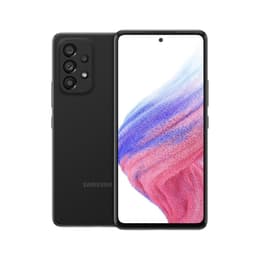
Galaxy A53 5G
Galaxy A53 5G
Starting at

Refurbished price:119.00

Versus €459.00 new

See options
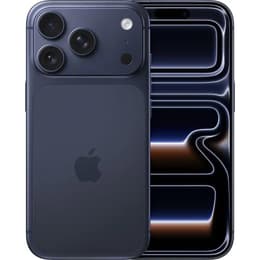
iPhone 17 Pro
iPhone 17 Pro
Starting at

Refurbished price:1,100.00

Versus €1,339.00 new

See options

Ratings

The Samsung Galaxy A53 5G, released in 2022, is an Android smartphone designed to offer a balanced experience, while the iPhone 17 Pro, launched in 2025, represents Apple's high-end iOS flagship. These devices cater to different user expectations, with the iPhone 17 Pro featuring more advanced processing power, camera capabilities, and display technology due to its later release and premium positioning. The Galaxy A53 5G runs on the Android operating system, offering extensive customization, whereas the iPhone 17 Pro operates on iOS, known for its integrated ecosystem and streamlined user experience.

Scores

Durability

When considering the practical lifespan of these devices, their respective release timelines and software support policies are key factors.

  • Release Timeline: The Galaxy A53 5G was released in March 2022, making it an older model compared to the iPhone 17 Pro, which launched in September 2025. This age difference inherently impacts their remaining software support and hardware longevity.
  • Software Longevity: The Galaxy A53 5G was promised four major Android OS upgrades, extending its support up to Android 16, and five years of security updates until 2027. The iPhone 17 Pro, being a newer Apple device, is expected to receive major iOS updates for a longer duration, typically 5-7 years from its release.
  • Durability Features: The Galaxy A53 5G features IP67 dust and water resistance and Gorilla Glass 5 for screen protection. The iPhone 17 Pro offers enhanced durability with an IP68 rating and Ceramic Shield 2 on both the front and back, providing improved scratch resistance.

Year of Release

2022

2025

Compatible with latest Update

Yes

Yes

OS

Android

iOS

Foldable

No

No

Performance

The performance capabilities of these two smartphones reflect their different market segments and release years, with the iPhone 17 Pro offering a more powerful and responsive experience.

  • Processing Power: The Galaxy A53 5G is equipped with a mid-range processor that handles everyday tasks smoothly, though some users have reported occasional lag during demanding applications or gaming. The iPhone 17 Pro features a significantly more advanced processor, designed to deliver exceptional speed and efficiency for complex tasks, intensive gaming, and advanced AI features, supported by a vapor chamber cooling system for sustained performance.
  • Multitasking and Storage: The Galaxy A53 5G comes with 6GB or 8GB of RAM and offers 128GB or 256GB of internal storage, expandable via microSD. The iPhone 17 Pro includes 12GB of RAM, facilitating seamless multitasking, and offers larger internal storage options starting from 256GB, without expandable storage.
  • Battery Behavior: The Galaxy A53 5G has a 5000mAh battery, generally providing over a day of use for moderate to heavy users, with 25W fast charging. The iPhone 17 Pro is noted for having the longest battery life of any iPhone to date, supporting USB-C fast charging and MagSafe/Qi 2 wireless charging.

Memory (GB)

4 GB

12 GB

Screen quality

The display experience on these devices varies, with the iPhone 17 Pro incorporating more advanced display technologies for a premium visual output.

  • Display Technology and Clarity: The Galaxy A53 5G features a 6.5-inch Super AMOLED display with a Full HD+ resolution (1080x2400 pixels), providing vibrant colors and deep blacks. The iPhone 17 Pro has a 6.3-inch OLED display with a higher resolution (2622x1206 pixels) and a pixel density of 460 ppi, offering sharper details and superior visual fidelity.
  • Brightness and Refresh Rate: The Galaxy A53 5G's display offers a 120Hz refresh rate for smooth scrolling and a peak brightness of 800 nits, suitable for most indoor and outdoor conditions. The iPhone 17 Pro features ProMotion technology with an adaptive refresh rate up to 120Hz and an Always-On display, capable of reaching up to 3000 nits peak brightness outdoors, ensuring excellent visibility even in bright sunlight.
  • Viewing Experience: Both devices offer a rich viewing experience for media consumption, but the iPhone 17 Pro's higher brightness and resolution contribute to a more immersive and detailed visual presentation, especially for high-quality content.

Resolution

1080 x 2400

2622x1206

Screen type

Super AMOLED

Super Retina XDR

Audiovisual

The camera systems on both phones are designed for different photography needs, with the iPhone 17 Pro offering a more comprehensive and advanced setup.

  • Rear Camera System: The Galaxy A53 5G includes a versatile quad-camera setup with a 64MP main sensor (with OIS), a 12MP ultrawide, a 5MP macro, and a 5MP depth sensor, capable of good photos in bright conditions and decent low-light performance. The iPhone 17 Pro features a triple 48MP Pro Fusion camera system, including a main, ultrawide, and a periscope telephoto lens with up to 8x optical zoom, along with a TOF 3D LiDAR scanner, excelling in detail, low-light, and advanced computational photography.
  • Video Recording Capabilities: Both devices support 4K video recording at 30fps. The iPhone 17 Pro extends this with features like Dolby Vision, ProRes, ProRes RAW, Apple Log 2, and Genlock support, catering to professional video creators, and also offers Dual Capture for simultaneous front and rear video recording.
  • Front Camera: The Galaxy A53 5G has a 32MP front-facing camera. The iPhone 17 Pro features an 18MP Centre Stage camera, designed for enhanced video calls and selfies, with rumors suggesting a 24MP sensor.

Main camera

64 megapixels

48 megapixels

Front camera

32 megapixels

18 megapixels

Miscellaneous

Beyond core features, several practical elements differentiate the user experience between these two smartphones.

  • Connectivity Standards: The Galaxy A53 5G supports 5G and Wi-Fi 802.11 a/b/g/n/ac. The iPhone 17 Pro features the latest connectivity standards, including 5G and Wi-Fi 7, offering faster and more reliable wireless connections.
  • Ports and Biometrics: The Galaxy A53 5G uses a USB Type-C 2.0 port and an optical under-display fingerprint scanner for security. The iPhone 17 Pro utilizes a USB-C port and relies on Face ID for secure authentication, complemented by a TOF 3D LiDAR scanner. Neither device includes a 3.5mm headphone jack.
  • Design and Handling: The Galaxy A53 5G has a plastic back and weighs 189 grams, with dimensions of 159.6 x 74.8 x 8.1 mm. The iPhone 17 Pro features a unibody aluminum chassis with Ceramic Shield 2 on both front and back, weighing 206 grams and measuring 150.0 × 71.9 × 8.75 mm, offering a premium feel and robust build.

Weight

189 g

206 g

Screen size (in)

6.5

6.3

Network

5G

5G

SIM card

Physical SIM

eSIM

Carrier compatibility

Unlocked

Unlocked

Connector

USB-C

USB-C

The Samsung Galaxy A53 5G and the iPhone 17 Pro cater to distinct user preferences and budgets, reflecting their different release years and market positioning. Users often praise the Galaxy A53 5G for its long-lasting battery, vibrant AMOLED display, and versatile camera system, especially considering its segment. However, some common criticisms include occasional performance lag with demanding apps and the absence of a charger in the box.

The iPhone 17 Pro, as a more recent flagship, receives acclaim for its cutting-edge performance, advanced camera capabilities with features like 8x optical zoom and ProRes video, and its exceptionally bright and smooth ProMotion display. User sentiment often highlights its robust build quality and extended software support. Potential considerations for some users might be its premium feature set, which may exceed the needs of casual smartphone users.

Users prioritizing an eco-friendly and quality-assured refurbished option with a strong balance of features for everyday use, good battery life, and a capable camera system may find the Galaxy A53 5G well-suited to their needs. Conversely, users who require the latest in mobile processing power, advanced photography and videography tools, a top-tier display, and a longer period of software updates will likely lean toward the iPhone 17 Pro. The decision ultimately depends on whether one values the comprehensive, high-performance package of a recent flagship or a reliable, feature-rich device that offers excellent value.


See all articles

Our recent comparisons





