

Compare models
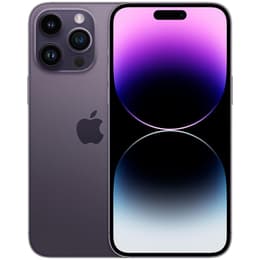
Galaxy Z Flip7 Vs iPhone 14 Pro Max
- 1-year minimum warranty
- Free delivery on all orders
- Free 30-day returns
Differences at a glance
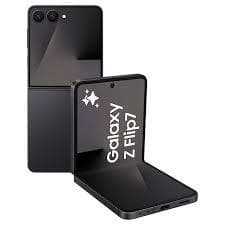
The Samsung Galaxy Z Flip7 (2025) and the Apple iPhone 14 Pro Max (2022) represent two fundamentally different approaches to high-end mobile technology. While the Galaxy Z Flip7 offers a modern foldable clamshell design running on Android, the iPhone 14 Pro Max provides a traditional slab-style form factor powered by iOS. These two devices cater to contrasting user preferences regarding pocketability, screen orientation, and software ecosystems.
Available Models
Colour
Storage
Scores
Durability
Both smartphones offer robust build qualities, though their mechanical lifespans differ due to their structural designs and release timelines.
- Software Longevity: The iPhone 14 Pro Max benefits from Apple's long-standing software update timeline, whereas the Galaxy Z Flip7 leverages its newer release date to secure several years of contemporary Android version updates.
- Physical Durability: The iPhone 14 Pro Max uses a rigid stainless steel and glass construction with high water resistance, while the Galaxy Z Flip7 utilizes an advanced folding hinge mechanism that requires deliberate care over extended years of daily physical closure.
- Repairability: Traditional slab devices like the iPhone generally present simpler structural frameworks for component replacement compared to folding display assemblies.
Year of Release
2025
2022
Compatible with latest Update
Yes
Yes
OS
Android
iOS
Foldable
Yes
No
Performance
Multitasking, app responsiveness, and energy management vary between these two platforms depending on hardware optimization.
- Everyday Responsiveness: Both devices handle intensive multitasking, demanding applications, and high-framerate gaming smoothly without noticeable stutter during normal workflows.
- Storage Configurations: The Galaxy Z Flip7 starts with generous baseline storage capacities, and the iPhone 14 Pro Max offers multiple tiers scaling up to massive capacities for large media libraries.
- Battery Behavior: The Galaxy Z Flip7 manages power efficiently for a compact folding device, whereas the larger physical footprint of the iPhone 14 Pro Max accommodates a battery capacity capable of sustaining heavy full-day workflows easily.
Screen quality
Visual immersion and panel utility differ significantly, driven by the unique mechanical design of the folding display versus a fixed glass screen.
- Display Technology: The Galaxy Z Flip7 features a flexible OLED main panel alongside a functional external cover screen, while the iPhone 14 Pro Max utilizes a rigid OLED panel featuring an interactive notification cutout at the top.
- Outdoor Visibility: Both panels achieve high peak brightness levels, ensuring sharp legibility and vibrant colors even under direct sunlight.
- Refresh Rate: Both devices incorporate adaptive high refresh rate technology, delivering smooth scrolling and fluid animations across interface navigation and media playback.
Resolution
1080x2520
1290 x 2796
Audiovisual
Main camera
50 megapixels
48 megapixels
Front camera
10 megapixels
12 megapixels
Miscellaneous
Physical dimensions and connectivity standards shape how each device fits into travel and daily routines.
- Portability: The Galaxy Z Flip7 folds down into a compact square that slips easily into smaller pockets, whereas the iPhone 14 Pro Max demands a larger pocket footprint due to its wide and heavy slab dimensions.
- Connectors and Biometrics: The Galaxy Z Flip7 relies on USB-C connectivity and fingerprint recognition alongside facial scanning, while the iPhone 14 Pro Max uses a Lightning port and secure 3D facial recognition.
- Ecosystem Integration: Connectivity suites include rapid 5G compatibility, modern Wi-Fi standards, and seamless Bluetooth pairing for accessories.
Weight
188 g
120 g
Screen size (in)
6.9
6.7
Network
5G
5G
SIM card
Physical SIM + eSIM
Physical SIM + eSIM
Carrier compatibility
Unlocked
Unlocked
Connector
USB-C
Lightning
What the community thinks
Users prioritizing a compact, pocket-friendly footprint with innovative screen angles will find the Galaxy Z Flip7 well-suited to their daily routines. Conversely, users seeking a traditional large-screen format with extended media battery reliability and a fixed glass structure often lean toward the iPhone 14 Pro Max. Evaluating whether a folding display or a traditional rigid form factor better matches your workflow is the primary decision factor here.
For those looking to make a sustainable choice, exploring a quality-assured refurbished option provides a practical way to acquire either device while minimizing environmental impact. Ultimately, balancing your preference for operating systems and physical handling will guide you toward the right choice for your needs.