

Galaxy S25 Vs Xiaomi Redmi Note 14 4G

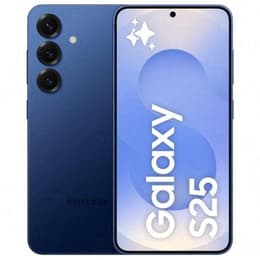
Galaxy S25
Galaxy S25
Starting at

Refurbished price:488.00

Versus €799.00 new

See options
Xiaomi Redmi Note 14 4G
Starting at

Refurbished price:162.00

Versus €229.99 new

See options

Ratings

The Samsung Galaxy S25, released in February 2025, and the Xiaomi Redmi Note 14 4G, launched in late 2024 or early 2025, are both contemporary smartphones operating on the Android platform. While the Galaxy S25 positions itself as a premium device with advanced processing power and extensive software support, the Redmi Note 14 4G focuses on delivering a robust user experience with a large battery and a capable display. These devices cater to different user priorities, with the Galaxy S25 offering a more refined and feature-rich ecosystem, and the Redmi Note 14 4G emphasizing endurance and core functionalities.

Scores

Durability

The longevity of a smartphone is influenced by its physical resilience and the duration of its software support. Both devices offer substantial support, but with differing timelines.

  • Software Support: The Samsung Galaxy S25 is designed for extended usability, promising seven generations of Android operating system upgrades and seven years of security updates, potentially extending its support until 2032. This commitment ensures the device remains current with the latest features and security protocols for a considerable period. In contrast, the Xiaomi Redmi Note 14 4G is slated to receive four major Android updates and six years of security updates, with support expected to continue until March 2031.
  • Physical Durability: The Galaxy S25 features an aluminum body and utilizes Gorilla Glass Victus 2 for both its front display and rear panel, offering enhanced protection against drops and scratches. It also boasts an IP68 rating, signifying high resistance to dust and water immersion (up to 1.5 meters for 30 minutes). The Redmi Note 14 4G comes with an IP54 rating, providing resistance against dust and splashes, and incorporates Gorilla Glass 5 for screen protection.
  • Expected Lifespan: Users seeking the longest possible software longevity and advanced physical protection may find the Galaxy S25 more aligned with their needs. The Redmi Note 14 4G, while offering solid durability and respectable software support, provides a slightly shorter update window.

Year of Release

2025

2025

OS

Android

Android

Foldable

No

No

Performance

Performance is a key differentiator, with the internal components dictating how smoothly applications run and how efficiently the device handles demanding tasks.

  • Processing Power: The Samsung Galaxy S25 is equipped with a current-generation processor optimized for its ecosystem, enabling it to handle demanding applications, complex multitasking, and graphic-intensive gaming with considerable ease and responsiveness. The Xiaomi Redmi Note 14 4G features a mid-range processor that provides smooth performance for everyday tasks and casual gaming.
  • Multitasking and Responsiveness: With 12GB of RAM as standard, the Galaxy S25 offers substantial headroom for seamless multitasking, allowing users to switch between numerous applications without experiencing slowdowns. The Redmi Note 14 4G typically comes with 6GB or 8GB of RAM, which is sufficient for general use and moderate multitasking, though some users have reported occasional lag after software updates.
  • Battery Behavior: The Galaxy S25 houses a 4000 mAh battery, which in tests has provided over 14 hours of video streaming, and users generally report it lasting a full day for moderate use. The Redmi Note 14 4G features a larger 5500 mAh battery, offering exceptional battery life that can comfortably last through a full day of intensive usage, and potentially longer for lighter users.

Memory (GB)

12 GB

6 GB

Screen quality

The display is the primary interface for user interaction, and both devices offer vibrant viewing experiences, though with distinct characteristics.

  • Display Technology and Clarity: The Samsung Galaxy S25 features a 6.2-inch Dynamic LTPO AMOLED 2X display, providing deep blacks, vibrant colors, and sharp visuals with its FHD+ resolution (2340x1080 pixels). The Xiaomi Redmi Note 14 4G sports a larger 6.67-inch AMOLED display with a 1080 x 2400 pixel (FHD+) resolution, also delivering clear and colorful imagery.
  • Brightness and Outdoor Visibility: The Galaxy S25's display can reach a peak brightness of up to 2600 nits, ensuring excellent visibility even in bright outdoor conditions. The Redmi Note 14 4G offers a peak brightness of 1800 nits, which is also capable of providing good visibility in various lighting environments.
  • Refresh Rate and Smoothness: Both smartphones feature a 120Hz refresh rate, contributing to smooth scrolling, fluid animations, and a more responsive overall user experience.

Resolution

1080x2340

1080x2400

Audiovisual

Camera capabilities are a significant factor for many users, and these devices offer different approaches to mobile photography and videography.

  • Rear Camera Systems: The Samsung Galaxy S25 is equipped with a versatile triple-camera system on the rear, including a 50MP wide-angle lens, a 10MP telephoto lens, and a 12MP ultra-wide lens, allowing for a range of photographic perspectives. The Redmi Note 14 4G primarily relies on its 108MP main sensor, complemented by 2MP macro and 2MP depth sensors, but notably lacks an ultrawide camera.
  • Photography Performance: The Galaxy S25 offers dependable camera quality, with improvements in night photography and focus modes, and benefits from advanced image processing features. The Redmi Note 14 4G's 108MP main camera delivers solid results in good lighting conditions, capturing detailed and colorful images, but its performance can struggle in low-light scenarios due to the absence of optical image stabilization.
  • Video Recording and Audio: The Galaxy S25 is capable of recording 4K video, providing high-resolution footage. The Redmi Note 14 4G records video at 1080p resolution and does not support 4K recording. Both devices offer stereo speakers, with the Redmi Note 14 4G featuring Dolby Atmos for an enhanced audio experience.

Miscellaneous

Beyond the core specifications, several practical elements contribute to the overall user experience and device utility.

  • Connectivity and Ports: The Samsung Galaxy S25 supports 5G connectivity, along with modern Wi-Fi standards and Bluetooth 5.4. It typically features a USB-C port for charging and data transfer. The Xiaomi Redmi Note 14 4G supports 4G LTE connectivity, Wi-Fi 5, and Bluetooth 5.3. It includes a USB-C port, a 3.5mm headphone jack, and an infrared (IR) blaster.
  • Biometric Security and Build Materials: The Galaxy S25 incorporates an ultrasonic in-screen fingerprint sensor for secure unlocking. Its construction involves an aluminum frame and Gorilla Glass Victus 2 on both the front and back. The Redmi Note 14 4G also features an in-screen fingerprint sensor and is built with a plastic back and an aluminum alloy frame, with Gorilla Glass 5 protecting the display.
  • Dimensions and Handling: The Galaxy S25 is a more compact device, measuring 146.9mm x 70.5mm x 7.2mm and weighing 162g, making it feel light and comfortable in hand. The Redmi Note 14 4G is slightly larger and heavier at 163.25mm x 76.55mm x 8.16mm and 196.5g.

Weight

162 g

196 g

Screen size (in)

6.2

6.67

Network

5G

4G

SIM card

Physical SIM + eSIM

Physical SIM + eSIM

Carrier compatibility

Unlocked

Unlocked

User feedback for the Samsung Galaxy S25 often highlights its exceptional performance, bright display, and the utility of its integrated AI features. Many users appreciate its comfortable, lightweight design and the promise of extensive software support, ensuring long-term relevance. However, some criticisms include its charging speed, which is not the fastest available, and the camera, while dependable, is sometimes described as mid-tier compared to other flagships.

The Xiaomi Redmi Note 14 4G receives praise for its impressive battery life, vibrant AMOLED display, and the inclusion of practical features like a 3.5mm headphone jack and expandable storage. Users also note its solid performance for everyday tasks. Common concerns revolve around its lack of an ultrawide camera, average low-light camera performance, and occasional software stutters or ads within the HyperOS interface.

Users prioritizing long-term software support, top-tier processing power for demanding applications, and a more versatile camera system with 4K video capabilities will find the Samsung Galaxy S25 well-suited to their needs. Conversely, individuals who value extended battery life, a larger display, and traditional features like a headphone jack and expandable storage, while still seeking a capable daily driver, may lean towards the Xiaomi Redmi Note 14 4G. Both devices offer compelling features, and considering a quality-assured refurbished option can provide an eco-friendly alternative for either model.


See all articles

Our recent comparisons