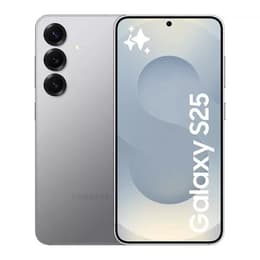
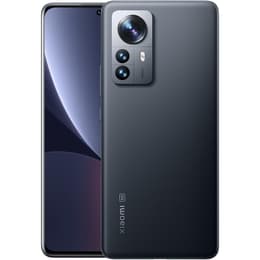


Galaxy S25 Vs Xiaomi 12T Pro

Galaxy S25
Galaxy S25
Starting at

Refurbished price:489.00

Versus €799.00 new

See options
Xiaomi 12T Pro
Xiaomi 12T Pro
Starting at

Refurbished price:201.00

Versus €1,199.00 new

See options

Ratings

The Samsung Galaxy S25, released in February 2025, and the Xiaomi 12T Pro, launched in October 2022, are both Android smartphones designed to offer distinct user experiences. While the Galaxy S25 represents a more recent flagship offering with extended software support and refined features, the Xiaomi 12T Pro focuses on high-megapixel photography and rapid charging capabilities. Both devices operate on the Android platform, but they differ significantly in their release timelines and the underlying software ecosystems.

Scores

Durability

The longevity of a smartphone is influenced by its release date, software support, and physical resilience. These two devices present different profiles in terms of their expected practical lifespan.

  • Software Support: The Galaxy S25 is designed for extended use, offering an impressive seven years of Android OS upgrades and seven years of security updates, ensuring it remains current and secure through 2032. In contrast, the Xiaomi 12T Pro, released earlier, is slated to receive three major Android OS updates, concluding with Android 15, and four years of security patches, with support expected to end around October 2026.
  • Physical Durability: The Galaxy S25 features Gorilla Glass Victus 2 on both its front and back, coupled with an aluminum frame and an IP68 rating for significant water and dust resistance. The Xiaomi 12T Pro utilizes Gorilla Glass 5 for its display and has a glass back with a plastic frame, offering some splash and dust resistance with an IP53 rating, though it lacks the comprehensive protection of the S25.
  • Practical Lifespan: Users prioritizing long-term software currency and robust physical protection will find the Galaxy S25 a more suitable option for extended ownership. The Xiaomi 12T Pro, while durable for its class, has a shorter software support window, which may influence its practical lifespan for users who prefer the latest Android versions and security updates.

Year of Release

2025

2022

Compatible with latest Update

Yes

Yes

OS

Android

Android

Foldable

No

No

Performance

Performance is a key differentiator, impacting how smoothly applications run, how quickly tasks are completed, and the overall responsiveness of the device.

  • Processing Power: The Galaxy S25 is equipped with a current-generation processor, specifically optimized for its ecosystem, which allows it to handle demanding applications, intensive multitasking, and graphic-rich games with considerable ease and efficiency. The Xiaomi 12T Pro, while featuring a powerful processor for its release year, offers robust performance for everyday tasks and gaming, though it may not match the raw processing headroom of the newer S25 for future applications.
  • Battery Endurance and Charging: The Galaxy S25 houses a 4000mAh battery, generally providing a full day of mixed usage, with optimizations for energy efficiency. The Xiaomi 12T Pro comes with a larger 5000mAh battery, often lasting a full day even with heavy use, and stands out with its 120W HyperCharge technology, capable of fully charging the device in approximately 20 minutes. The Galaxy S25 supports fast wired and wireless charging, while the Xiaomi 12T Pro does not include wireless charging.
  • Storage and Responsiveness: Both devices offer various storage configurations, with the Galaxy S25 typically starting at 128GB and offering up to 256GB, and the Xiaomi 12T Pro also available in 128GB and 256GB variants. The Galaxy S25 generally includes 12GB of RAM, contributing to seamless multitasking, while the Xiaomi 12T Pro offers 8GB or 12GB RAM options, providing smooth operation for most users.

Memory (GB)

12 GB

8 GB

Screen quality

The display is the primary interface for user interaction, and differences in technology and specifications can significantly affect the visual experience.

  • Display Technology and Clarity: The Galaxy S25 features a 6.2-inch Dynamic LTPO AMOLED 2X display with a resolution of 2340x1080 pixels, delivering vibrant colors, deep blacks, and sharp details. The Xiaomi 12T Pro sports a slightly larger 6.67-inch AMOLED display with a 2712x1220 pixel resolution, also offering excellent clarity and color reproduction.
  • Brightness and Refresh Rate: The Galaxy S25 boasts a high peak brightness of 2600 nits, ensuring excellent visibility even in bright outdoor conditions, and an adaptive refresh rate that scales from 1Hz to 120Hz for smooth scrolling and power efficiency. The Xiaomi 12T Pro reaches a peak brightness of 900 nits in high brightness mode and offers a 120Hz adaptive refresh rate, providing a fluid visual experience.
  • Viewing Experience: Both phones provide an immersive viewing experience for media consumption and daily use. The Galaxy S25's higher peak brightness offers an advantage in extremely bright environments, while the Xiaomi 12T Pro's slightly larger screen size might appeal to users who prefer more screen real estate.

Resolution

1080x2340

1220 x 2712

Audiovisual

Camera capabilities are often a deciding factor for many users, with both devices offering distinct approaches to mobile photography and videography.

  • Rear Camera Systems: The Galaxy S25 features a versatile triple-camera setup, including a 50MP main sensor with optical image stabilization (OIS), a 12MP ultra-wide lens, and a 10MP telephoto lens with 3x optical zoom and OIS, providing a balanced system for various photographic scenarios. The Xiaomi 12T Pro highlights a 200MP main sensor with OIS, accompanied by an 8MP ultra-wide camera and a 2MP macro lens, focusing on high-resolution detail in its primary camera.
  • Photography Performance: The Galaxy S25 excels in delivering consistently detailed and vibrant photos across its lenses, with strong low-light performance and advanced computational photography features. The Xiaomi 12T Pro's 200MP main sensor can capture incredibly detailed images, especially in good lighting, and offers features like 200MP ProCut for creative cropping. Its ultra-wide and macro sensors are functional but may not match the versatility or detail of the S25's secondary lenses.
  • Video Recording and Audio: Both devices support 8K video recording, with the Galaxy S25 capable of 8K at 30 frames per second and the Xiaomi 12T Pro at 24 frames per second. The Galaxy S25 offers advanced video features like Super Steady stabilization and enhanced AI processing. The Xiaomi 12T Pro provides solid video capabilities for its class. For audio, the Xiaomi 12T Pro features dual speakers with sound tuned by Harman Kardon, offering a rich audio experience for media consumption.

Miscellaneous

Beyond the core specifications, several practical features and design elements contribute to the overall user experience and daily usability.

  • Connectivity and Ports: The Galaxy S25 supports the latest wireless standards, including Wi-Fi 7 and Bluetooth 5.4, alongside 5G connectivity, ensuring fast and reliable connections. The Xiaomi 12T Pro offers Wi-Fi 6, Bluetooth 5.2, and 5G, providing robust connectivity for most users. Both devices feature a USB-C port for charging and data transfer.
  • Biometric Security and Additional Features: The Galaxy S25 incorporates an ultrasonic in-screen fingerprint sensor for secure and convenient unlocking, along with face recognition. The Xiaomi 12T Pro uses an optical in-display fingerprint sensor and face unlock. A notable inclusion on the Xiaomi 12T Pro is an IR blaster, which allows it to function as a universal remote control for various home electronics.
  • Design and Handling: The Galaxy S25 has a refined design with an aluminum body and glass construction, weighing approximately 162 grams and measuring 7.2mm thick, offering a comfortable and premium feel. The Xiaomi 12T Pro, with its glass front and plastic back and frame, weighs around 205 grams and is 8.6mm thick, providing a substantial in-hand feel.

Weight

162 g

204 g

Screen size (in)

6.2

6.67

Network

5G

5G

SIM card

Physical SIM + eSIM

Dual Physical SIM

Carrier compatibility

Unlocked

Unlocked

User sentiment for the Samsung Galaxy S25 often highlights its comprehensive software support, robust build quality, and consistently high-performing camera system as key strengths. Users appreciate the long-term commitment to updates and the device's overall reliability. Some common feedback points might revolve around its incremental design changes compared to previous generations.

The Xiaomi 12T Pro is frequently praised for its exceptional fast charging capabilities, large battery capacity, and the impressive detail captured by its 200MP main camera. Users often find its performance to be strong for its segment. Criticisms sometimes point to the less versatile secondary cameras and the shorter software update window compared to some competitors.

For users prioritizing the absolute latest in mobile technology, extended software longevity, and a highly refined, balanced user experience with top-tier durability, the Samsung Galaxy S25 aligns well with those needs. Its long-term update commitment makes it a suitable choice for those who keep their devices for many years.

Conversely, individuals who value rapid battery replenishment, a large battery for extended use, and a high-resolution main camera for detailed photography may find the Xiaomi 12T Pro to be a compelling option. It caters to users who appreciate specific high-impact features, even if it means a shorter software support cycle.

Both devices offer distinct advantages, and considering a quality-assured refurbished option for either model can provide an eco-friendly alternative for consumers seeking to make informed and sustainable choices.


See all articles

Our recent comparisons







