

Galaxy S25 Vs OnePlus 11

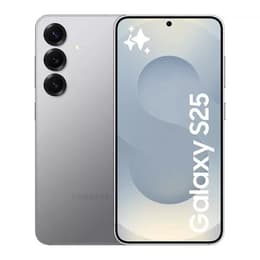
Galaxy S25
Galaxy S25
Starting at

Refurbished price:489.00

Versus €799.00 new

See options
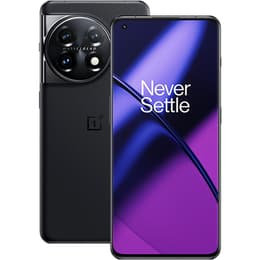
OnePlus 11
OnePlus 11
Starting at

Refurbished price:325.00

Versus €949.00 new

See options

Ratings

The Samsung Galaxy S25, released in early 2025, and the OnePlus 11, launched in early 2023, represent distinct approaches to the premium smartphone experience. While both devices operate on the Android platform, they differ significantly in their release timelines, software support commitments, and hardware priorities, catering to varying user preferences.

Scores

Durability

The expected lifespan of a smartphone is heavily influenced by its software support and physical resilience. These two devices offer different propositions in terms of longevity.

  • Software Updates: The Samsung Galaxy S25 benefits from an extensive software commitment, promising seven generations of Android OS upgrades and seven years of security updates from its release. This means the device is projected to receive updates through Android 22, ensuring long-term access to new features and security patches. In contrast, the OnePlus 11, launched with Android 13, is slated to receive four major Android updates and five years of security updates, extending its support through Android 17.
  • Physical Durability: The Galaxy S25 features IP68 water and dust resistance, indicating robust protection against environmental elements, and utilizes Corning Gorilla Glass Victus 2 or Ceramic Shield for screen protection. The OnePlus 11 is protected by Corning Gorilla Glass Victus, with some sources indicating an IP54 rating for splash resistance, which offers a lower level of protection compared to the S25's IP68 rating.
  • Practical Lifespan: Users prioritizing the longest possible software support and advanced water and dust protection will find the Galaxy S25 a more future-proof option. The OnePlus 11, while still offering substantial support, has a shorter projected software lifespan.

Year of Release

2025

2023

OS

Android

Android

Foldable

No

No

Performance

Performance is a key differentiator, with the newer Galaxy S25 featuring a more recent processor generation compared to the OnePlus 11.

  • Processing Power: The Samsung Galaxy S25 is equipped with the Snapdragon 8 Elite for Galaxy processor, a newer generation chip designed to handle demanding applications, complex multitasking, and advanced AI features with efficiency. The OnePlus 11 utilizes the Snapdragon 8 Gen 2 processor, which was a top-tier chip at its release, providing smooth performance for everyday tasks, gaming, and multitasking.
  • Multitasking and Storage: The Galaxy S25 typically comes with 12GB of RAM, ensuring smooth operation even with numerous applications running simultaneously. Storage options include 128GB, 256GB, and 512GB. The OnePlus 11 offers more flexibility with RAM configurations, available in 8GB, 12GB, and 16GB variants, and storage options of 128GB (UFS 3.1) or 256GB/512GB (UFS 4.0), with the latter offering faster data transfer speeds.
  • Battery Behavior: The Galaxy S25 houses a 4000 mAh battery, which users report provides a full day of moderate use, though heavy users might require more frequent charging. The OnePlus 11 features a larger 5000 mAh battery, generally offering extended usage times, with many users praising its ability to last through a full day of heavy use.

Memory (GB)

12 GB

16 GB

Screen quality

Both smartphones offer high-quality displays, but with differences in size, resolution, and specific technologies.

  • Display Technology and Size: The Samsung Galaxy S25 features a 6.2-inch Dynamic AMOLED 2X display, known for its vibrant colors, deep blacks, and excellent contrast. The OnePlus 11 sports a larger 6.7-inch 2K Super Fluid AMOLED display, which also delivers rich colors and deep blacks. The larger screen on the OnePlus 11 provides a more expansive viewing area for media consumption and gaming.
  • Resolution and Clarity: The Galaxy S25 offers an FHD+ resolution (2340 x 1080 pixels), providing a clear and sharp viewing experience for its size. The OnePlus 11 boasts a higher QHD+ resolution (1440 x 3216 pixels), resulting in a higher pixel density and potentially finer detail, especially noticeable on its larger screen.
  • Refresh Rate and Brightness: Both devices feature a 120Hz refresh rate, ensuring smooth scrolling and fluid animations. The OnePlus 11's display utilizes LTPO 3.0 technology, allowing for a variable refresh rate that can drop as low as 1Hz to conserve battery. While both displays offer good brightness, some OnePlus 11 users have noted that outdoor visibility in bright sunlight could be improved compared to some competitors.

Resolution

1080x2340

1440 x 3216

Audiovisual

The camera systems on both devices are designed for versatile photography, though they approach imaging with different hardware and software philosophies.

  • Rear Camera Systems: The Samsung Galaxy S25 features a triple-camera setup with a 50MP wide-angle main sensor, a 12MP ultra-wide lens, and a 10MP telephoto lens capable of 3x optical zoom. It also incorporates advanced AI features for image processing. The OnePlus 11 also has a triple-camera system, co-developed with Hasselblad, comprising a 50MP main sensor (Sony IMX890), a 48MP ultra-wide sensor (Sony IMX581), and a 32MP telephoto lens with 2x optical zoom (Sony IMX709).
  • Photography Performance: The Galaxy S25 is noted for its dependable camera quality, with improvements in night photography and focus modes, though some users suggest other phones might offer better overall image quality in certain scenarios. The OnePlus 11's Hasselblad partnership aims for natural color reproduction, but some users have reported occasional issues with color accuracy and shutter speed, particularly indoors.
  • Video Recording and Front Camera: The Galaxy S25 supports 8K video recording at 24/30fps and 4K at 30/60fps, and features a 12MP front camera. The OnePlus 11 also offers 8K video at 24fps and 4K at 30/60fps, with a 16MP front camera.

Miscellaneous

Beyond the core specifications, several other features contribute to the overall user experience and practical utility of these smartphones.

  • Connectivity and Ports: Both devices support 5G connectivity for fast mobile data. The Galaxy S25 features Wi-Fi 7 and Bluetooth 5.4, along with a USB-C 3.2 port for faster data transfer speeds. The OnePlus 11 is Wi-Fi 7-ready and includes Bluetooth 5.3, but its USB-C port operates at the slower USB 2.0 standard.
  • Design and Handling: The Galaxy S25 is a more compact device, measuring 146.9mm x 70.5mm x 7.2mm and weighing 162g, making it comfortable for one-handed use. The OnePlus 11 is larger and heavier at 163.1mm x 74.1mm x 8.5mm and 205g. The OnePlus 11 retains the signature alert slider, a physical switch for quickly changing sound profiles, which is a favored feature among its users.
  • Charging and Sensors: The OnePlus 11 offers significantly faster wired charging at 100W (International) or 80W (USA), capable of a full charge in a short period, but lacks wireless charging. The Galaxy S25 supports 25W wired and 15W wireless charging. Both phones include in-display fingerprint sensors for secure unlocking.

Weight

162 g

205 g

Screen size (in)

6.2

6.7

Network

5G

5G

SIM card

Physical SIM + eSIM

Physical SIM

Carrier compatibility

Unlocked

Unlocked

Choosing between the Samsung Galaxy S25 and the OnePlus 11 involves weighing priorities such as long-term software support, physical design, and specific performance aspects. User feedback indicates distinct strengths for each device.

The Galaxy S25 is frequently praised for its comfortable, compact design, making it appealing to users who prefer a smaller form factor for easier handling. Its extensive seven-year software update policy is a significant advantage for those seeking maximum longevity and future-proofing from their device. While its camera system is dependable, some users note that it may not always lead the pack in every photographic scenario. The wired charging speed, at 25W, is also a point of consideration for users accustomed to faster charging technologies.

Conversely, the OnePlus 11 is often lauded for its exceptionally fast wired charging, which can fully replenish the battery in a remarkably short time, a major convenience for users on the go. Its larger battery capacity generally translates to longer usage between charges, and its display is often highlighted for its smoothness and vibrancy. However, some users have expressed mixed opinions on its camera performance, occasionally citing issues with color and shutter speed, and its outdoor screen brightness has been a point of discussion. The OnePlus 11's software support, while generous, does not match the extended commitment offered by the Galaxy S25.

Users prioritizing a compact device with the longest possible software support and robust water resistance will likely find the Samsung Galaxy S25 well-suited to their needs. Those who value a larger display, exceptionally fast wired charging, and a generally longer battery life, and are comfortable with a slightly shorter software update window, may lean towards the OnePlus 11. Both devices offer a quality-assured refurbished option, providing an eco-friendly alternative for consumers looking to make informed and sustainable choices.


See all articles

Our recent comparisons