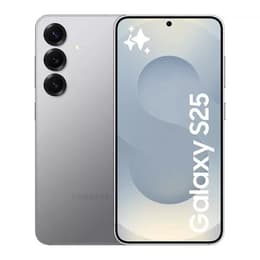
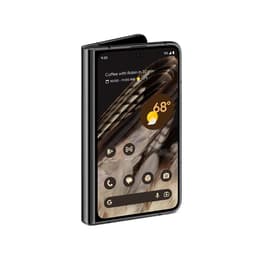


Galaxy S25 Vs Google Pixel Fold

Galaxy S25
Galaxy S25
Starting at

Refurbished price:489.00

Versus €799.00 new

See options
Google Pixel Fold
Google Pixel Fold
Starting at

Refurbished price:454.00

Versus €1,750.29 new

See options

Ratings

The Samsung Galaxy S25, released in February 2025, represents a traditional flagship smartphone experience, while the Google Pixel Fold, launched in June 2023, offers a distinct foldable design. These devices cater to different user preferences, with the Galaxy S25 focusing on a conventional, high-performance slab form factor and the Pixel Fold providing an expansive, tablet-like display in a compact, foldable body. Both operate on the Android platform, offering access to a wide ecosystem of applications and services.

Scores

Durability

The practical lifespan of a smartphone is influenced by its release timeline, software support, and physical resilience. The Galaxy S25, being a newer device, benefits from a longer expected support window.

  • Software Longevity: The Samsung Galaxy S25 launched with Android 15 and is anticipated to receive up to seven years of major OS updates and security patches, extending its software relevance through 2032. In contrast, the Google Pixel Fold, released with Android 13, is expected to receive at least five years of security updates, offering a slightly shorter, though still substantial, support period.
  • Physical Durability: The Galaxy S25 features a robust construction with Gorilla Glass Victus 2 on both the front and back, encased in an aluminum frame, and boasts an IP68 rating for dust and water resistance. The Pixel Fold, while offering an IPX8 water resistance rating, does not have a dust resistance rating, and its inner foldable screen, protected by a plastic layer, is more susceptible to scratches. Early user experiences with the Pixel Fold also indicated some concerns regarding its hinge and overall structural integrity under stress.
  • Repairability Considerations: While specific repairability scores can vary, traditional slab phones like the Galaxy S25 generally present a more straightforward repair process compared to the intricate design of foldable devices, which often involve specialized components and assembly.

Year of Release

2025

2023

Compatible with latest Update

Yes

Yes

OS

Android

Android

Foldable

No

Yes

Performance

Performance in daily use is a key differentiator, with the internal components dictating how smoothly applications run and how efficiently tasks are handled. The newer Galaxy S25 incorporates more recent processing technology.

  • Processing Power: The Galaxy S25 is equipped with a current-generation processor, offering enhanced CPU, GPU, and neural processing unit performance compared to its predecessor. This translates to smoother operation for demanding applications, faster multitasking, and more efficient AI-driven features. The Pixel Fold utilizes the Google Tensor G2, which provides capable performance for everyday tasks and general use, but may show limitations with intensive gaming or very heavy multitasking compared to newer flagship chipsets.
  • System Responsiveness: With 12GB of RAM across all models, the Galaxy S25 handles multiple applications and transitions between them with fluidity. The Pixel Fold also features 12GB of RAM, contributing to a responsive user experience for most common activities, though some users have noted that the Tensor G2 can lead to the device warming up during prolonged demanding use.
  • Storage Options: Both devices offer various internal storage configurations, allowing users to choose based on their needs for apps, media, and files. The Galaxy S25 starts with 128GB of storage, while the Pixel Fold offers 256GB or 512GB options.

Memory (GB)

12 GB

12 GB

Screen quality

The display experience varies significantly between these two devices, primarily due to their fundamental form factors.

  • Display Technology and Clarity: The Galaxy S25 features a Dynamic LTPO AMOLED 2X display, known for its vibrant colors, deep blacks, and excellent contrast. The base S25 offers a 6.2-inch screen with a resolution of 2340x1080 pixels. The Pixel Fold, on the other hand, provides a dual-screen setup: a 5.8-inch OLED outer display and a 7.6-inch foldable OLED inner display when unfolded. Both Pixel Fold screens offer good clarity, though the inner screen has a slightly lower pixel density.
  • Brightness and Refresh Rate: The Galaxy S25 boasts a high peak brightness of 2600 nits, ensuring excellent visibility even in bright outdoor conditions. Both the Galaxy S25 and the Pixel Fold's displays feature a 120Hz refresh rate, contributing to smooth scrolling and a fluid visual experience. The Pixel Fold's inner screen, however, has been noted by some users to be less bright in direct sunlight compared to other flagship displays.
  • Viewing Experience: The Galaxy S25 offers a traditional smartphone viewing experience, ideal for one-handed use and standard media consumption. The Pixel Fold's larger, unfolded inner display provides an expansive canvas for multitasking, reading, and immersive media viewing, akin to a small tablet. However, the inner screen of the Pixel Fold has a visible crease, a characteristic common to foldable devices.

Resolution

1080x2340

1840 x 2208

Audiovisual

Both devices offer capable camera systems, though they approach photography with different strengths and features.

  • Camera System Configuration: The Galaxy S25 features a versatile triple-camera setup on the rear, including a 50 MP wide-angle lens with optical image stabilization (OIS), a 10 MP telephoto lens with 3x optical zoom and OIS, and a 12 MP ultrawide lens. The Pixel Fold also has a triple-lens rear camera system, comprising a 48 MP wide-angle lens with OIS, a 10.8 MP ultrawide lens, and a 10.8 MP telephoto lens with 5x optical zoom.
  • Photography Performance: The Galaxy S25 benefits from advanced image processing and AI-powered editing tools, contributing to high-quality photos across various conditions. The Pixel Fold is highly regarded for its computational photography, leveraging Google's software algorithms to produce consistently good images, particularly in areas like portrait mode and astrophotography. Its 5x optical zoom offers greater reach compared to the S25's 3x optical zoom.
  • Video and Audio: The Galaxy S25 supports video recording up to 8K resolution at 30 frames per second, while the Pixel Fold can record up to 4K at 60 frames per second. Both devices offer good microphone quality for calls and recording, and stereo speakers for media consumption.

Miscellaneous

Beyond core features, several practical elements contribute to the overall user experience and differentiate these two smartphones.

  • Connectivity and Ports: The Galaxy S25 supports the latest Wi-Fi 7 standard and Bluetooth 5.4, offering faster and more reliable wireless connections. The Pixel Fold supports Wi-Fi 6E and Bluetooth, providing robust connectivity. Both devices utilize a USB-C port for charging and data transfer.
  • Biometric Security: The Galaxy S25 incorporates an ultrasonic in-screen fingerprint sensor for secure and convenient unlocking. The Pixel Fold features a side-mounted fingerprint sensor integrated into the power button. Both methods offer reliable biometric authentication.
  • Physical Design and Handling: The Galaxy S25, with its traditional slab design, is generally lighter and thinner, making it comfortable for one-handed use. The base S25 weighs 162 grams. The Pixel Fold, while designed to be compact when folded, is thicker and heavier at 283 grams, offering a different in-hand feel. Its wider aspect ratio on the outer screen can make one-handed typing more comfortable than some other foldables.

Weight

162 g

283 g

Screen size (in)

6.2

7.6

Network

5G

5G

SIM card

Physical SIM + eSIM

Physical SIM + eSIM

Carrier compatibility

Unlocked

Unlocked

Connector

USB-C

USB-C

The Samsung Galaxy S25 and Google Pixel Fold offer distinct smartphone experiences, each with its own set of advantages. The Galaxy S25 is a strong contender for users who prefer a conventional, high-performance device with a focus on cutting-edge processing power, extended software support, and a robust, traditional build. Its advanced display technology and versatile camera system make it suitable for those who prioritize a premium, straightforward smartphone experience.

The Google Pixel Fold, on the other hand, appeals to users seeking the versatility of a large, foldable display for enhanced multitasking and immersive media consumption. Its unique form factor allows for a tablet-like experience in a pocketable design, and its computational photography capabilities deliver impressive image quality. However, users considering the Pixel Fold should be mindful of its earlier release date, which impacts its processor generation and expected software support timeline, as well as the inherent durability considerations of a foldable device.

Users prioritizing the absolute latest in processing power and the longest software support window may find the Galaxy S25 more aligned with their needs. Those who value an expansive screen for productivity and entertainment, and appreciate Google's approach to photography, might lean towards the Pixel Fold, understanding the trade-offs in form factor and device age. For those looking for an eco-friendly alternative, both models are available as quality-assured refurbished options, providing a sustainable choice for acquiring these devices.


See all articles

Our recent comparisons






