

Compare models
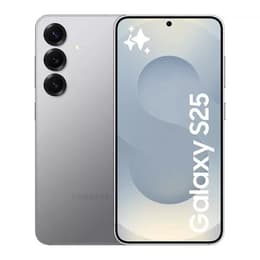
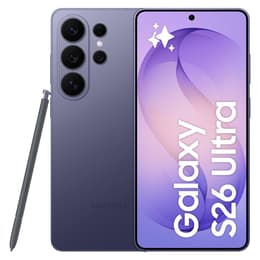
Galaxy S25 Vs Galaxy S26 Ultra
- 1-year minimum warranty
- Free delivery on all orders
- Free 30-day returns
Differences at a glance
The Samsung Galaxy S25 (2025) and the Samsung Galaxy S26 Ultra (2026) represent two different tiers and generations of Samsung's flagship smartphone ecosystem. While the Galaxy S25 focuses on a compact and lightweight form factor, the Galaxy S26 Ultra functions as a large-format powerhouse equipped with expansive workspace capabilities. Both devices run on Android operating systems, though the newer Ultra variant launches with a subsequent software generation.
Available Models
Colour
Storage (GB)
Scores
Durability
When examining hardware durability and software longevity, both smartphones are engineered to receive extensive manufacturer updates over their lifecycle, though their release dates and physical resilience features create distinct usage timelines.
- Software Support Duration: Both devices benefit from long-term operating system upgrade commitments, with the Galaxy S26 Ultra extending its active software lifecycle slightly further into the future due to its later release year.
- Build Resilience: The Galaxy S26 Ultra utilizes advanced reinforced frame materials and specialized glass coatings designed to resist scratching and accidental impacts more effectively than standard glass finishes.
- Reparability and Lifespan: Both models feature sealed internal layouts that require specialized technician tools for component replacements, though professional repair networks can readily service batteries and displays to sustain their multi-year utility.
Year of Release
2025
2026
OS
Android
Android
Foldable
No
No
Performance
Underneath the exterior, both devices manage demanding tasks and daily multi-app workflows smoothly, though they differ significantly in memory headroom and sustained thermal capabilities.
- Multitasking and System Speed: Both models switch between intensive applications, browser tabs, and background services without stuttering, while the Galaxy S26 Ultra provides higher maximum memory configurations for heavy professional workflows.
- Battery Endurance: The Galaxy S25 relies on a smaller internal cell designed for moderate daily routines, whereas the Galaxy S26 Ultra features a higher-capacity battery capable of sustaining extended media playback and heavy work sessions through a full day.
- Storage Variations: Storage options begin at baseline tiers suitable for general photos and apps, scaling up to high-capacity configurations on the Ultra model for large video files and local document storage.
Screen quality
Display engineering represents a primary differentiator between the compact everyday layout of the base model and the expansive immersive canvas of the larger flagship.
- Display Technology and Size: The Galaxy S25 features a manageable 6.2-inch panel optimized for one-handed navigation, while the Galaxy S26 Ultra offers a sprawling 6.9-inch screen that provides significantly more room for viewing documents and media.
- Clarity and Refresh Rate: Both panels support high refresh rates for smooth scrolling and responsive touch interaction, while the Ultra model delivers a higher pixel resolution for sharper fine text rendering.
- Outdoor Visibility: Advanced panel brightness capabilities on both devices ensure content remains legible under direct sunlight, with specialized anti-reflective treatments on the Ultra variant minimizing glare in bright environments.
Resolution
1080x2340
1440 x 3120
Audiovisual
Photography and media capture hardware cater to different levels of creative intent, ranging from straightforward point-and-shoot versatility to advanced multi-lens optical zooming.
- Lens Versatility: The Galaxy S25 includes a reliable multi-sensor array for everyday snapshots and wide-angle views, while the Galaxy S26 Ultra integrates a quad-camera system featuring dedicated dual telephoto lenses for high-magnification distant subjects.
- Low-Light and Video Performance: Both devices capture clear images in dim settings using automated processing, but the larger sensor assembly on the Ultra model gathers more light detail for complex nighttime scenes and steady 8K video recording.
- Media Consumption: Stereo speaker configurations on both smartphones deliver clear audio output for calls and casual video watching, though the larger acoustic chamber on the Ultra produces a slightly fuller sound profile.
Miscellaneous
Practical daily usability elements, physical dimensions, and connectivity standards shape how each smartphone integrates into everyday travel and work.
- Handling and Portability: Weighing noticeably less and featuring a narrow profile, the Galaxy S25 slips easily into pockets and small bags, whereas the wider, heavier Galaxy S26 Ultra prioritizes maximum screen workspace over pocket-friendliness.
- Input Accessories: The Galaxy S26 Ultra includes an integrated stylus silo for handwritten notes and precise screen navigation, a feature omitted on the compact base model.
- Connectivity and Ports: Both models support current wireless communication standards, 5G cellular networks, and reliable USB-C interfacing for charging and data transfer.
Weight
162 g
214 g
Screen size (in)
6.2
6.9
Network
5G
5G
SIM card
Dual Physical SIM
Physical SIM + eSIM
Carrier compatibility
Unlocked
Unlocked
What the community thinks
User discussions and community feedback indicate that consumer preference between these two smartphones largely centers on physical size and functional priorities. Owners of the Galaxy S25 frequently praise its lightweight handling and pocket-friendly dimensions, noting that it fits comfortably into active, minimalist daily routines. At the same time, some users observe that its smaller battery requires more frequent attention during heavy usage days. Conversely, users drawn to the Galaxy S26 Ultra highlight its expansive workspace, versatile zoom lenses, and integrated stylus utility as major advantages for productivity, though others point out that its larger physical footprint can feel heavy during prolonged one-handed operation.
Users prioritizing pocketability, lightweight handling, and a compact design will find the Galaxy S25 well-suited to their daily habits. Meanwhile, users prioritizing maximum screen workspace, advanced long-range photography, and productivity tools will lean toward the Galaxy S26 Ultra. For those exploring sustainable purchasing paths, a quality-assured refurbished option provides an eco-friendly alternative that delivers flagship capabilities while reducing electronic waste. Ultimately, evaluating these devices depends on matching physical dimensions and feature sets to individual daily requirements.