

Compare models
Galaxy S25 Ultra Vs Google Pixel 10
- 1-year minimum warranty
- Free delivery on all orders
- Free 30-day returns
Differences at a glance
The Samsung Galaxy S25 Ultra (2025) and the Google Pixel 10 (2025) are flagship smartphones representing distinct philosophies in mobile engineering, large-screen productivity, and everyday usability. While both run on the Android operating system, they cater to different user priorities through unique hardware builds, software integrations, and camera layouts. Choosing between them depends on whether a user leans toward a expansive workspace with specialized input tools or a streamlined, highly integrated daily companion.
Available Models
Colour
Storage
Scores
Durability
Both devices offer robust long-term longevity, though they approach software maintenance and physical durability through different construction choices.
- Software support cycles: Both manufacturers provide extensive operating system update commitments, ensuring years of security patches and feature upgrades.
- Build and repairability: The Galaxy S25 Ultra employs a titanium frame and reinforced glass panels designed for structural resilience, whereas the Google Pixel 10 utilizes a streamlined aluminum framework that scores similarly in standard component repair assessments.
- Expected lifespan: High-capacity internal power cells and current-generation processing hardware allow both models to maintain reliable daily operation over multiple years of intensive use.
Year of Release
2025
2025
Performance
Handling demanding applications and multitasking routines efficiently, both smartphones deliver responsive daily operation tailored to modern user workflows.
- Processing speed and multitasking: Both devices manage heavy app switching, split-screen viewing, and demanding background tasks smoothly, backed by generous random access memory configurations.
- Battery behavior: Energy management systems optimize power draw during typical usage, allowing both models to transition through standard work days without requiring midday recharges.
- Storage capacity: Internal storage tiers accommodate large media libraries and offline application data, though neither device includes expandable card slots.
Screen quality
Visual output differs noticeably in scale, peak brightness handling, and physical dimensions, impacting media consumption and outdoor readability.
- Display technology: Both models utilize vibrant OLED panels with deep black levels, high contrast ratios, and adaptive refresh rates reaching up to 120 hertz for smooth scrolling.
- Brightness and outdoor clarity: High peak luminance capabilities ensure content remains legible under direct sunlight conditions.
- Form factor and viewing space: The Galaxy S25 Ultra features a larger, flatter 6.9-inch canvas suited for productivity tasks, while the Google Pixel 10 offers a more compact 6.3-inch display that improves one-handed reachability.
Audiovisual
Photographic hardware arrays offer versatile capabilities for everyday snapshots, low-light conditions, and video recording.
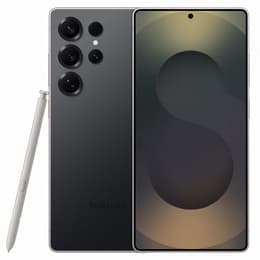
- Lens configurations: The Galaxy S25 Ultra incorporates a versatile quad-camera array featuring multiple telephoto focal lengths for distant subjects, while the Google Pixel 10 features a reliable triple-lens system with wide, ultra-wide, and dedicated zoom capabilities.
- Computational photography: Advanced image processing software handles challenging lighting conditions, exposure balancing, and detail retention automatically across both platforms.
- Media and audio output: Integrated stereo speakers deliver clear audio for media playback, and multi-microphone arrays capture clean audio during video recording and voice calls.
Miscellaneous
Physical handling characteristics and connectivity standards define how these devices integrate into daily routines.
- Connectivity and ports: Both smartphones support fifth-generation cellular networks, modern wireless communication standards, and USB-C physical interfacing.
- Biometric security: Fast authentication is handled via secure facial recognition and reliable under-display fingerprint sensors.
- Dimensions and handling: The Galaxy S25 Ultra carries a heavier, boxier footprint that includes an integrated stylus for note-taking, whereas the lighter Google Pixel 10 prioritizes pocket-friendly ergonomics.
Screen size (in)
6.9
6.3
Network
5G
4G
SIM card
Dual Physical SIM
Physical SIM + eSIM
Carrier compatibility
Unlocked
Unlocked
Connector
USB-C
USB-C
What the community thinks
User discussions across public forums frequently highlight the Samsung Galaxy S25 Ultra for its expansive workspace, integrated stylus utility, and versatile multi-lens camera setup. Common feedback points to its larger physical footprint and heavier weight as considerations for pocketability. Conversely, users frequently praise the Google Pixel 10 for its clean software interface, streamlined ergonomics, and dependable everyday camera processing, though some note that its zoom capabilities are less extensive than larger ultra models.
Users prioritizing productivity, split-screen multitasking, and precise handwritten note inputs will find the Galaxy S25 Ultra well-suited to their needs. Meanwhile, users prioritizing a lighter, more compact form factor alongside streamlined software navigation may lean toward the Google Pixel 10. Exploring a quality-assured refurbished option provides an eco-friendly alternative for acquiring either device while supporting sustainable consumer choices.