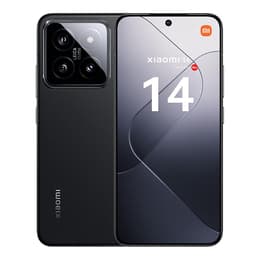


Galaxy S24+ Vs Xiaomi 14

Galaxy S24+
Galaxy S24+
Starting at

Refurbished price:395.00

Versus €1,155.59 new

See options
Xiaomi 14
Xiaomi 14
Starting at

Refurbished price:348.00

Versus €1,099.00 new

See options

Ratings

The Samsung Galaxy S24 Plus and the Xiaomi 14 are contemporary flagship smartphones, both released in late 2023 or early 2024, offering advanced features within the Android ecosystem. While the Galaxy S24 Plus emphasizes a larger display and extended software support, the Xiaomi 14 distinguishes itself with a more compact design and a camera system co-engineered with Leica.

Scores

Durability

Evaluating the long-term usability of a smartphone involves considering its software support, physical resilience, and ease of repair.

  • Software Longevity: The Samsung Galaxy S24 Plus offers an extended commitment of seven years of software and security updates, providing a longer period of current features and protection. The Xiaomi 14, released slightly earlier, typically receives four years of operating system updates and five years of security updates.
  • Physical Durability: Both devices feature robust construction. The Galaxy S24 Plus utilizes an Armor Aluminum frame and Gorilla Glass Victus 2 on both the front and back for impact and scratch resistance. The Xiaomi 14 also incorporates an aluminum alloy body and Gorilla Glass Victus 2 for its display, alongside an IP68 rating for dust and water resistance.
  • Repairability: The Galaxy S24 Plus has demonstrated a high repairability score, with components like the battery being relatively easy to replace, though screen replacement can be challenging. Information on the Xiaomi 14's specific repairability score is less widely available, but its construction suggests a similar level of complexity for internal repairs.

Year of Release

2024

2023

Compatible with latest Update

Yes

Yes

OS

Android

Android

Foldable

No

No

Performance

Both devices are equipped with current-generation processors designed to handle demanding applications and multitasking efficiently, though they differ in available configurations and battery capacities.

  • Processing Power: Both smartphones deliver smooth performance for everyday tasks, gaming, and demanding applications. They are designed to manage multiple apps simultaneously without significant slowdowns, ensuring a responsive user experience.
  • Memory and Storage: The Galaxy S24 Plus comes with 12GB of RAM and offers internal storage options of 256GB or 512GB. The Xiaomi 14 provides more varied configurations, including 8GB, 12GB, or 16GB of RAM, and storage options of 256GB, 512GB, or 1TB. Both utilize fast UFS 4.0 storage technology.
  • Battery Performance: The Galaxy S24 Plus houses a 4900 mAh battery, generally providing long battery life for typical usage. The Xiaomi 14 features a 4610 mAh battery, also noted for good battery life and fast charging capabilities.

Memory (GB)

12 GB

16 GB

Screen quality

The visual experience on both devices is characterized by high-quality displays, though they present differences in size, resolution, and peak brightness.

  • Display Technology and Size: The Samsung Galaxy S24 Plus features a larger 6.7-inch Dynamic AMOLED 2X display, offering vibrant colors and deep blacks. The Xiaomi 14 has a more compact 6.36-inch LTPO AMOLED display, which also provides excellent color reproduction.
  • Resolution and Clarity: The Galaxy S24 Plus boasts a higher resolution of 3120x1440 pixels, resulting in a pixel density of 513 PPI, which contributes to exceptionally sharp images and text. The Xiaomi 14 offers a resolution of 2670x1200 pixels with a pixel density of 460 PPI, delivering clear and crisp visuals.
  • Brightness and Refresh Rate: Both phones feature adaptive refresh rates up to 120Hz for smooth scrolling and responsiveness. The Xiaomi 14 achieves a higher peak brightness of 3000 nits, while the Galaxy S24 Plus reaches 2600 nits, both ensuring good visibility in various lighting conditions, including direct sunlight.

Resolution

1440 x 3120

1200 x 2670

Screen type

Dynamic LTPO AMOLED 2X

LTPO OLED

Audiovisual

Both smartphones offer advanced camera systems, but they approach mobile photography with distinct philosophies and hardware configurations.

  • Rear Camera Systems: The Samsung Galaxy S24 Plus is equipped with a versatile triple camera setup, including a 50MP main sensor with optical image stabilization (OIS), a 12MP ultrawide camera, and a 10MP telephoto lens with 3x optical zoom. The Xiaomi 14 features a triple 50MP rear camera system, co-engineered with Leica, comprising a 50MP main sensor with OIS, a 50MP ultrawide lens, and a 50MP telephoto lens with 3.2x optical zoom.
  • Photography Performance: The Galaxy S24 Plus delivers detailed and rich photos, particularly in good lighting, with consistent color science across its lenses. The Xiaomi 14, with its Leica collaboration, is noted for producing very detailed images with good exposure and colors, and consistent color science across its three imaging units.
  • Video and Audio: Both devices are capable of high-quality video recording, with the Galaxy S24 Plus supporting up to 8K at 30 frames per second and the Xiaomi 14 supporting up to 8K at 24 frames per second. Both phones feature stereo speakers, with the Galaxy S24 Plus sometimes described as having a slightly brighter sound profile, while some users have noted its speakers can sound a little hollow. The Xiaomi 14 also includes Dolby Atmos and Hi-Res Audio certifications.

Main camera

50 megapixels

50 megapixels

Front camera

12 megapixels

32 megapixels

Miscellaneous

Beyond core performance, several practical features contribute to the overall user experience and daily convenience of these devices.

  • Connectivity: The Galaxy S24 Plus supports 5G, Wi-Fi 6E, and Bluetooth 5.3. The Xiaomi 14 offers 5G, Wi-Fi 7, and Bluetooth 5.4, providing slightly newer wireless standards. Both devices include NFC for contactless payments.
  • Ports and Biometrics: Both smartphones utilize a USB-C port for charging and data transfer, with the Galaxy S24 Plus featuring USB 3.2. Neither device includes a traditional headphone jack. For security, both offer under-display fingerprint sensors.
  • Design and Handling: The Galaxy S24 Plus measures 158.5 x 75.9 x 7.7 mm and weighs 196g, offering a larger form factor. The Xiaomi 14 is more compact at 152.8 x 71.5 x 8.2 mm and weighs 193g, which may appeal to users preferring a smaller device. Both devices feature an IP68 rating for dust and water resistance.

Weight

197 g

188 g

Screen size (in)

6.7

6.36

Network

5G

5G

SIM card

Dual Physical SIM + eSIM

Dual Physical SIM

Carrier compatibility

Unlocked

Unlocked

The Samsung Galaxy S24 Plus and the Xiaomi 14 both stand as strong contenders in the flagship smartphone market, each with distinct advantages catering to different user preferences.

Users frequently praise the Galaxy S24 Plus for its stunning display, robust performance, and impressive battery life. Its commitment to seven years of software updates is a significant draw for those prioritizing long-term device support. However, some users have noted that the speaker audio can sometimes lack depth.

The Xiaomi 14 garners appreciation for its compact size, powerful performance, and its Leica-tuned camera system, which delivers high-quality images. Criticisms sometimes point to the camera's presets limiting advanced customization for some photographers, and the selfie camera's performance. Additionally, Xiaomi's HyperOS interface, while feature-rich, can be perceived as overwhelming by some users.

For individuals who prioritize a larger, high-resolution display, extended software longevity, and a generally well-rounded flagship experience, the Samsung Galaxy S24 Plus presents a compelling option. Conversely, users seeking a more compact device with a strong emphasis on photography, particularly with the unique characteristics of Leica's imaging science, may find the Xiaomi 14 more aligned with their needs. Both devices represent excellent choices, and considering a quality-assured refurbished option can be a sustainable way to acquire either of these advanced smartphones.