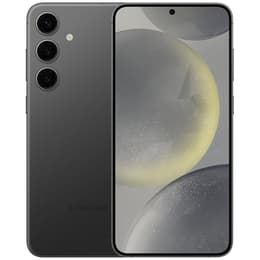
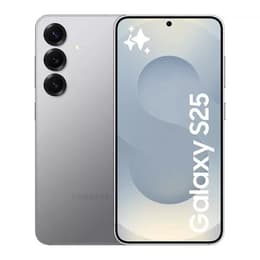


Galaxy S24+ Vs Galaxy S25

Galaxy S24+
Galaxy S24+
Starting at

Refurbished price:399.00

Versus €1,167.06 new

See options
Galaxy S25
Galaxy S25
Starting at

Refurbished price:489.60

Versus €910.00 new

See options

Ratings

The Samsung Galaxy S24 Plus, released in early 2024, and the Samsung Galaxy S25, launched in early 2025, represent two consecutive generations within Samsung's flagship smartphone lineup. While both devices offer a premium Android experience with Samsung's One UI, the Galaxy S25 introduces a more compact form factor and updated internal components, contrasting with the S24 Plus's larger display and battery capacity.

Scores

Durability

When considering the long-term usability of these devices, both the Galaxy S24 Plus and Galaxy S25 offer robust software support and durable construction, designed for extended practical lifespans.

  • Release Timeline: The Galaxy S24 Plus was released in January 2024, while the Galaxy S25 followed in February 2025. This generational difference means the S25 benefits from an additional year of potential software updates and security patches, extending its period of up-to-date software.
  • OS Support: Both models are part of Samsung's commitment to providing seven years of operating system and security updates. The Galaxy S24 Plus, launching with Android 14, is expected to receive updates until approximately Android 21. The Galaxy S25, released with Android 15, will receive support up to Android 22, extending its software longevity further into 2032.
  • Repairability: Both devices demonstrate a high degree of repairability. The Galaxy S24 Plus has received repairability scores ranging from 8.0 to 9.0 out of 10, with features like easily removable back panels and pull tabs for battery replacement. The Galaxy S25 series also scores highly, with the standard S25 model achieving an 8.5 out of 10, indicating a continued focus on ease of service for common components.

Year of Release

2024

2025

OS

Android

Android

Foldable

No

No

Performance

Both the Galaxy S24 Plus and Galaxy S25 deliver strong performance for daily tasks and demanding applications, though the newer model incorporates advancements for enhanced efficiency and speed.

  • Processing Capabilities: The Galaxy S24 Plus is equipped with a powerful processor that capably handles multitasking, graphics-intensive games, and demanding applications. The Galaxy S25 features a next-generation processor, offering a notable improvement in raw processing power and energy efficiency, which translates to smoother operation and quicker response times across the system.
  • Multitasking and Responsiveness: Both devices typically come with 12GB of RAM, ensuring efficient management of multiple applications running simultaneously. The newer processor in the Galaxy S25 contributes to a more responsive user experience, particularly when switching between heavy applications or during intensive computational tasks.
  • Battery Behavior: The Galaxy S24 Plus houses a 4900 mAh battery, generally providing a full day of use for most users. The Galaxy S25, with its 4000 mAh battery, is designed for efficiency, and user reports suggest it can offer around 11 hours of usage for moderate users, though heavy use may require more frequent charging. Both support 45W wired and 15W wireless charging.

Memory (GB)

12 GB

12 GB

Screen quality

Both the Galaxy S24 Plus and Galaxy S25 offer vibrant and clear displays, though they differ in size and resolution, catering to different user preferences for viewing experience.

  • Display Technology and Size: The Galaxy S24 Plus features a larger 6.7-inch Dynamic AMOLED 2X display, providing an expansive viewing area. The Galaxy S25 opts for a more compact 6.2-inch Dynamic LTPO AMOLED 2X display, making it easier for one-handed use and pocketability. Both technologies deliver deep blacks and vivid colors.
  • Resolution and Clarity: The S24 Plus boasts a QHD+ resolution (3120x1440 pixels), resulting in exceptionally sharp and detailed visuals. The Galaxy S25 features an FHD+ resolution (2340x1080 pixels), which still provides clear and crisp images for everyday viewing, though with a slightly lower pixel density compared to its larger counterpart.
  • Brightness and Smoothness: Both devices offer a high peak brightness of 2600 nits, ensuring content remains easily viewable even in bright outdoor conditions. They also feature a 120Hz adaptive refresh rate, contributing to smooth scrolling and fluid animations.

Resolution

1440 x 3120

1080x2340

Screen type

Dynamic LTPO AMOLED 2X

Dynamic LTPO AMOLED 2X

Audiovisual

The camera systems on both the Galaxy S24 Plus and Galaxy S25 are designed to capture high-quality images and videos, with similar core configurations and capabilities.

  • Rear Camera System: Both phones feature a versatile triple-camera setup on the rear. This typically includes a 50 MP wide-angle main camera, a 12 MP ultrawide camera for broader scenes, and a 10 MP telephoto lens capable of 3x optical zoom for detailed distant shots.
  • Photography Performance: Both devices excel in everyday photography, producing vibrant and detailed photos. User feedback for the Galaxy S25 indicates improvements in night photography and focus capabilities, though some users note that overall image vividness might be perceived differently compared to other flagship brands.
  • Video and Front Camera: Both the S24 Plus and S25 are capable of recording video at up to 8K resolution. For selfies and video calls, both models are equipped with a 12 MP front-facing camera.

Miscellaneous

Beyond core performance, several practical elements differentiate the user experience and functionality of the Galaxy S24 Plus and Galaxy S25.

  • Connectivity and Ports: Both devices support 5G networks for fast mobile data. The Galaxy S24 Plus typically features Wi-Fi 6E and Bluetooth 5.3, while the newer Galaxy S25 upgrades to Wi-Fi 7 and Bluetooth 5.4, offering potentially faster and more stable wireless connections. Both utilize a USB-C port for charging and data transfer.
  • Physical Design and Handling: The Galaxy S24 Plus measures 158.5 x 75.9 x 7.7 mm and weighs around 195-197g, offering a substantial feel. The Galaxy S25 is notably more compact and lighter, with dimensions of 146.9 x 70.5 x 7.2 mm and a weight of 162g, making it more comfortable for one-handed use and easier to carry.
  • Build Materials and Durability: Both phones feature an Armor Aluminum frame and Corning Gorilla Glass Victus 2 on the front and back, providing robust protection against drops and scratches. They also carry an IP68 rating, signifying resistance to dust and water immersion.

Weight

197 g

162 g

Screen size (in)

6.7

6.2

Network

5G

5G

SIM card

Dual Physical SIM + eSIM

Physical SIM + eSIM

Carrier compatibility

Unlocked

Unlocked

The Samsung Galaxy S24 Plus and Galaxy S25 both offer compelling smartphone experiences, each with distinct advantages that cater to different user priorities. User sentiment for the Galaxy S24 Plus often praises its large, high-resolution display and robust battery life, making it a strong choice for media consumption and extended use. Criticisms, when present, sometimes relate to its size for users preferring a more compact device.

For the Galaxy S25, common praise points include its more manageable size and lighter weight, making it comfortable for daily handling. Users also appreciate its enhanced processing power and the latest connectivity standards. Some feedback notes that the standard S25's battery life, while efficient, may not match the larger capacity of its Plus predecessor for very heavy users, and its display resolution is lower than the S24 Plus. The camera is generally considered dependable, with improvements in specific areas like night photography.

Users prioritizing an expansive, high-resolution display and maximum battery capacity may find the Galaxy S24 Plus well-suited to their needs. Conversely, those who value a more compact, lighter device with the very latest processor and connectivity features, and are content with a slightly smaller battery and a Full HD+ display, will likely lean towards the Galaxy S25. Both devices benefit from Samsung's extended software support, ensuring longevity. For those considering a more sustainable choice, both models are available as quality-assured refurbished options, offering an eco-friendly alternative to purchasing new.


See all articles

Our recent comparisons