

Galaxy S25 Vs iPhone 14 Pro Max

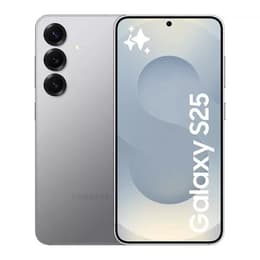
Galaxy S25
Galaxy S25
Starting at

Refurbished price:489.60

Versus €910.00 new

See options
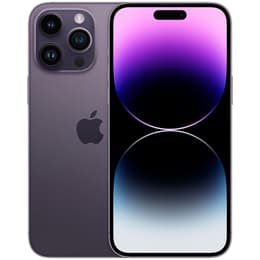
iPhone 14 Pro Max
iPhone 14 Pro Max
Starting at

Refurbished price:446.00

Versus €1,489.00 new

See options

Ratings

The Samsung Galaxy S25, released in February 2025, and the Apple iPhone 14 Pro Max, launched in September 2022, represent distinct approaches to high-end smartphone design and functionality. While both devices offer premium experiences, the Galaxy S25 introduces a more recent Android ecosystem with extended software support, whereas the iPhone 14 Pro Max provides a robust iOS platform with unique hardware integrations like the Dynamic Island. These differences cater to varying user preferences in terms of operating system, display interaction, and overall device age.

Scores

Durability

The practical lifespan of a smartphone is significantly influenced by its release timeline and the manufacturer's commitment to software updates.

  • Release Timeline: The Galaxy S25 was released in February 2025, making it a newer device compared to the iPhone 14 Pro Max, which launched in September 2022. This difference in release dates means the Galaxy S25 benefits from a more current hardware foundation.
  • Software Longevity: Samsung has committed to providing seven years of OS upgrades and security updates for the Galaxy S25 series, extending its software support through 2032. The iPhone 14 Pro Max typically receives 5-6 years of major iOS updates from its release, meaning its software support cycle will conclude sooner than the Galaxy S25.
  • Durability Features: Both devices feature robust build materials designed for resilience. The Galaxy S25 utilizes Gorilla Glass Victus 2 for its front and back panels, paired with an aluminum frame, and carries an IP68 rating for dust and water resistance. The iPhone 14 Pro Max features Ceramic Shield on the front, a glass back, and a stainless steel frame, also boasting an IP68 rating for similar protection against elements.

Year of Release

2025

2022

OS

Android

iOS

Foldable

No

No

Performance

Performance in both devices is optimized for smooth operation, though they achieve this through different hardware and software integrations.

  • System Responsiveness: The Galaxy S25 is powered by a current-generation processor, enabling it to handle demanding applications and multitasking with efficiency. The iPhone 14 Pro Max features a high-performance processor that delivers fluid navigation and rapid app loading, ensuring a responsive user experience.
  • Multitasking Capabilities: The Galaxy S25 comes with 12GB of RAM, providing ample capacity for running multiple applications simultaneously and managing complex workflows without slowdowns. The iPhone 14 Pro Max is equipped with 6GB of RAM, which, combined with iOS's efficient memory management, allows for effective multitasking and smooth transitions between apps.
  • Storage Options: Both devices offer a range of internal storage configurations to suit various user needs. The Galaxy S25 is available with 128GB, 256GB, 512GB, and 1TB storage options. The iPhone 14 Pro Max also provides choices of 128GB, 256GB, 512GB, and 1TB, accommodating extensive media libraries and numerous applications.

Memory (GB)

12 GB

6 GB

Screen quality

The visual experience on both smartphones is characterized by high-quality displays, each with distinct advantages.

  • Display Technology and Clarity: The Galaxy S25 features a 6.2-inch Dynamic LTPO AMOLED 2X display, offering vibrant colors and deep blacks with a resolution of 2340 x 1080 pixels, resulting in a pixel density of 416 ppi. The iPhone 14 Pro Max sports a 6.7-inch Super Retina XDR OLED display, known for its exceptional color accuracy and contrast, with a higher resolution of 2796 x 1290 pixels and a pixel density of 460 ppi.
  • Brightness and Refresh Rate: Both devices offer excellent brightness levels for visibility in various lighting conditions. The Galaxy S25 can reach a peak brightness of up to 2600 nits, and its 120 Hz refresh rate ensures smooth scrolling and fluid animations. The iPhone 14 Pro Max achieves a peak outdoor brightness of 2000 nits and features ProMotion technology, providing an adaptive refresh rate that can scale from 1 Hz to 120 Hz for power efficiency and visual fluidity.
  • Screen Features: The iPhone 14 Pro Max introduces the Dynamic Island, an interactive area around the front camera that adapts to alerts and background activities, alongside an Always-On display feature. The Galaxy S25 also includes an Always-On display and an ultrasonic in-screen fingerprint sensor for convenient unlocking. (Note: Larger screen sizes are available in the Galaxy S25+ and S25 Ultra models).

Resolution

1080x2340

1290 x 2796

Screen type

Dynamic LTPO AMOLED 2X

LTPO Super Retina XDR OLED

Audiovisual

Both smartphones offer advanced camera systems designed to capture high-quality photos and videos in diverse environments.

  • Rear Camera Systems: The Galaxy S25 is equipped with a versatile triple-camera setup, including a 50 MP wide-angle main camera with optical image stabilization (OIS), a 12 MP ultra-wide camera with a 120° field of view, and a 10 MP telephoto lens offering 3x optical zoom. The iPhone 14 Pro Max features a Pro camera system comprising a 48 MP main camera with second-generation sensor-shift OIS, a 12 MP ultra-wide camera with a 120° field of view, and a 12 MP telephoto camera with 3x optical zoom.
  • Photography Performance: The Galaxy S25's main camera performs well in daylight, producing natural colors and balanced dynamic range, with decent low-light performance when Night mode is engaged. The iPhone 14 Pro Max excels in various lighting conditions, with its larger main sensor improving image quality in medium and low-light situations, and its Photonic Engine enhancing overall detail and color.
  • Video Capabilities and Audio: The Galaxy S25 can record video up to 8K resolution at 30 frames per second (fps) from its main camera, and 4K at 60fps, with good stabilization. The iPhone 14 Pro Max offers 4K video recording at up to 60fps, along with advanced features like Cinematic mode for shallow depth-of-field effects and Action mode for smooth, stabilized footage. Both devices provide quality microphone performance for calls and video recording, and stereo speakers for media consumption.

Miscellaneous

Beyond core features, several practical elements differentiate the user experience of these two devices.

  • Connectivity and Ports: Both the Galaxy S25 and iPhone 14 Pro Max support 5G connectivity, along with modern Wi-Fi standards and Bluetooth for wireless connections. The Galaxy S25 uses a USB-C port for charging and data transfer. The iPhone 14 Pro Max utilizes Apple's proprietary Lightning port.
  • Biometric Security: For secure unlocking and authentication, the Galaxy S25 incorporates an ultrasonic in-screen fingerprint sensor. The iPhone 14 Pro Max relies on Face ID, an advanced facial recognition system.
  • Physical Design and Handling: The Galaxy S25 has dimensions of 146.9 x 70.5 x 7.2 mm and weighs 162.0 g, offering a more compact and lighter form factor. The iPhone 14 Pro Max is a larger and heavier device, measuring 160.7 x 77.6 x 7.85 mm and weighing 240 g, which might appeal to users who prefer a more substantial feel and larger screen.

Weight

162 g

120 g

Screen size (in)

6.2

6.7

Network

5G

5G

SIM card

Physical SIM + eSIM

Physical SIM + eSIM

Carrier compatibility

Unlocked

Unlocked

User sentiment for the iPhone 14 Pro Max often highlights its exceptional battery life, with many users reporting it comfortably lasts a full day or more, even with heavy usage. Its camera system is frequently praised for its consistent quality and advanced video capabilities. Some users, however, note its considerable size and weight as a factor in daily handling. The Dynamic Island is generally well-received for its innovative approach to notifications and multitasking.

For the Galaxy S25, initial user feedback often focuses on its extended software support, providing a longer period of updates compared to many other Android devices. Its display is lauded for its brightness and smooth refresh rate, contributing to a premium viewing experience. The camera system is considered reliable for everyday photography, particularly in good lighting conditions. Criticisms, if any, tend to be minor refinements rather than significant drawbacks, often related to specific camera performance in very challenging low-light scenarios for the base model.

Users prioritizing a device with the longest possible software support and a slightly more compact form factor may find the Galaxy S25 well-suited to their needs. Those who value a larger display, a robust and established ecosystem, and advanced video features might lean towards the iPhone 14 Pro Max. Both devices offer high-quality experiences, and considering a quality-assured refurbished option for either model can be an eco-friendly alternative for consumers.

See all articles

Our recent comparisons