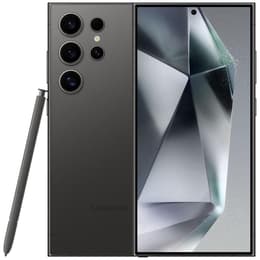
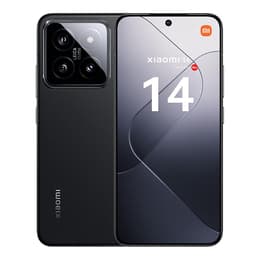


Galaxy S24 Ultra Vs Xiaomi 14

Galaxy S24 Ultra
Galaxy S24 Ultra
Starting at

Refurbished price:544.00

Versus €1,589.00 new

See options
Xiaomi 14
Xiaomi 14
Starting at

Refurbished price:384.00

Versus €1,099.00 new

See options

Ratings

The Samsung Galaxy S24 Ultra, released in January 2024, and the Xiaomi 14, globally launched in February 2024, represent two distinct approaches to flagship Android smartphones. While both devices offer high-end performance and advanced camera systems, they differ significantly in their physical size, display characteristics, and software experiences. The Galaxy S24 Ultra emphasizes a larger form factor with an integrated stylus, while the Xiaomi 14 focuses on a more compact design with rapid charging capabilities.

Scores

Durability

When considering the long-term usability of these devices, their release timelines and software support policies are key factors.

  • Release Timeline: The Samsung Galaxy S24 Ultra was released in January 2024, while the Xiaomi 14 had its global launch in February 2024, making both relatively current devices. This means both will benefit from contemporary hardware and software optimizations.
  • OS Support Duration: Samsung offers an extended software commitment for the Galaxy S24 Ultra, providing seven years of operating system and security updates. In contrast, the Xiaomi 14 is slated to receive four years of OS updates and five years of security updates. Users prioritizing the longest possible software longevity will find the Galaxy S24 Ultra's policy more extensive.
  • Repairability: The Galaxy S24 Ultra generally receives a high repairability rating, with some assessments giving it a 9 out of 10, noting that most components are accessible, and the battery includes pull tabs for easier removal, though the display can be challenging to replace without damage. The Xiaomi 14 also scores well, with an 8 out of 10 repairability rating, featuring pull tabs for the battery and accessible screen components, though accessing some cables requires removing plastic covers.

Year of Release

2024

2023

Compatible with latest Update

Yes

Yes

OS

Android

Android

Foldable

No

No

Performance

Both the Galaxy S24 Ultra and Xiaomi 14 are equipped with current-generation processors, ensuring robust performance across various tasks.

  • Processing Power: Both devices handle demanding applications, intensive multitasking, and graphic-heavy gaming smoothly, offering a responsive user experience. The underlying hardware in both phones is designed for efficiency and sustained performance, even under heavy workloads.
  • Storage and RAM: The Galaxy S24 Ultra typically comes with 12GB of RAM and storage options up to 1TB. The Xiaomi 14 offers configurations with 8GB, 12GB, or 16GB of RAM and storage up to 1TB. For users who frequently run many applications simultaneously or engage in intensive tasks, higher RAM configurations can contribute to smoother transitions and app retention.
  • Battery Behavior: The Galaxy S24 Ultra features a 5000mAh battery, providing excellent endurance, with some tests showing nearly 17 hours of web surfing and up to two days of mixed usage. The Xiaomi 14, with its 4610mAh battery, also offers strong battery life, often lasting 1.5 days or around 43 hours of usage, and up to 8.5 hours of screen-on time. Both devices support rapid charging, with the Xiaomi 14 notably offering 90W wired charging that can fully replenish the battery in about 31 minutes, and 50W wireless charging.

Memory (GB)

12 GB

16 GB

Screen quality

The visual experience on both smartphones is characterized by high-quality displays, though with differences in size and specific attributes.

  • Display Technology and Size: The Samsung Galaxy S24 Ultra features a larger 6.8-inch OLED display, while the Xiaomi 14 has a more compact 6.36-inch LTPO OLED screen. Both displays offer vibrant colors, deep blacks, and excellent contrast, typical of OLED technology.
  • Resolution and Clarity: The Galaxy S24 Ultra provides a QHD+ resolution (3088x1440 pixels), resulting in a very sharp image. The Xiaomi 14 offers a resolution of 1200x2670 pixels (460 PPI), which also delivers clear and detailed visuals. In practical use, both screens offer high clarity, making text and images appear crisp.
  • Brightness and Refresh Rate: Both phones feature adaptive refresh rates up to 120Hz, ensuring smooth scrolling and fluid animations. The Galaxy S24 Ultra has a rated peak brightness of 2600 nits, with tested values around 1363 nits, providing good visibility in bright conditions. The Xiaomi 14 boasts an even higher peak brightness of 3000 nits, which can be beneficial for outdoor use.

Resolution

1440 x 3120

1200 x 2670

Screen type

Dynamic LTPO AMOLED 2X

LTPO OLED

Audiovisual

Both the Galaxy S24 Ultra and Xiaomi 14 offer advanced camera systems, each with distinct strengths and features.

  • Camera System Configuration: The Galaxy S24 Ultra features a versatile quad-camera setup, including a 200MP main sensor, a 12MP ultrawide, a 50MP 5x telephoto, and a 10MP 3x telephoto lens. The Xiaomi 14, co-engineered with Leica, sports a triple 50MP camera system, comprising a 50MP main, a 50MP ultrawide, and a 50MP 3.2x telephoto lens.
  • Photography Performance: The Galaxy S24 Ultra is praised for its clarity, dynamic range, and effective night mode, with its 100x zoom capability being notable, though sometimes grainy at maximum magnification. The Xiaomi 14 is recognized for producing natural-looking images with rich contrast, and its telephoto lens is particularly effective for close-up and macro shots. Both phones offer strong low-light performance, capturing detail and managing noise effectively.
  • Video Recording and Audio: Both devices are capable of high-resolution video recording, with the Galaxy S24 Ultra supporting 8K at 30fps and the Xiaomi 14 supporting 8K at 24fps. User experiences suggest both offer good video stabilization and quality. For audio, both provide robust stereo sound through their built-in speakers, delivering clear output for media consumption.

Main camera

200 megapixels

50 megapixels

Front camera

12 megapixels

32 megapixels

Miscellaneous

Beyond core performance and display, several practical elements differentiate these two flagship smartphones.

  • Connectivity and Ports: Both devices support 5G connectivity, ensuring fast mobile data speeds. The Galaxy S24 Ultra includes Wi-Fi 802.11 a/b/g/n/ac/ax and Bluetooth v5.3. The Xiaomi 14 supports the newer Wi-Fi 7 standard and Bluetooth 5.4. Both utilize a USB Type-C port for charging and data transfer and offer dual-SIM capabilities.
  • Biometric Security and Features: Both phones incorporate under-display optical fingerprint sensors for secure unlocking. The Galaxy S24 Ultra also features an integrated S Pen stylus, offering additional functionality for note-taking, drawing, and navigation.
  • Build Materials and Handling: The Galaxy S24 Ultra features a titanium frame and Gorilla Glass Armor protection, contributing to its durability. It measures 162.3 x 79.0 x 8.6mm and weighs 232g. The Xiaomi 14, with its more compact dimensions of 152.8 x 71.5 x 8.2mm and lighter weight of 193g, is often described as feeling more comfortable and manageable in hand. Both devices carry an IP68 rating for dust and water resistance.

Weight

232 g

188 g

Screen size (in)

6.8

6.36

Network

5G

5G

SIM card

Dual Physical SIM + eSIM

Dual Physical SIM

Carrier compatibility

Unlocked

Unlocked

The Samsung Galaxy S24 Ultra and Xiaomi 14 both stand as strong contenders in the high-end smartphone market, each catering to slightly different user preferences. User sentiment for the Galaxy S24 Ultra frequently highlights its exceptional battery life, versatile camera system, and the utility of the integrated S Pen. Its large, vibrant display and long-term software support are also commonly praised. Some users, however, find its size to be substantial, and there are occasional discussions regarding Samsung's software ecosystem control.

The Xiaomi 14 garners positive feedback for its compact form factor, impressive camera capabilities co-engineered with Leica, and remarkably fast charging speeds. Its performance is consistently described as fast and smooth. Criticisms sometimes point to the HyperOS software experience, with some users finding it occasionally glitchy or overwhelming, though ads can typically be disabled. Some early reports also mentioned camera fogging issues in extreme conditions, though this may have been addressed.

Users prioritizing a large display, an integrated stylus for productivity, and the longest possible software support will find the Samsung Galaxy S24 Ultra well-suited to their needs. Its robust battery life makes it a reliable companion for heavy usage throughout the day. Conversely, individuals seeking a more compact device that still delivers top-tier performance, an acclaimed camera system, and exceptionally fast charging will likely lean towards the Xiaomi 14. Both devices offer a premium experience, and for those considering an eco-friendly alternative, quality-assured refurbished options for both models are available, providing a sustainable choice without compromising on performance.


See all articles

Our recent comparisons