

Galaxy S23 Ultra Vs Galaxy S25+

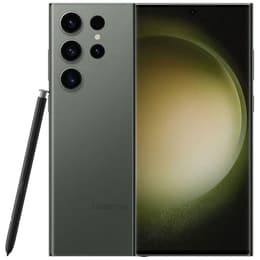
Galaxy S23 Ultra
Galaxy S23 Ultra
Starting at

Refurbished price:430.00

Versus €1,409.00 new

See options
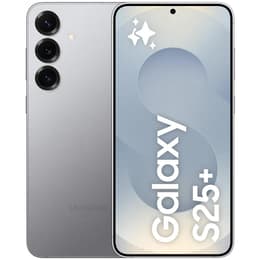
Galaxy S25+
Galaxy S25+
Starting at

Refurbished price:624.00

Versus €1,401.57 new

See options

Ratings

The Samsung Galaxy S23 Ultra, released in February 2023, and the Samsung Galaxy S25 Plus, launched in February 2025, represent different approaches within Samsung's flagship smartphone offerings. While both devices operate on the Android platform, the S25 Plus introduces a more recent processor and an extended software support policy, whereas the S23 Ultra distinguishes itself with a more advanced camera system and the integrated S Pen. These differences cater to varying user priorities, from long-term software longevity to specialized creative and photographic capabilities.

Scores

Durability

When evaluating the long-term usability of these devices, their release timelines and software support commitments are key factors.

  • Software Longevity: The Galaxy S25 Plus, being a 2025 release, benefits from Samsung's commitment to seven years of Android OS and security updates, extending its support until approximately 2032. In contrast, the Galaxy S23 Ultra, released in 2023, is promised four major Android OS updates and five years of security patches, with support expected to continue until 2028. This means the S25 Plus will receive new features and security enhancements for a significantly longer period. [10, 19, 22, 26, 29, 30, 35]
  • Physical Durability: Both smartphones feature robust construction with Gorilla Glass Victus 2 on the front and back, coupled with an Armor Aluminum frame, providing a high level of resistance to drops and scratches. Both also carry an IP68 rating, indicating strong protection against dust and water ingress. [1, 6, 9, 14]
  • Repairability: While specific repairability scores can vary, both models are designed with components that can be serviced. However, the newer S25 Plus may benefit from more readily available parts and updated repair procedures in the coming years compared to the older S23 Ultra.

Year of Release

2023

2025

Compatible with latest Update

Yes

Yes

OS

Android

Android

Foldable

No

No

Performance

Performance capabilities see a generational advancement, with the newer model offering enhanced processing power for demanding tasks.

  • Processing Power: The Galaxy S25 Plus features a newer generation processor, which translates to faster app loading, smoother multitasking, and improved efficiency for graphically intensive applications and advanced on-device AI features. The Galaxy S23 Ultra, powered by its current-generation processor at the time of its release, still handles everyday tasks and most demanding applications with considerable responsiveness. [36]
  • Multitasking and Storage: The S25 Plus typically comes with 12GB of RAM, facilitating seamless transitions between multiple applications. The S23 Ultra offers configurations with either 8GB or 12GB of RAM, with higher RAM options providing comparable multitasking fluidity. Both devices utilize UFS 4.0 storage for faster data access, with the S23 Ultra offering a 1TB storage option not typically found on the S25 Plus. [1, 3, 7, 11, 14, 23]
  • Battery Behavior: The Galaxy S23 Ultra is equipped with a 5000 mAh battery, while the Galaxy S25 Plus features a 4900 mAh battery. Despite the slightly smaller capacity, the S25 Plus often demonstrates improved battery optimization due to its newer, more efficient processor and software enhancements, potentially leading to comparable or even slightly better screen-on time for typical daily use. Users of the S23 Ultra have reported good battery life, though some noted faster drain during intensive tasks. [2, 4, 7, 8, 14, 27, 28, 36]

Memory (GB)

8 GB

12 GB

Screen quality

The display experience on both devices offers high visual fidelity, though with distinct characteristics that cater to different preferences.

  • Display Technology and Clarity: Both smartphones feature Dynamic AMOLED 2X displays, known for their vibrant colors, deep blacks, and excellent contrast. The Galaxy S23 Ultra boasts a 6.8-inch display with a QHD+ resolution (3088 x 1440 pixels), offering a very sharp and immersive viewing experience. The Galaxy S25 Plus features a 6.7-inch display, also with a QHD+ resolution (3120 x 1440 pixels), providing comparable clarity. [1, 4, 6, 7, 10, 11, 14, 23]
  • Brightness and Refresh Rate: Both models offer high peak brightness levels, ensuring good visibility even in bright outdoor conditions. They also feature adaptive refresh rates up to 120Hz, which contributes to smooth scrolling and fluid animations. The S23 Ultra's refresh rate can adapt from 1Hz to 120Hz, while the S25 Plus offers a similar adaptive range. [6]
  • Design and Viewing Experience: A notable difference lies in the screen design; the S23 Ultra features a curved display, which can offer a more expansive feel, while the S25 Plus adopts a flat display. Some users prefer flat screens for their perceived durability and ease of use with screen protectors. [12, 23, 33]

Resolution

1440 x 3088

1440 x 3120 pixels

Audiovisual

The camera systems on these devices offer distinct capabilities, reflecting their different design philosophies.

  • Rear Camera System: The Galaxy S23 Ultra features a versatile quad-camera setup, highlighted by a 200MP wide-angle primary camera, a 12MP ultra-wide camera, and two 10MP telephoto lenses offering 3x and 10x optical zoom, respectively, capable of up to 100x digital zoom. The Galaxy S25 Plus comes with a triple-camera system, including a 50MP wide-angle main sensor, a 12MP ultra-wide, and a 10MP telephoto lens with 3x optical zoom. [1, 6, 7, 8, 10, 11, 12, 23]
  • Photography Performance: The S23 Ultra's 200MP sensor allows for capturing highly detailed images, and its dual telephoto lenses provide exceptional zoom flexibility. Users have noted some initial challenges with shutter lag and motion blur on the S23 Ultra's 200MP lens, which Samsung has addressed through software updates. The S25 Plus offers strong everyday photography with its 50MP main sensor, though it lacks the extreme zoom capabilities of the Ultra model. Some S25 Plus users have reported issues with camera AI auto-enhancement that cannot be turned off. [15, 21, 25, 33]
  • Video Recording and Front Camera: Both devices are capable of recording video at up to 8K resolution at 30 frames per second. For selfies and video calls, both feature a 12MP front-facing camera. The S23 Ultra's camera system, particularly its zoom, is often praised by users who prioritize advanced photographic features. [1, 6, 7, 12, 42]

Front camera

12 megapixels

12MP

Miscellaneous

Beyond core specifications, several practical elements contribute to the overall user experience of these smartphones.

  • Connectivity and Ports: Both the Galaxy S23 Ultra and S25 Plus support 5G connectivity, the latest Wi-Fi standards (Wi-Fi 6/6E), and Bluetooth for robust wireless connections. The S23 Ultra features a USB-C 3.2 port, while the S25 Plus also uses a USB-C port. Neither device includes a traditional 3.5mm headphone jack. [7, 9]
  • Biometrics and Sensors: Both phones incorporate an ultrasonic in-display fingerprint sensor for secure unlocking. The S23 Ultra also features an integrated S Pen, offering precise input for note-taking, drawing, and remote controls, a feature absent on the S25 Plus. [11, 14, 33]
  • Design and Handling: The Galaxy S23 Ultra is a larger and heavier device, measuring 163.4 x 78.1 x 8.9 mm and weighing 233g, which contributes to its substantial feel. The S25 Plus is comparatively more compact and lighter at 158.4 x 75.7 x 7.3 mm and 190g, potentially offering more comfortable one-handed use for some individuals. [7, 14, 33]

Weight

233 g

190 g

Screen size (in)

6.8

6.7

Network

5G

5G

SIM card

Dual Physical SIM + eSIM

Physical SIM + eSIM

Carrier compatibility

Unlocked

Unlocked

Connector

USB-C

USB-C

The Samsung Galaxy S23 Ultra and Galaxy S25 Plus cater to different user needs, reflecting their respective positions in Samsung's lineup and their release timelines. Users frequently praise the S23 Ultra for its exceptional camera system, particularly its versatile zoom capabilities and the integrated S Pen, which enhances productivity and creative tasks. However, some users have noted initial software quirks like camera shutter lag or phantom scrolling, which have largely been addressed through updates. [15, 27, 33]

The Galaxy S25 Plus, as a newer model, is often lauded for its extended software support, promising seven years of updates, which is a significant advantage for users prioritizing long-term device longevity and up-to-date features. Its newer processor also provides a noticeable boost in overall responsiveness and efficiency. Some users have reported minor issues such as display flickering or camera AI that cannot be fully disabled, though overall sentiment often points to a smooth and capable experience. [16, 25, 34, 38]

Users prioritizing a comprehensive and highly versatile camera system, especially with advanced zoom and the unique S Pen functionality, may find the Galaxy S23 Ultra well-suited to their needs. Those who value the latest software, extended update support, a slightly more compact and lighter design, and a newer generation of processing power might lean towards the Galaxy S25 Plus. Both devices offer a premium Android experience, and choosing between them often comes down to whether a user prioritizes specialized features and an integrated stylus or a longer software lifecycle and a more recent hardware platform. For those considering a quality-assured refurbished option, both models are excellent choices for making a sustainable decision.


See all articles

Our recent comparisons