


Galaxy A16 Vs Xiaomi Redmi Note 13 Pro+

Galaxy A16
Galaxy A16
Starting at

Refurbished price:134.00

Versus €250.00 new

See options
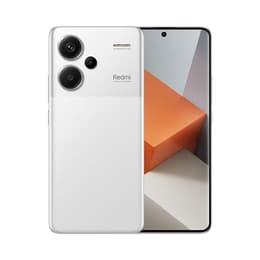
Xiaomi Redmi Note 13 Pro+
Starting at

Refurbished price:198.00

Versus €449.00 new

See options

Ratings

The Samsung Galaxy A16 and the Xiaomi Redmi Note 13 Pro Plus are both contemporary smartphones designed to offer a comprehensive mobile experience. The Galaxy A16, released in late 2024 and early 2025, focuses on extended software support and a balanced feature set. The Redmi Note 13 Pro Plus, launched in late 2023, emphasizes a high-resolution camera, rapid charging, and a premium display. Both devices operate on the Android platform, providing users with access to a wide ecosystem of applications and services.

Scores

Durability

When considering the long-term usability of these devices, their release timelines and software support policies are key factors.

  • Software Longevity: The Samsung Galaxy A16 stands out with a commitment to six years of OS and security updates, extending its support until October 2030. This provides a longer period of up-to-date features and security patches. The Xiaomi Redmi Note 13 Pro Plus, released earlier, typically receives up to four years of security updates, with major OS updates often spanning three years.
  • Physical Durability: The Redmi Note 13 Pro Plus features an IP68 rating for dust and water resistance, along with Corning Gorilla Glass Victus for display protection, suggesting a robust build. The Galaxy A16 has a plastic back and frame with a glass front, and while specific IP ratings are not consistently highlighted across all sources, it is generally designed for everyday use.
  • Repairability: The Redmi Note 13 Pro Plus has a repairability score of 6.5 out of 10, indicating average ease of repair. While components like the battery have pull tabs, the use of adhesive and the need to disassemble multiple parts for screen replacement can complicate repairs. Repairability information for the Galaxy A16 is less detailed in available public sources.

Year of Release

2024

2023

OS

Android

Android

Foldable

No

No

Performance

The performance of a smartphone is crucial for daily tasks, app usage, and multitasking. Both devices offer capable hardware for their respective segments.

  • Processing Power: The Xiaomi Redmi Note 13 Pro Plus is equipped with a MediaTek Dimensity 7200-Ultra processor, which delivers smooth performance for demanding applications and gaming. Users report it feels fast and capable for advanced tasks. The Samsung Galaxy A16, depending on the variant, uses either a MediaTek Helio G99 or a MediaTek Dimensity 6300/Exynos 1330. This hardware provides smooth performance for basic activities and light multitasking, though power users might seek more robust options.
  • Memory and Storage: The Redmi Note 13 Pro Plus offers configurations with up to 12GB of RAM and 512GB of UFS 3.1 internal storage, which contributes to faster app loading and efficient multitasking. The Galaxy A16 comes with up to 8GB of RAM and 256GB of UFS 2.2 storage, and uniquely, it includes a microSDXC card slot for expandable storage, offering flexibility for users who need more space.
  • Battery Endurance: Both phones feature a 5000mAh battery capacity. The Redmi Note 13 Pro Plus typically provides about 1.5 days or 36 hours of use on a single charge, with some users reporting up to two full days with lighter usage. The Galaxy A16 also has a 5000mAh battery, and while specific endurance figures are less detailed, this capacity generally supports a full day of moderate use.

Memory (GB)

4 GB

12 GB

Screen quality

The display is a primary interface for smartphone interaction, and both models offer vibrant viewing experiences with distinct characteristics.

  • Display Technology and Clarity: Both the Samsung Galaxy A16 and the Xiaomi Redmi Note 13 Pro Plus feature AMOLED display technology, known for deep blacks and vibrant colors. The Redmi Note 13 Pro Plus boasts a 6.67-inch AMOLED panel with a 1.5K resolution (2712x1220 pixels), providing excellent clarity and detail. The Galaxy A16 has a slightly larger 6.7-inch Super AMOLED display with a Full HD+ resolution (1080x2340 pixels), offering clear visuals for everyday content.
  • Refresh Rate and Brightness: The Redmi Note 13 Pro Plus features a 120Hz refresh rate, contributing to smoother scrolling and more fluid animations, along with an impressive peak brightness of 1800 nits for excellent outdoor visibility. The Galaxy A16 offers a 90Hz refresh rate, which provides a noticeable improvement in smoothness over standard 60Hz displays, and its Super AMOLED panel delivers good brightness for various lighting conditions.
  • Design and Protection: The Redmi Note 13 Pro Plus features a curved display protected by Corning Gorilla Glass Victus, enhancing its premium feel and durability. The Galaxy A16 has a glass front, and while specific protection details are less prominent, its design is functional and user-friendly.

Resolution

1080x2340

1220 x 2712

Screen type

Super AMOLED

AMOLED

Audiovisual

Camera capabilities are a significant consideration for many users, and these devices offer different approaches to mobile photography.

  • Main Camera System: The Xiaomi Redmi Note 13 Pro Plus features a high-resolution 200MP main camera with Optical Image Stabilization (OIS), which is praised for capturing sharp images with good colors and dynamic range, even in low-light conditions. It also offers up to 4x lossless zoom. The Samsung Galaxy A16 comes with a 50MP rear camera, providing capable performance for everyday photography.
  • Additional Lenses: The Redmi Note 13 Pro Plus includes an 8MP ultra-wide camera and a 2MP macro camera. While the ultra-wide can be decent in good lighting, the 2MP macro lens is often considered a less practical addition by users and reviewers. The Galaxy A16 also features a 2MP macro camera, and some variants include a 5MP ultrawide lens.
  • Front Camera and Video: For selfies, the Redmi Note 13 Pro Plus has a 16MP front camera, while the Galaxy A16 features a 13MP front camera. Both phones are capable of recording video, with the Redmi Note 13 Pro Plus supporting up to 4K at 30fps with OIS and Electronic Image Stabilization (EIS) for smoother footage.

Miscellaneous

Beyond core specifications, several practical elements contribute to the overall user experience of a smartphone.

  • Connectivity and Ports: Both devices support 5G connectivity (for the 5G variant of the A16), ensuring fast mobile data speeds. The Redmi Note 13 Pro Plus includes an IR blaster, allowing it to function as a universal remote, and NFC for mobile payments. It uses a USB-C port but lacks a 3.5mm headphone jack and expandable storage. The Galaxy A16 also features a USB-C port and offers expandable storage via a microSDXC card slot, which is a notable advantage for some users.
  • Biometric Security: Both smartphones incorporate modern biometric security features. The Redmi Note 13 Pro Plus includes an in-screen fingerprint sensor for convenient unlocking and secure transactions. The Galaxy A16 also offers fingerprint recognition, though its placement (side-mounted or in-display) may vary by region or variant.
  • Build Materials and Handling: The Redmi Note 13 Pro Plus features a design with an IP68 rating for dust and water resistance and a curved display, giving it a more premium feel. It weighs around 204g. The Galaxy A16 has a plastic back and frame, which can contribute to a lighter feel and potentially better grip, weighing 200g.

Weight

200 g

204 g

Screen size (in)

6.7

6.67

Network

4G

5G

SIM card

Physical SIM

Dual Physical SIM

Carrier compatibility

Unlocked

Unlocked

The Samsung Galaxy A16 and Xiaomi Redmi Note 13 Pro Plus cater to slightly different user priorities, each offering a compelling package. Users frequently praise the Redmi Note 13 Pro Plus for its vibrant 1.5K AMOLED display, exceptionally fast 120W charging, and its high-resolution 200MP main camera, which performs well even in challenging lighting conditions. However, some users note that its secondary cameras (ultrawide and macro) are less impressive, and the software experience, while improved with HyperOS, can sometimes feel less refined compared to other Android interfaces.

The Galaxy A16 is often lauded for Samsung's commitment to extended software support, promising updates for up to six years, which is a significant advantage for long-term ownership. Its Super AMOLED display and reliable performance for everyday tasks are also well-regarded. While it may not offer the same peak performance or ultra-fast charging as its competitor, its balanced feature set and software longevity make it a practical choice.

Users prioritizing a cutting-edge display, rapid charging, and a high-megapixel main camera for detailed photography may find the Xiaomi Redmi Note 13 Pro Plus well-suited to their needs. Conversely, those who value long-term software support, expandable storage, and a consistent user experience with a focus on reliability might lean towards the Samsung Galaxy A16. Both devices represent solid choices in the smartphone market, and considering a quality-assured refurbished option for either model can be an eco-friendly alternative.


See all articles

Our recent comparisons