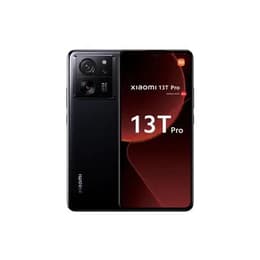



Xiaomi 13T Pro Vs Xiaomi Redmi Note 11

Xiaomi 13T Pro
Xiaomi 13T Pro
Starting at

Refurbished price:253.00

Versus €900.00 new

See options
Xiaomi Redmi Note 11
Starting at

Refurbished price:108.00

Versus €249.99 new

See options

Ratings

The Xiaomi 13T Pro, released in September 2023, and the Xiaomi Redmi Note 11, launched in January 2022, represent different segments within Xiaomi's smartphone lineup. While both operate on the Android platform, the 13T Pro offers a more advanced experience with its newer hardware and enhanced features, contrasting with the Redmi Note 11's focus on essential smartphone functionalities.

Scores

Durability

When considering the longevity of these devices, their release timelines and software support are key factors.

  • Release Timeline: The Xiaomi 13T Pro was released in September 2023, making it a more recent device compared to the Redmi Note 11, which launched in January 2022. This difference in release date inherently means the 13T Pro will receive software updates for a longer period.
  • Software Support: The Xiaomi 13T Pro is expected to receive up to four major Android updates and five years of security patches, offering extended software longevity. The Redmi Note 11 launched with Android 11 and MIUI 13, and its update cycle will be shorter due to its earlier release.
  • Physical Durability: The Xiaomi 13T Pro features Corning Gorilla Glass 5 for display protection and boasts an IP68 rating for dust and water resistance, indicating a higher level of protection against environmental elements. The Redmi Note 11 uses Gorilla Glass 3 for its display and has an IP53 rating, offering splash and dust resistance.

Year of Release

2023

2022

OS

Android

Android

Foldable

No

No

Performance

The performance of these two smartphones varies significantly, reflecting their different hardware generations and target user experiences.

  • Processing Power: The Xiaomi 13T Pro is equipped with a powerful processor designed for demanding applications, offering smooth performance for gaming, video editing, and intensive multitasking. The Redmi Note 11 features a processor that handles everyday tasks and light gaming efficiently, providing a responsive experience for general use.
  • Multitasking and Storage: The 13T Pro comes with higher RAM configurations, supporting more seamless multitasking and app switching. It also offers faster storage types and larger capacities, contributing to quicker app loading and file transfers. The Redmi Note 11 provides adequate RAM and storage options for typical smartphone usage, with expandable storage via microSD.
  • Battery and Charging: Both devices feature a 5000mAh battery capacity, capable of lasting a full day for many users. However, the Xiaomi 13T Pro supports significantly faster 120W wired charging, allowing for a full charge in approximately 19 minutes. The Redmi Note 11 supports 33W fast charging, which can charge the device to full in about an hour.

Memory (GB)

16 GB

4 GB

Screen quality

The visual experience on both devices is delivered through AMOLED displays, but with notable differences in their capabilities.

  • Display Technology and Size: Both the Xiaomi 13T Pro and Redmi Note 11 feature AMOLED displays, known for deep blacks and vibrant colors. The 13T Pro has a 6.67-inch display, while the Redmi Note 11 has a slightly smaller 6.43-inch screen.
  • Resolution and Clarity: The 13T Pro offers a higher resolution of 1220 x 2712 pixels, resulting in a sharper image with a pixel density of 446 ppi. The Redmi Note 11 has a resolution of 1080x2400 pixels, providing clear visuals with a pixel density of 409 ppi.
  • Refresh Rate and Brightness: The Xiaomi 13T Pro boasts a 144Hz refresh rate for exceptionally smooth scrolling and responsiveness, with a peak brightness of 2600 nits for excellent outdoor visibility. The Redmi Note 11 features a 90Hz refresh rate, offering a smoother experience than standard 60Hz displays, and a peak brightness of 1000 nits.

Resolution

1220 x 2712

1080 x 2400

Audiovisual

The camera systems on the Xiaomi 13T Pro and Redmi Note 11 cater to different photography needs and expectations.

  • Rear Camera System: The Xiaomi 13T Pro features a triple rear camera setup with a 50MP main sensor with optical image stabilization (OIS), a 50MP telephoto lens with 2x optical zoom, and a 12MP ultrawide lens. This setup is designed for versatile photography, including detailed zoom shots and improved low-light performance. The Redmi Note 11 has a quad-camera system with a 50MP main sensor, an 8MP ultrawide, and two 2MP sensors for macro and depth.
  • Photography Performance: The 13T Pro's main camera captures detailed images with good dynamic range, and its Leica-tuned modes offer distinct color profiles. The Redmi Note 11's main camera performs well in good lighting conditions, producing images suitable for social media, though low-light performance can be inconsistent.
  • Video Recording and Selfie Camera: The Xiaomi 13T Pro supports high-resolution video recording, including 8K at 24fps and 4K at 60fps, and has a 20MP front camera. The Redmi Note 11 is capable of recording video at up to 1080p at 30fps and features a 13MP front-facing camera.

Miscellaneous

Beyond core specifications, several practical features differentiate these two Xiaomi smartphones.

  • Connectivity: The Xiaomi 13T Pro supports 5G connectivity, Wi-Fi 6E/7, and Bluetooth 5.4, offering advanced and faster wireless communication. The Redmi Note 11 supports 4G LTE, Wi-Fi 802.11ac, and Bluetooth 5.0.
  • Ports and Biometrics: Both devices feature a USB-C port for charging and data transfer. The Redmi Note 11 retains a 3.5mm headphone jack, which is absent on the 13T Pro. The 13T Pro has an in-display optical fingerprint sensor, while the Redmi Note 11 uses a side-mounted fingerprint sensor.
  • Design and Handling: The 13T Pro has dimensions of 162.2 x 75.7 x 8.5 mm and weighs around 200-206g, with options for glass or vegan leather back panels. The Redmi Note 11 measures 159.9 x 73.9 x 8.1 mm and weighs 179g, featuring a plastic build.

Weight

206 g

179 g

Screen size (in)

6.67

6.43

Network

5G

4G

SIM card

Physical SIM + eSIM

Dual Physical SIM

Carrier compatibility

Unlocked

Unlocked

User feedback for the Xiaomi 13T Pro often highlights its powerful performance, vibrant display, and capable camera system as strong points. Users appreciate its fast charging capabilities and the extended software support. Some criticisms include the absence of wireless charging and the noticeable camera bump.

For the Redmi Note 11, common praise centers on its bright AMOLED display, reliable battery life, and the inclusion of a 3.5mm headphone jack. Users generally find its performance sufficient for daily tasks. Frequent criticisms point to its less impressive camera performance in challenging conditions and the lack of 5G connectivity.

Users prioritizing high-end performance, advanced camera features, and a longer software support window may find the Xiaomi 13T Pro better suited to their needs. This device is ideal for those who engage in mobile gaming, intensive multitasking, or advanced photography and videography. Conversely, users seeking a dependable smartphone for everyday communication, media consumption, and light usage, who also value a headphone jack and strong battery life, may lean towards the Redmi Note 11. It serves well for those who need a functional device without the most cutting-edge specifications.

Both models are available as quality-assured refurbished options, providing an eco-friendly alternative for consumers looking to make informed and sustainable choices.


See all articles

Our recent comparisons