

Galaxy S22 Ultra 5G Vs Xiaomi Redmi Note 13

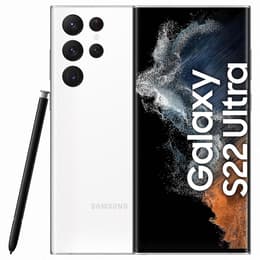
Galaxy S22 Ultra 5G
Galaxy S22 Ultra 5G
Starting at

Refurbished price:350.00

Versus €1,445.00 new

See options
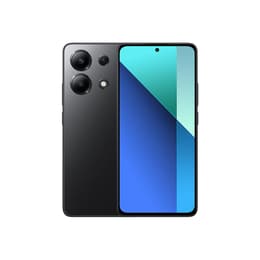
Xiaomi Redmi Note 13
Starting at

Refurbished price:137.00

Versus €340.00 new

See options

Ratings

The Samsung Galaxy S22 Ultra 5G, released in February 2022, and the Xiaomi Redmi Note 13, launched globally in January 2024, represent distinct segments of the smartphone market. The Galaxy S22 Ultra was a flagship device, offering premium features and performance, while the Redmi Note 13 is positioned as a mid-range option focusing on a balance of features and accessibility. Both devices run on the Android operating system, though with different custom user interfaces: Samsung's One UI and Xiaomi's MIUI (or HyperOS on newer updates).

Scores

Durability

The expected practical lifespan of a smartphone is influenced by its build quality, software support, and component longevity. These two devices, despite their different market positions, offer varying timelines for updates and physical resilience.

  • Release Timeline and Software Support: The Galaxy S22 Ultra, released in early 2022, was promised four major Android OS updates and five years of security updates. It has already received its major OS updates and is expected to receive security updates until 2027, with quarterly updates in its final year. The Redmi Note 13, launched in early 2024, is part of a series that Xiaomi has committed to providing three major Android OS updates and four years of security updates, extending support until 2028. This means the Redmi Note 13, despite being newer, may have a similar or slightly longer period of active software support remaining compared to the S22 Ultra from the current date.
  • Physical Durability: The Galaxy S22 Ultra features Gorilla Glass Victus+ on both its front and back, along with an Armor Aluminum frame, contributing to its robust build and IP68 dust and water resistance, allowing submersion up to 1.5 meters for 30 minutes. The Redmi Note 13 uses Gorilla Glass 3 for screen protection and has an IP54 rating, indicating splash and dust resistance, but not full water immersion.
  • Repairability: While specific repairability scores can vary by region and repair service, flagship devices like the S22 Ultra often have more complex internal designs, potentially making repairs more intricate. Mid-range phones like the Redmi Note 13 can sometimes be simpler to repair, though official parts availability and service network are also factors.

Year of Release

2022

2024

Compatible with latest Update

Yes

Yes

OS

Android

Android

Foldable

No

No

Performance

Performance is a key differentiator, impacting how smoothly applications run, how quickly tasks are completed, and the overall responsiveness of the device. The Galaxy S22 Ultra, as a former flagship, offers a higher tier of processing power compared to the mid-range Redmi Note 13.

  • Processing Capabilities: The Galaxy S22 Ultra is equipped with a processor designed for demanding tasks, enabling smooth operation of complex applications, intensive multitasking, and high-fidelity gaming experiences. The Redmi Note 13 features a processor that handles everyday applications and casual gaming effectively, providing a responsive experience for general use.
  • Storage and RAM: The S22 Ultra offers configurations with up to 12GB of RAM and up to 1TB of internal storage, utilizing faster UFS 3.1 storage technology. The Redmi Note 13 typically comes with up to 8GB of RAM and up to 256GB of storage, often using UFS 2.2, which is generally slower than UFS 3.1. The S22 Ultra does not support expandable storage, while the Redmi Note 13 offers a hybrid SIM slot that can be used for a microSD card to expand storage.
  • Battery Behavior: Both devices house a 5000 mAh battery. The S22 Ultra's more powerful components can lead to varied battery performance depending on usage intensity, with some users reporting good battery life on Wi-Fi but faster drain on 5G or during heavy use. The Redmi Note 13 generally provides a full day of use for average users, with its less power-intensive processor contributing to consistent endurance.

Memory (GB)

8 GB

8 GB

Screen quality

The display is a primary interface for user interaction, and both devices offer vibrant screens, though with differences in resolution, brightness, and overall visual fidelity.

  • Display Technology and Resolution: The Galaxy S22 Ultra features a 6.8-inch Dynamic AMOLED 2X display with a QHD+ resolution (3088 x 1440 pixels), resulting in a higher pixel density for sharper images and text. The Redmi Note 13 has a 6.67-inch AMOLED display with an FHD+ resolution (2400 x 1080 pixels).
  • Brightness and Refresh Rate: The S22 Ultra can reach a peak brightness of 1750 nits, offering excellent visibility in bright outdoor conditions. The Redmi Note 13 boasts a peak brightness of 1800 nits, also providing strong outdoor visibility. Both phones feature a 120Hz adaptive refresh rate, contributing to smoother scrolling and more fluid animations.
  • Viewing Experience: The S22 Ultra's larger, higher-resolution display with curved edges provides an immersive viewing experience, particularly for media consumption and detailed work, complemented by its S Pen support. The Redmi Note 13 offers a clear and vibrant viewing experience suitable for everyday tasks, streaming, and casual gaming.

Resolution

1440 x 3088

1080 x 2400

Screen type

Dynamic AMOLED 2X

AMOLED

Audiovisual

The camera systems on these smartphones cater to different photographic needs, with the S22 Ultra offering a more versatile and advanced setup for enthusiasts, while the Redmi Note 13 provides a capable system for general photography.

  • Rear Camera System: The Galaxy S22 Ultra features a quad-camera setup, including a 108MP main sensor, a 12MP ultrawide lens, and two 10MP telephoto lenses offering 3x and 10x optical zoom, respectively. This configuration allows for significant zoom capabilities and detailed shots across various focal lengths. The Redmi Note 13 comes with a triple-camera system, typically featuring a 108MP main sensor, an 8MP ultrawide lens, and a 2MP macro lens.
  • Photography Performance: The S22 Ultra excels in detail, dynamic range, and low-light performance, with its advanced sensors and image processing. Its telephoto lenses provide exceptional versatility for capturing distant subjects. The Redmi Note 13's main camera captures detailed photos in good lighting conditions, and its ultrawide lens offers a broader perspective. However, its low-light performance and zoom capabilities are generally less advanced than the S22 Ultra.
  • Video Recording and Front Camera: The S22 Ultra supports video recording up to 8K resolution at 24fps and features a 40MP front camera for high-resolution selfies and video calls. The Redmi Note 13 typically records video up to 1080p at 30fps and has a 16MP front camera.

Main camera

108 megapixels

108 megapixels

Front camera

40 megapixels

16 megapixels

Miscellaneous

Beyond core performance and display, several practical elements contribute to the overall user experience, including connectivity, physical design, and additional features.

  • Connectivity and Ports: The Galaxy S22 Ultra supports 5G connectivity, Wi-Fi 6E, and Bluetooth 5.2, offering fast wireless speeds and efficient connections. It features a USB-C port for charging and data transfer. The Redmi Note 13 supports 4G connectivity (the base model), Wi-Fi 5, and Bluetooth 5.1. It also has a USB-C port and notably includes a 3.5mm headphone jack, which is absent on the S22 Ultra.
  • Design and Handling: The S22 Ultra has a distinctive design with a built-in S Pen stylus, offering additional productivity features. It is a larger and heavier device, weighing around 228g, with dimensions that reflect its expansive screen. The Redmi Note 13 is lighter at approximately 188g and has a slimmer profile, making it potentially easier to handle for some users.
  • Sensors and Other Features: Both phones include essential sensors like fingerprint scanners (in-display for both), accelerometers, and gyroscopes. The S22 Ultra's integrated S Pen provides unique functionality for note-taking and navigation. The Redmi Note 13 often includes an IR blaster, allowing it to function as a universal remote control.

Weight

228 g

175 g

Screen size (in)

6.8

6.67

Network

5G

5G

SIM card

Physical SIM + eSIM

Dual Physical SIM

Carrier compatibility

Unlocked

Unlocked

Connector

USB-C

USB-C

The Samsung Galaxy S22 Ultra 5G and the Xiaomi Redmi Note 13 cater to different user priorities, reflecting their original market positioning. The S22 Ultra, a former flagship, continues to offer a premium experience in several key areas, while the Redmi Note 13 provides a solid, modern smartphone experience for everyday use.

Users who prioritize a highly advanced camera system with extensive zoom capabilities, top-tier processing power for demanding applications and gaming, and an integrated stylus for productivity will find the Galaxy S22 Ultra well-suited to their needs. Its vibrant, high-resolution display and robust build quality also contribute to a premium feel. However, some users have noted concerns regarding battery performance under heavy 5G usage and potential software optimization issues, particularly with the Exynos variant.

Conversely, individuals seeking a capable smartphone for daily tasks, media consumption, and casual photography will find the Redmi Note 13 to be a strong contender. Its newer release date means a potentially longer period of active software support from Xiaomi, and features like the 3.5mm headphone jack and IR blaster add practical value for many. Users generally praise its display and overall smooth performance for non-intensive use. Some user feedback suggests that while the camera is decent, it may not excel in low-light conditions, and the processor, while competent, might not satisfy those with heavy gaming requirements.

Ultimately, the choice depends on individual priorities. For those who value cutting-edge features, a versatile camera, and the unique S Pen functionality, the Galaxy S22 Ultra remains a compelling option. For users who prefer a more recent device with a balanced feature set for general use and practical additions, the Redmi Note 13 is a strong choice. Both devices are available as quality-assured refurbished options, providing an eco-friendly alternative for consumers.


See all articles

Our recent comparisons