

iPhone 16 Pro Max Vs Xiaomi Redmi Note 14 Pro

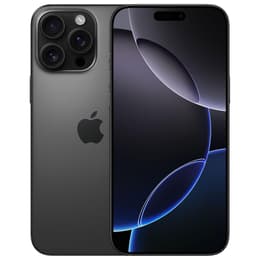
iPhone 16 Pro Max
iPhone 16 Pro Max
Starting at

Refurbished price:812.00

Versus €1,489.00 new

See options
Xiaomi Redmi Note 14 Pro
Starting at

Refurbished price:260.77

Versus €349.99 new

See options

Ratings

The iPhone 16 Pro Max, released in late 2024, and the Xiaomi Redmi Note 14 Pro, launched in early 2025, represent distinct approaches to smartphone design and functionality. While the iPhone 16 Pro Max operates on Apple's iOS ecosystem, the Redmi Note 14 Pro runs on Android with Xiaomi's HyperOS interface. These devices primarily differ in their core processing power, camera capabilities, and overall software experience, catering to varying user preferences.

Scores

Durability

The longevity of a smartphone is influenced by its release timeline, software support, and physical resilience.

  • Release Timeline: The iPhone 16 Pro Max was released in late 2024, while the Xiaomi Redmi Note 14 Pro followed in early 2025. This difference means the iPhone model has been available for a slightly longer period.
  • Software Support: Apple typically provides extensive iOS updates for its devices, often spanning five to six years from release, with the iPhone 16 Pro Max launching with iOS 18 and currently running iOS 26.4. In contrast, the Redmi Note 14 Pro, running Android 14 with HyperOS, is generally expected to receive around three major Android OS updates and four to five years of security updates. This suggests a longer software lifespan for the iPhone.
  • Repairability and Durability: The iPhone 16 Pro Max features a robust build with Ceramic Shield glass, a glass back, and a titanium frame, offering IP68 water and dust resistance. It has also received an improved repairability score of 7 out of 10 from iFixit, indicating enhanced modularity and ease of repair compared to previous iPhone generations. The Redmi Note 14 Pro typically incorporates Corning Gorilla Glass Victus 2 for screen protection and carries an IP68 or IP69 rating for dust and water resistance, though some sources indicate IP64. Its repairability is considered average, with some components requiring more complex disassembly.

Year of Release

2024

2025

Foldable

No

No

Performance

Performance is a key differentiator, impacting how smoothly applications run and how efficiently the device handles demanding tasks.

  • Processing Power: The iPhone 16 Pro Max is equipped with Apple's A18 Pro chip, designed for high-end performance, ensuring seamless multitasking, rapid app loading, and smooth execution of graphics-intensive games and applications. The Redmi Note 14 Pro typically features a MediaTek Dimensity 7300 Ultra processor, which provides strong performance for everyday tasks, social media, and casual gaming, but may show limitations with the most graphically demanding applications or prolonged heavy use.
  • System Responsiveness: Users generally report that the iPhone 16 Pro Max offers a highly responsive and fluid user experience across the operating system and applications, benefiting from tight hardware-software integration. The Redmi Note 14 Pro delivers a generally stable and responsive experience for typical usage, though some users have noted occasional software-related stutters or lags, particularly with the camera app or under heavy load.
  • Multitasking and Storage: Both devices offer ample RAM for efficient multitasking, with the iPhone 16 Pro Max typically featuring 8GB of RAM and the Redmi Note 14 Pro offering 8GB or 12GB options. Storage options are generous on both, ranging from 256GB up to 1TB for the iPhone and 128GB to 512GB for the Redmi, catering to users with extensive media libraries or numerous applications.

Memory (GB)

8 GB

8 GB

Screen quality

The display is the primary interface for user interaction, and both devices offer high-quality viewing experiences with distinct characteristics.

  • Display Technology and Clarity: The iPhone 16 Pro Max features a 6.9-inch Super Retina XDR OLED display, known for its deep blacks, vibrant colors, and excellent contrast. The Redmi Note 14 Pro comes with a 6.67-inch AMOLED panel, also providing rich colors and good contrast. Both offer high resolutions, with the iPhone at 2868x1320 pixels and the Redmi at 1220x2712 pixels, ensuring sharp text and detailed images.
  • Brightness and Outdoor Visibility: The iPhone 16 Pro Max boasts impressive brightness levels, reaching up to 1000 nits typical and 2000 nits peak brightness in outdoor conditions, making it highly visible even in direct sunlight. The Redmi Note 14 Pro also offers strong brightness, with some specifications listing up to 3000 nits peak brightness, ensuring good readability outdoors.
  • Refresh Rate and Smoothness: Both smartphones feature a 120Hz refresh rate, contributing to smoother scrolling, more fluid animations, and a more responsive feel during gaming or general navigation. The iPhone's ProMotion technology allows for adaptive refresh rates, optimizing power consumption.

Resolution

1320 x 2868

1080x2400

Audiovisual

Camera systems are a significant factor for many users, and these devices offer different strengths in photography and videography.

  • Rear Camera System: The iPhone 16 Pro Max is equipped with a versatile triple-camera setup, including a 48MP main sensor, a 48MP ultrawide lens, and a 12MP telephoto lens with 5x optical zoom. It excels in computational photography, delivering consistent image quality across various lighting conditions, including improved low-light performance. The Redmi Note 14 Pro features a high-megapixel main camera, often a 200MP sensor, alongside an 8MP ultrawide and a 2MP macro lens. It can capture detailed daylight photos, but its secondary lenses and low-light performance may not match the iPhone's consistency.
  • Video Recording Capabilities: The iPhone 16 Pro Max offers advanced video recording, supporting 4K resolution at various frame rates up to 120fps, with features like ProRes and spatial video capture. User reviews generally praise its video quality. The Redmi Note 14 Pro's video capabilities are more limited, with some users reporting a maximum of 1080p at 60fps and a lack of 4K support, which can be a significant drawback for those prioritizing high-resolution video.
  • Front Camera and Audio: Both devices provide capable front-facing cameras for selfies and video calls. The iPhone 16 Pro Max has a 12MP front camera. The Redmi Note 14 Pro typically features a 20MP or 32MP front camera. For audio, the iPhone offers stereo speakers and good microphone quality for calls and recordings. The Redmi Note 14 Pro also includes stereo speakers, with user feedback on microphone quality being mixed, some noting a lack of clarity.

Front camera

12 megapixels

32 MP

Miscellaneous

Beyond core features, several practical elements contribute to the overall user experience and daily convenience.

  • Connectivity Standards: The iPhone 16 Pro Max supports the latest wireless technologies, including Wi-Fi 7 and enhanced 5G capabilities, ensuring fast and reliable network connections. The Redmi Note 14 Pro also offers 5G connectivity and supports Wi-Fi 802.11a/b/g/n/ac, providing modern wireless communication. Both devices include Bluetooth 5.3 for connecting accessories.
  • Ports and Biometrics: The iPhone 16 Pro Max features a USB-C port, offering versatile connectivity and charging. It relies on Face ID for secure biometric authentication. The Redmi Note 14 Pro also uses a USB-C port and typically includes an in-screen fingerprint sensor for unlocking and security, alongside AI Face Unlock. Some Redmi models in this series may also retain an IR blaster, a feature for controlling home electronics.
  • Design and Handling: The iPhone 16 Pro Max has dimensions of 163 x 77.6 x 8.3 mm and weighs 227g, featuring a titanium frame. Its larger size is appreciated by some for media consumption but can be a concern for one-handed use. The Redmi Note 14 Pro measures around 162.3 x 74.4 x 8.4 mm and weighs approximately 190g, offering a slightly lighter and potentially more manageable form factor for some users.

Weight

227 g

180 g

Screen size (in)

6.9

6.67

Network

5G

4G

SIM card

eSIM

Dual Physical SIM

Carrier compatibility

Unlocked

Unlocked

The iPhone 16 Pro Max and Xiaomi Redmi Note 14 Pro cater to different user priorities, each with its own set of strengths and considerations.

Users frequently praise the iPhone 16 Pro Max for its exceptional display quality, robust camera system, and outstanding battery life, which some tests show lasting over 25 hours. Its long-term software support and premium build materials are also consistent points of appreciation. However, some users find its large size challenging for comfortable handling. There have also been mixed reactions regarding the initial implementation of AI features and occasional software glitches reported by some early adopters.

The Xiaomi Redmi Note 14 Pro is often lauded for its vibrant AMOLED display, strong battery life with fast charging, and its high-megapixel main camera in good lighting conditions. Its overall design and build quality are also frequently highlighted as positive aspects for its segment. Conversely, common criticisms include inconsistent camera performance, particularly for video recording (with some models lacking 4K) and low-light photography, as well as reports of software bugs and bloatware within HyperOS. Performance for demanding games has also been noted as a potential limitation.

Users prioritizing a top-tier camera experience, extended software longevity, and a highly polished operating system may find the iPhone 16 Pro Max well-suited to their needs. Those who value a vibrant display, fast charging, and a high-megapixel main camera for everyday photos, and who are comfortable within the Android ecosystem, might lean towards the Xiaomi Redmi Note 14 Pro. Both devices offer compelling features, and considering a quality-assured refurbished option for either model can provide an eco-friendly alternative for consumers.

See all articles

Our recent comparisons