

Galaxy A15 Vs Galaxy S25+

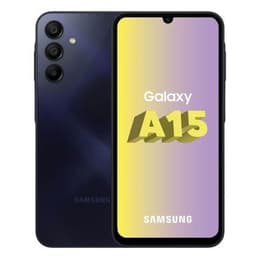
Galaxy A15
Galaxy A15
Starting at

Refurbished price:124.00

Versus €189.00 new

See options
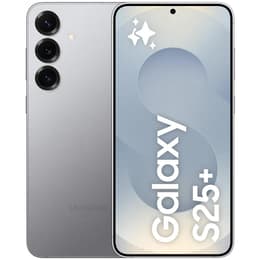
Galaxy S25+
Galaxy S25+
Starting at

Refurbished price:624.00

Versus €1,401.57 new

See options

Ratings

The Samsung Galaxy A15, released in late 2023, and the Samsung Galaxy S25 Plus, launched in early 2025, represent distinct tiers within Samsung's smartphone lineup. While both operate on the Android platform with Samsung's One UI, they cater to different user expectations regarding performance, display quality, and camera capabilities. The S25 Plus offers a premium, high-performance experience, whereas the A15 focuses on delivering essential smartphone functions reliably.

Scores

Durability

The longevity of a smartphone is influenced by its build quality, software support, and the demands of evolving applications. These two devices offer different propositions in terms of their expected practical lifespan.

  • Release Timeline and Software Support: The Galaxy A15, released in December 2023, shipped with Android 14 and is promised four major Android OS upgrades and five years of security patches. This means it will receive updates until approximately late 2028 for OS and late 2029 for security. The Galaxy S25 Plus, launched in February 2025 with Android 15, benefits from Samsung's extended support policy, offering seven years of OS updates and security patches, projecting support until early 2032.
  • Build Materials and Durability: The Galaxy A15 features a plastic back and frame, with Dragontrail Pro glass protecting its display. It does not carry an official IP rating for water and dust resistance, suggesting it is less protected against environmental elements. In contrast, the Galaxy S25 Plus utilizes more premium materials, including Gorilla Glass Victus 2 for its display, and is expected to have an IP rating, offering enhanced resistance to dust and water.
  • Repairability and Practical Lifespan: While specific repairability scores vary, the more robust construction and higher-grade components of the S25 Plus generally contribute to a device that can withstand daily wear and tear more effectively. However, the A15's simpler construction might make certain repairs more straightforward. Users prioritizing maximum software longevity and physical resilience will find the S25 Plus better suited for extended use.

Year of Release

2023

2025

Compatible with latest Update

Yes

Yes

OS

Android

Android

Foldable

No

No

Performance

The performance capabilities of these two Samsung smartphones differ significantly, impacting how smoothly they handle various tasks and applications.

  • Processor and Everyday Tasks: The Galaxy A15 (5G variant) is equipped with a MediaTek Dimensity 6100+ processor, which capably handles daily activities such as web browsing, social media, and light applications. Users generally report it performs well for basic needs, though some note occasional lag with heavy multitasking or demanding apps. The Galaxy S25 Plus, powered by a current-generation flagship processor (Qualcomm Snapdragon 8 Elite or Exynos 2500 depending on region), delivers top-tier performance, ensuring seamless multitasking, rapid app loading, and smooth operation even with graphically intensive games and complex applications.
  • Memory and Storage: The A15 is available with 4GB, 6GB, or 8GB of RAM and storage options up to 256GB, with the added flexibility of microSD card expansion. The S25 Plus comes with a substantial 12GB of RAM and internal storage options of 256GB or 512GB, without expandable storage. The larger RAM in the S25 Plus significantly enhances its ability to keep multiple applications open and switch between them without reloading.
  • Overall System Responsiveness: The S25 Plus offers a consistently fluid and responsive user experience, making interactions feel immediate and effortless. The A15 provides a satisfactory experience for its segment, but users accustomed to higher-end devices may notice a difference in speed and fluidity, particularly during more intensive usage.

Memory (GB)

4 GB

12 GB

Screen quality

The display is a primary interface for smartphone interaction, and both devices offer different visual experiences tailored to their respective categories.

  • Display Technology and Resolution: The Galaxy A15 features a 6.5-inch Super AMOLED display with a Full HD+ resolution (1080 x 2340 pixels). This technology provides vibrant colors and deep blacks, a notable upgrade for its class. The Galaxy S25 Plus boasts a larger 6.7-inch Dynamic AMOLED 2X display with a Quad HD+ resolution (3120 x 1440 pixels), offering significantly sharper details and a more immersive viewing experience.
  • Brightness and Refresh Rate: The A15's display reaches up to 800 nits in High Brightness Mode (HBM), providing decent visibility in outdoor conditions, and has a 90Hz refresh rate for smoother scrolling. The S25 Plus features a much brighter display, peaking at up to 2600 nits, ensuring excellent readability even in direct sunlight. It also offers an adaptive 120Hz refresh rate (LTPO), which dynamically adjusts to content for optimal smoothness and power efficiency.
  • Viewing Experience: The A15 provides a clear and enjoyable viewing experience for everyday media consumption. The S25 Plus, with its higher resolution, larger size, superior brightness, and adaptive refresh rate, delivers a more premium and fluid visual experience, particularly beneficial for high-definition content, gaming, and detailed work.

Resolution

1080 x 2340

1440 x 3120 pixels

Audiovisual

Camera systems are a key differentiator, and these two phones offer varying capabilities for capturing photos and videos.

  • Rear Camera System: The Galaxy A15 is equipped with a triple rear camera setup: a 50-megapixel main sensor, a 5-megapixel ultrawide lens, and a 2-megapixel macro lens. It performs adequately in well-lit conditions, producing photos with good color balance, but its performance diminishes in low-light environments. The Galaxy S25 Plus features a more versatile triple camera system: a 50-megapixel wide-angle main camera with optical image stabilization (OIS) and phase-detection autofocus (PDAF), a 12-megapixel ultrawide camera, and a 10-megapixel telephoto lens with 3x optical zoom. This setup allows for greater flexibility in various shooting scenarios, including zoomed shots.
  • Low-Light and Video Performance: The S25 Plus handles low-light scenes well with its main camera, producing bright and clear images, and offers 8K video recording at 30 frames per second. The A15 records video at 1080p at 30 frames per second and struggles more in challenging lighting conditions. While the S25 Plus's camera hardware is largely consistent with previous generations, software enhancements contribute to improved image processing.
  • Front Camera and Audio: For selfies, the A15 has a 13-megapixel front camera, while the S25 Plus features a 12-megapixel front camera, often praised for sharp and detailed images with good color. The S25 Plus also offers stereo speakers for a more immersive media consumption experience, whereas the A15 typically has a single loudspeaker.

Front camera

13 megapixels

12MP

Miscellaneous

Beyond core specifications, several practical elements contribute to the overall user experience and daily usability of these devices.

  • Connectivity and Ports: Both devices support modern connectivity standards. The Galaxy A15 (5G variant) includes 5G, Wi-Fi 5, Bluetooth 5.3, and a USB-C 2.0 port. Notably, it retains a 3.5mm headphone jack, which is convenient for users with wired audio accessories. The Galaxy S25 Plus supports the latest 5G, Wi-Fi, and Bluetooth standards, along with a USB-C port, but it typically omits the traditional headphone jack, aligning with current flagship trends.
  • Biometric Security: The A15 features a side-mounted fingerprint sensor for secure unlocking. The S25 Plus incorporates an ultrasonic in-screen fingerprint sensor, offering a seamless and integrated biometric authentication method.
  • Dimensions, Weight, and Handling: The Galaxy A15 measures 160.1 x 76.8 x 8.4 mm and weighs 200g. The Galaxy S25 Plus is slightly larger at 158.4 mm in height, with a 6.7-inch display, and is designed to feel comfortable in hand despite its size. The S25 Plus's premium build materials contribute to a more refined in-hand feel compared to the A15's plastic construction.

Weight

200 g

190 g

Screen size (in)

6.5

6.7

Network

4G

5G

SIM card

Dual Physical SIM

Physical SIM + eSIM

Carrier compatibility

Unlocked

Unlocked

The Samsung Galaxy A15 and Galaxy S25 Plus cater to different user needs and priorities. User feedback for the Galaxy A15 often highlights its excellent battery life, which can easily last a full day or more, and its commendable software update policy for a device in its category. Users appreciate its Super AMOLED display for vibrant visuals, especially considering its segment. However, common criticisms point to its performance, which can be slow for demanding tasks or heavy multitasking, and its camera's limitations in low-light conditions.

Conversely, the Galaxy S25 Plus receives praise for its exceptionally smooth performance, vibrant and bright display, and generally strong battery life, often extending beyond a single day of use. Its long-term software support is also a significant advantage, ensuring the device remains current for many years. Some users note that while the camera system is solid, it may not always deliver outstanding results, particularly in specific low-light scenarios, and the design might feel familiar to previous generations.

Users prioritizing a device for essential communication, social media, web browsing, and media consumption, who value extended software support without needing top-tier performance, may find the Galaxy A15 well-suited to their needs. Its inclusion of a headphone jack is also a practical benefit for some. For individuals who require a powerful smartphone for demanding applications, high-end gaming, advanced photography, and a premium, highly responsive user experience, the Galaxy S25 Plus is the more appropriate choice. It offers a more refined build and a significantly longer period of software updates. Both models are available as quality-assured refurbished options, providing an eco-friendly alternative for consumers.


See all articles

Our recent comparisons