

Galaxy S21 5G Vs iPhone 16 Pro Max

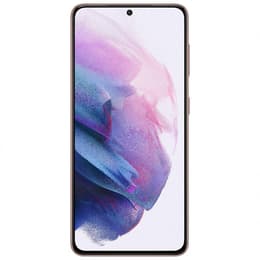
Galaxy S21 5G
Galaxy S21 5G
Starting at

Refurbished price:165.00

Versus €1,026.00 new

See options
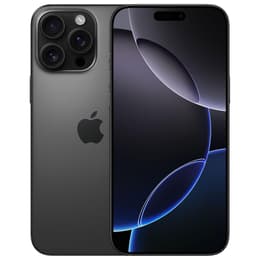
iPhone 16 Pro Max
iPhone 16 Pro Max
Starting at

Refurbished price:821.00

Versus €1,489.00 new

See options

Ratings

The Samsung Galaxy S21 5G, released in January 2021, and the iPhone 16 Pro Max, launched in September 2024, represent different generations and operating system ecosystems in the smartphone market. While the Galaxy S21 5G offers a compact Android experience, the iPhone 16 Pro Max provides a larger display and more recent advancements within the iOS platform. These devices cater to users with distinct preferences for software, design, and performance capabilities.

Scores

Durability

The longevity of a smartphone is influenced by its release timeline, software support, and physical durability.

  • Release Timeline: The Galaxy S21 5G was released in January 2021, making it an older device compared to the iPhone 16 Pro Max, which launched in September 2024. This age difference impacts their respective positions in the software update cycle.
  • Software Longevity: The Galaxy S21 5G launched with Android 11 and received its last major OS update, Android 15 (One UI 7), in May 2025. Security updates for the S21 series concluded around January/February 2026. The iPhone 16 Pro Max, having launched with iOS 18, is expected to receive major iOS updates for several more years, typically 5-6 years from its release, ensuring a longer period of new features and security enhancements.
  • Physical Durability: Both devices feature robust construction. The Galaxy S21 5G is protected by Corning Gorilla Glass Victus and carries an IP68 rating for dust and water resistance, allowing submersion up to 1.5 meters for 30 minutes. The iPhone 16 Pro Max features Ceramic Shield front cover and also boasts an IP68 rating, with a higher maximum depth of 6 meters for up to 30 minutes. The iPhone 16 Pro Max also utilizes a durable titanium design. The Galaxy S21 5G generally has a good repairability score, though battery removal can be challenging due to strong adhesive.

Year of Release

2021

2024

Compatible with latest Update

Yes

Yes

Foldable

No

No

Performance

Performance is a key differentiator, impacting how smoothly applications run and how efficiently the device handles demanding tasks.

  • Processing Power: The iPhone 16 Pro Max is equipped with a more recent and powerful processor, designed to handle intensive applications, advanced gaming, and complex video editing with greater efficiency and speed. The Galaxy S21 5G, while powerful for its time, provides solid performance for everyday tasks, multitasking, and gaming, but may show its age with the most demanding current applications.
  • System Responsiveness: Users of the iPhone 16 Pro Max can expect highly fluid navigation and rapid app loading times, benefiting from its advanced internal components. The Galaxy S21 5G offers a responsive experience for general use, though it may exhibit slightly longer loading times for very large applications or during heavy multitasking compared to the newer iPhone model.
  • Battery Behavior: The iPhone 16 Pro Max is noted for its extended battery life, with some reports indicating it can last over 25 hours in certain usage scenarios, making it suitable for prolonged use without frequent recharging. The Galaxy S21 5G typically offers all-day battery life for average users, but heavy usage, especially with 5G connectivity, may necessitate more frequent charging.

Memory (GB)

8 GB

8 GB

Screen quality

The display quality significantly influences the visual experience, from everyday browsing to media consumption.

  • Display Technology and Clarity: Both devices feature vibrant OLED displays. The Galaxy S21 5G has a 6.2-inch Dynamic AMOLED 2X display with a 2400 x 1080 pixel resolution, offering clear and colorful visuals. The iPhone 16 Pro Max boasts a larger 6.9-inch Super Retina XDR OLED display with a higher resolution of 2868 x 1320 pixels, resulting in sharper details and a more expansive viewing area.
  • Brightness and Outdoor Visibility: The Galaxy S21 5G's display can reach a peak brightness of 1300 nits, providing good visibility in various lighting conditions. The iPhone 16 Pro Max offers higher brightness levels, with a typical maximum of 1000 nits, a peak HDR brightness of 1600 nits, and an impressive 2000 nits for outdoor use, ensuring excellent readability even in direct sunlight.
  • Refresh Rate and Smoothness: Both smartphones feature adaptive refresh rate technology for smoother scrolling and more fluid animations. The Galaxy S21 5G offers a 120Hz adaptive refresh rate, which can scale down to 48Hz to conserve power. The iPhone 16 Pro Max also incorporates ProMotion technology, providing adaptive refresh rates up to 120Hz for a consistently smooth visual experience.

Resolution

1080 x 2400

1320 x 2868

Screen type

Dynamic AMOLED 2X

LTPO Super Retina XDR OLED

Audiovisual

Camera capabilities are a primary consideration for many users, impacting the quality of photos and videos captured.

  • Rear Camera Systems: The Galaxy S21 5G features a versatile triple-camera setup, including a 12MP wide, 12MP ultrawide, and a 64MP telephoto lens with 3x hybrid optical zoom, capable of capturing detailed images and 8K video. The iPhone 16 Pro Max comes with a more advanced Pro camera system, featuring a 48MP Fusion main camera, a 48MP Ultra Wide lens, and a 12MP 5x Telephoto lens, designed for enhanced detail and flexibility across various shooting conditions.
  • Low-Light Performance and Video: The Galaxy S21 5G offers good low-light photography with its Night mode and AI processing, and supports 8K video recording. The iPhone 16 Pro Max excels in low-light conditions with its upgraded sensors and processing, and supports 4K 120fps video recording in Dolby Vision, offering professional-grade video capabilities.
  • Additional Camera Features: The iPhone 16 Pro Max introduces a new Camera Control button, providing more tactile control over camera functions. Both devices offer features like advanced selfie capabilities and various shooting modes to enhance the user's photographic experience.

Main camera

12 megapixels

48 megapixels

Front camera

10 megapixels

12 megapixels

Miscellaneous

Beyond core features, several practical elements contribute to the overall user experience and device utility.

  • Connectivity and Ports: Both devices support 5G connectivity, enabling faster mobile data speeds. The Galaxy S21 5G uses a USB-C port for charging and data transfer. The iPhone 16 Pro Max also features a USB-C port, aligning with modern connectivity standards, and supports Wi-Fi 7. Neither device includes a traditional headphone jack.
  • Biometric Security: The Galaxy S21 5G incorporates an ultrasonic in-display fingerprint sensor for secure unlocking. The iPhone 16 Pro Max relies on Face ID, Apple's facial recognition technology, for secure authentication.
  • Physical Characteristics: The Galaxy S21 5G is a more compact device, measuring 151.7 x 71.2 x 7.9 mm and weighing 169 grams. The iPhone 16 Pro Max is larger and heavier, with dimensions of 163.0 × 77.6 × 8.25 mm and a weight of 227 grams, offering a more substantial feel and a larger screen.

Weight

171 g

227 g

Screen size (in)

6.2

6.9

Network

5G

5G

SIM card

Physical SIM + eSIM

Physical SIM + eSIM

Carrier compatibility

Unlocked

Unlocked

Connector

USB-C

USB-C (USB 3)

The Samsung Galaxy S21 5G and the iPhone 16 Pro Max cater to different user priorities, largely due to their generational gap and distinct operating systems. Users often praise the Galaxy S21 5G for its vibrant display, capable camera system, and overall balanced performance for an Android device of its era. Some common criticisms noted by users include its battery life for heavy use and the conclusion of its major software update cycle.

The iPhone 16 Pro Max, being a much newer device, receives acclaim for its significantly extended battery life, advanced camera capabilities, and powerful processing, which ensures smooth operation for demanding tasks. Users appreciate its large, bright display and the consistent iOS experience. Some discussions around the iPhone 16 Pro Max have touched upon its physical size and weight, which might not appeal to all users seeking a more compact device.

Users prioritizing a more compact form factor and the Android ecosystem, who are comfortable with a device nearing the end of its official software support, may find the Galaxy S21 5G suitable. Conversely, those who value the latest in mobile technology, superior camera performance, extended software longevity, and exceptional battery life, and prefer the iOS ecosystem, will likely lean towards the iPhone 16 Pro Max. When considering either device, exploring quality-assured refurbished options can provide an eco-friendly alternative for making an informed choice.


See all articles

Our recent comparisons