

Galaxy S20 FE Vs Galaxy S23+

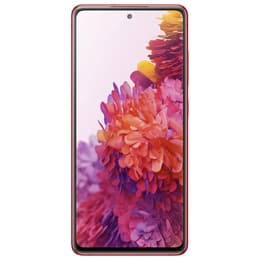
Galaxy S20 FE
Galaxy S20 FE
Starting at
€153.00
€779.00 new
See options
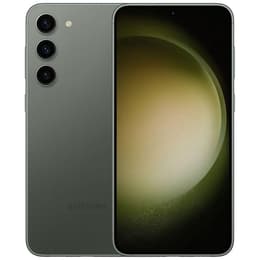
Galaxy S23+
Galaxy S23+
Starting at
€317.00
€1,199.99 new
See options

Ratings

The Samsung Galaxy S20 FE, released in October 2020, and the Samsung Galaxy S23 Plus, launched in February 2023, are both Android smartphones from Samsung's popular Galaxy S series. While both run on the Android operating system with Samsung's One UI, the S23 Plus represents a significant generational leap, bringing advancements in processing power, camera capabilities, and overall device longevity compared to the earlier S20 FE.

Scores

Durability

When considering the long-term usability of these devices, their release timelines and software support are key differentiators.

  • Release Timeline and Software Support: The Galaxy S20 FE, released in late 2020, originally came with Android 10 and received major OS updates up to Android 13, with its software update lifecycle concluding around October 2025. In contrast, the Galaxy S23 Plus, launched in early 2023 with Android 13, is promised four generations of OS updates and five years of security updates, extending its support well into 2028 or 2029.
  • Practical Lifespan: Users seeking extended software longevity and access to the latest Android features will find the Galaxy S23 Plus to be a more future-proof option due to its significantly longer support period.
  • Durability and Repairability: The S20 FE features a plastic back and Gorilla Glass 3 on the front, offering an IP68 dust and water resistance rating. It has a moderate repairability score of 7.5/10, with some components requiring effort to replace. The S23 Plus elevates durability with Gorilla Glass Victus 2 on both the front and back, an Armor Aluminum frame, and also carries an IP68 rating for enhanced protection against elements.

Year of Release

2020

2023

Compatible with latest Update

No

Yes

OS

Android

Android

Foldable

No

No

Performance

Performance aspects reveal where the newer Galaxy S23 Plus truly excels over the Galaxy S20 FE.

  • Processor Capabilities: The Galaxy S20 FE is powered by either the Snapdragon 865 or Exynos 990 processor, depending on the region. This chipset capably handles daily tasks and older demanding applications. The Galaxy S23 Plus, on the other hand, features a custom 'Snapdragon 8 Gen 2 for Galaxy' processor, which delivers significantly faster CPU and GPU speeds, resulting in smoother operation for heavy multitasking, current-generation gaming, and advanced applications.
  • System Responsiveness and Multitasking: While the S20 FE offers good responsiveness, the S23 Plus provides a more fluid and immediate experience, especially when switching between numerous applications or running processor-intensive tasks.
  • Storage and RAM: The S20 FE typically comes with 6GB or 8GB of RAM and 128GB or 256GB of internal storage. The S23 Plus offers 8GB of RAM as standard, with storage options of 256GB or 512GB, utilising faster UFS 4.0 storage for quicker data access.
  • Battery Performance: The S20 FE has a 4,500 mAh battery, which generally provides good all-day usage, sometimes extending to two days with moderate use and a 60Hz screen setting. The S23 Plus features a slightly larger 4,700 mAh battery. Combined with the efficiency improvements of its newer processor, the S23 Plus consistently offers reliable all-day power, often extending to comfortable usage into a second day for many users.

Memory

6 GB

8 GB

Screen quality

Both devices offer high-quality displays, but the S23 Plus introduces improvements in brightness and adaptive refresh rates.

  • Display Technology and Clarity: Both phones feature Super AMOLED (S20 FE) or Dynamic AMOLED 2X (S23 Plus) displays, which deliver vibrant colors and deep blacks. The S20 FE has a 6.5-inch Full HD+ (2400 x 1080) display with approximately 407 pixels per inch (ppi). The S23 Plus has a slightly larger 6.6-inch Full HD+ (2340 x 1080) display with about 393 ppi. While the S20 FE technically has a slightly higher pixel density, both screens offer sharp visuals for everyday viewing.
  • Brightness and Outdoor Visibility: The S20 FE can reach a typical brightness of around 679 nits, which is adequate but can sometimes be challenging in very bright direct sunlight. The S23 Plus significantly improves on this, boasting a peak brightness of up to 1,750 nits, ensuring excellent visibility even in harsh outdoor lighting conditions.
  • Refresh Rate: Both devices offer a smooth 120Hz refresh rate for fluid scrolling and animations. The S23 Plus features an adaptive refresh rate that can scale down to 48Hz to conserve battery life when static content is displayed.

Resolution

1080 x 2400

1080 x 2340

Screen type

Super AMOLED

Dynamic AMOLED 2X

Audiovisual

The camera systems of both smartphones offer versatility, with the S23 Plus featuring more advanced imaging capabilities.

  • Rear Camera System: The Galaxy S20 FE is equipped with a triple-camera setup, including a 12MP main lens with optical image stabilization (OIS), a 12MP ultrawide lens, and an 8MP telephoto lens offering 3x optical zoom with OIS. The Galaxy S23 Plus features a more capable triple-camera system with a 50MP main sensor (outputting 12.5MP photos by default) with OIS, a 12MP ultrawide lens, and a 10MP telephoto lens also offering 3x optical zoom with OIS.
  • Photography Performance: The S20 FE delivers good, consistent daylight photos with pleasant colors and detail, and decent low-light performance with its Night mode. The S23 Plus, leveraging its newer processor and updated sensors, provides superior image quality across various conditions, with enhanced detail, improved low-light performance, and more accurate color rendering, especially in challenging lighting.
  • Video Recording: The S20 FE supports video recording up to 4K at 60 frames per second (fps) on its main camera, with good stabilization. The S23 Plus extends this to 8K at 30fps and offers fully stabilized 4K at 60fps, alongside features like Super HDR for selfie videos.
  • Front Camera: The S20 FE features a 32MP front-facing camera, while the S23 Plus has a 12MP front camera with improved processing for clearer selfies and video calls.

Main camera

12 megapixels

50 megapixels

Front camera

32 megapixels

12 megapixels

Miscellaneous

Beyond core performance, several practical elements distinguish these two Galaxy smartphones.

  • Connectivity: Both devices support 5G connectivity, Wi-Fi 6 (802.11ax) for fast wireless internet, and Bluetooth for accessories. The S20 FE uses Bluetooth 5.0, while the S23 Plus features the more advanced Bluetooth 5.3, offering improved efficiency and stability with compatible devices.
  • Physical Design and Handling: The S20 FE measures 159.8 x 74.5 x 8.4mm and weighs 190g. The S23 Plus is slightly more compact at 157.8 x 76.2 x 7.6mm, but marginally heavier at 195g, providing a robust feel in hand. Both offer a comfortable large-screen experience.
  • Ports and Biometrics: Both smartphones utilise a USB-C port for charging and data transfer, and neither includes a traditional 3.5mm headphone jack. Both feature in-display fingerprint sensors for secure unlocking.

Weight

190 g

196 g

Screen size (in)

6.5

6.6

Network

4G

5G

SIM card

Dual Physical SIM

Dual Physical SIM + eSIM

Carrier compatibility

Unlocked

Unlocked

The Samsung Galaxy S20 FE and Galaxy S23 Plus cater to different user priorities. The Galaxy S20 FE, having been released in 2020, was widely praised by users for its balanced feature set, including a vibrant display, a versatile camera system with optical zoom, and reliable performance for its time. Some users noted that its screen resolution wasn't top-tier compared to other flagships and the plastic back, while durable, felt less premium.

The Galaxy S23 Plus, a much newer device from 2023, is lauded for its significantly upgraded performance, exceptional battery life that comfortably lasts a full day for heavy users, and a premium design with enhanced durability. Its camera system also delivers superior results, particularly in challenging conditions, making it a strong choice for photography enthusiasts. Criticisms are fewer but sometimes include the adaptive refresh rate not being as wide-ranging as the top-tier Ultra models.

For users who prioritize the latest performance, extended software support, and a more refined camera experience for capturing memories and everyday life, the Galaxy S23 Plus stands out. Its enhanced durability makes it a robust choice for professionals and travelers who need a reliable device. Conversely, for those who value an eco-friendly and quality-assured refurbished option that still offers a good smartphone experience for general use, the Galaxy S20 FE remains a capable device, particularly for students or light users. When making a choice, consider your usage patterns and how long you expect to keep your device. Opting for a quality-assured refurbished phone like these can provide excellent value while supporting sustainable practices.