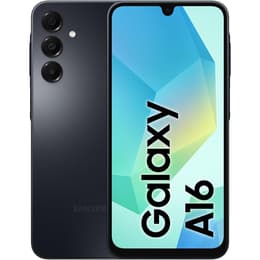


Galaxy A16 Vs Xiaomi Redmi Note 14 4G

Galaxy A16
Galaxy A16
Starting at

Refurbished price:134.00

Versus €250.00 new

See options
Xiaomi Redmi Note 14 4G
Starting at

Refurbished price:162.00

Versus €229.99 new

See options

Ratings

The Samsung Galaxy A16 and the Xiaomi Redmi Note 14 4G are both smartphones released in late 2024 and early 2025, respectively, targeting users seeking capable devices for everyday tasks. While both operate on the Android platform, the Galaxy A16 emphasizes long-term software support, whereas the Redmi Note 14 4G focuses on a more fluid display experience and faster charging capabilities.

Scores

Durability

When considering the longevity of these devices, several factors come into play, including their release timelines, software support, and physical durability.

  • Release Timeline: The Samsung Galaxy A16 was announced in October 2024 and released shortly after, with its 4G variant featuring a Mediatek Helio G99 processor. The Xiaomi Redmi Note 14 4G followed, officially released in December 2024 or January 2025, depending on the region.
  • Software Longevity: The Galaxy A16 stands out with a commitment to six OS upgrades and six years of security updates, extending its support until October 2030. The Redmi Note 14 4G launched with Android 14 and HyperOS, but its long-term update policy is typically shorter than Samsung's extended commitment.
  • Physical Durability: The Redmi Note 14 4G incorporates Corning Gorilla Glass 5 for screen protection and features an aluminum frame, contributing to its overall robustness. It also carries an IP64 rating for dust and water resistance. The Galaxy A16, while generally durable, uses a plastic frame and does not explicitly mention Gorilla Glass protection in its primary specifications.

Year of Release

2024

2025

OS

Android

Android

Foldable

No

No

Performance

Both smartphones are designed to handle daily tasks efficiently, but they approach performance with slightly different hardware configurations.

  • Processor Capabilities: The Galaxy A16 4G is equipped with a Mediatek Helio G99 processor, which provides smooth performance for general applications and moderate multitasking. The Redmi Note 14 4G features a MediaTek Dimensity 7025 Ultra chipset, offering a responsive experience for demanding apps and gaming.
  • Multitasking and Storage: The Galaxy A16 offers RAM options ranging from 4 GB to 8 GB, paired with 128 GB or 256 GB of internal storage, which is expandable via a microSDXC card. The Redmi Note 14 4G typically comes with 8 GB of RAM and storage options of 128 GB or 256 GB, also expandable via a shared SIM slot.
  • Battery Behavior: The Galaxy A16 includes a 5000 mAh battery, supporting 25W fast charging. The Redmi Note 14 4G has a slightly larger 5110 mAh battery and supports faster 45W wired charging, with the charger typically included.

Memory (GB)

4 GB

6 GB

Screen quality

The visual experience on both devices is a key consideration, with each offering distinct display characteristics.

  • Display Technology and Clarity: Both phones feature AMOLED display technology, known for deep blacks and vibrant colors. The Galaxy A16 has a 6.7-inch Super AMOLED display with a 1080x2340 pixel resolution. The Redmi Note 14 4G offers a 6.67-inch AMOLED display with a 1080 x 2400 pixel resolution and a density of 395 ppi, providing sharp visuals.
  • Refresh Rate and Brightness: The Galaxy A16 provides a 90 Hz refresh rate, contributing to smoother scrolling and animations. The Redmi Note 14 4G elevates this with a 120Hz refresh rate, offering an even more fluid visual experience, and boasts a peak brightness of 2100 nits, ensuring excellent visibility even in bright outdoor conditions.
  • Viewing Experience: Both displays offer a large viewing area suitable for media consumption and productivity. The Redmi Note 14 4G's higher refresh rate and peak brightness may appeal to users who prioritize a more responsive and visible screen in various lighting environments.

Resolution

1080x2340

1080x2400

Audiovisual

For users who rely on their smartphones for photography and videography, the camera systems present notable differences.

  • Rear Camera System: The Galaxy A16 features a triple rear camera setup, including a 50 MP primary sensor, a 5 MP ultrawide lens, and a 2 MP macro camera. The Redmi Note 14 4G also has a triple rear camera system, with a 50 MP primary sensor featuring PDAF and OIS, an 8 MP ultrawide lens, and a 2 MP macro camera.
  • Photography and Video Performance: The Galaxy A16 is noted for producing balanced photos with good color and contrast, and its ultrawide camera is a useful addition. The Redmi Note 14 4G's primary camera benefits from Optical Image Stabilization (OIS), which can lead to clearer photos in challenging conditions and more stable video recording. Both phones record video at Full HD @30 fps, but the Redmi Note 14 4G's video is often stabilized.
  • Front Camera and Audio: For selfies and video calls, the Galaxy A16 has a 13 MP front camera. The Redmi Note 14 4G offers a higher resolution 20 MP front camera. The Redmi Note 14 4G also includes stereo speakers and a 3.5mm headphone jack, enhancing the media consumption experience.

Miscellaneous

Beyond the core specifications, several practical features and design elements differentiate these two devices.

  • Connectivity and Ports: Both devices support 4G LTE networks, Wi-Fi, and Bluetooth. The Galaxy A16 features Bluetooth v5.30. The Redmi Note 14 4G includes an infrared port, which can be useful for controlling home appliances, and a 3.5mm headphone jack. Both likely use USB-C for charging and data transfer.
  • Sensors and Security: Both smartphones incorporate a fingerprint sensor for secure unlocking, along with light and accelerometer sensors. The Redmi Note 14 4G adds a compass and gyroscope, which can enhance navigation and gaming experiences.
  • Design and Handling: The Galaxy A16 measures 164.4 mm in height, 77.9 mm in width, and 7.9 mm in depth, weighing 200 g. The Redmi Note 14 4G is slightly more compact at 163.3 x 76.6 x 8.2 mm and lighter at 196.5 grams. The Redmi Note 14 4G's aluminum frame and Gorilla Glass 5 contribute to a more robust feel compared to the Galaxy A16's plastic frame.

Weight

200 g

196 g

Screen size (in)

6.7

6.67

Network

4G

4G

SIM card

Physical SIM

Physical SIM + eSIM

Carrier compatibility

Unlocked

Unlocked

User feedback often highlights the Samsung Galaxy A16's strength in delivering consistent photo quality, particularly with its main camera, and its commitment to extended software updates is a significant advantage for long-term users. Some users might note the absence of an ultrawide camera on some Redmi Note 14 4G variants or the A16's plastic frame as a point of comparison. Conversely, the Xiaomi Redmi Note 14 4G receives praise for its vibrant 120Hz AMOLED display, faster charging capabilities, and the inclusion of an ultrawide camera and OIS on its main sensor, which enhances both photography and video stability. Its more premium build materials and IP rating are also frequently appreciated.

Users prioritizing long-term software support and a reliable camera for everyday photos may find the Samsung Galaxy A16 well-suited to their needs. Those who value a smoother display experience, faster battery charging, enhanced video stability, and a more robust physical build might lean towards the Xiaomi Redmi Note 14 4G. Both devices offer solid performance for their segment, making them suitable for students, professionals, and travelers seeking a capable smartphone. For those looking for an eco-friendly alternative, quality-assured refurbished options for both models can provide an excellent way to acquire these devices sustainably.


See all articles

Our recent comparisons