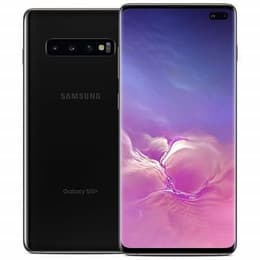
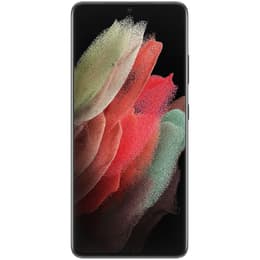


Galaxy S10+ Vs Galaxy S21 Ultra 5G

Galaxy S10+
Galaxy S10+
Starting at

Refurbished price:143.00

Versus €1,009.00 new

See options
Galaxy S21 Ultra 5G
Galaxy S21 Ultra 5G
Starting at

Refurbished price:228.00

Versus €1,297.00 new

See options

Ratings

The Samsung Galaxy S10 Plus, released in March 2019, and the Samsung Galaxy S21 Ultra 5G, launched in January 2021, represent different generations of Samsung's premium smartphone offerings. Both devices provide a high-end Android experience, but the S21 Ultra 5G introduces notable advancements in camera technology, display fluidity, and overall performance, alongside the inclusion of 5G connectivity. While the S10 Plus was a flagship of its time, the S21 Ultra 5G offers a more contemporary feature set.

Scores

Durability

When considering the practical lifespan of these devices, several factors come into play, including their release timelines, software support, and repairability.

  • Release Timeline and Software Support: The Galaxy S10 Plus, released in March 2019, initially ran on Android 9.0 Pie and received major OS updates up to Android 12. Its official software support, including security patches, concluded around early 2023 for most models. The Galaxy S21 Ultra 5G, launched in January 2021 with Android 11, received major OS updates up to Android 15 and its security updates concluded around early 2026. This means the S21 Ultra 5G benefits from a longer period of ongoing software and security support, offering extended usability for those who prioritize the latest features and protections.
  • Repairability: Both devices present challenges when it comes to repair. The Galaxy S10 Plus received a repairability score of 3 out of 10 from iFixit, largely due to the extensive use of adhesive and the difficulty in accessing internal components for common repairs like screen replacements. Similarly, the Galaxy S21 Ultra 5G also scored 3 out of 10 in repairability, with iFixit noting the use of strong glue for the battery, display, and rear panel, making disassembly difficult.
  • Expected Practical Lifespan: Given the cessation of official software updates for the S10 Plus, its practical lifespan for users who require the latest Android features and security patches is more limited compared to the S21 Ultra 5G, which still receives updates.

Year of Release

2019

2021

Compatible with latest Update

No

Yes

OS

Android

Android

Foldable

No

No

Performance

The performance capabilities of these two devices reflect their respective release years, with the newer model offering significant advancements.

  • Processor Capabilities: The Galaxy S10 Plus, powered by a processor from 2019, handles everyday applications and multitasking smoothly. However, for demanding tasks like intensive gaming or heavy video editing, users may experience slower loading times and less fluid performance compared to newer devices. The Galaxy S21 Ultra 5G features a more advanced processor, enabling seamless multitasking, quicker app launches, and a more responsive experience for graphically intensive games and applications.
  • RAM and Storage: The S10 Plus offered configurations with 8GB or 12GB of RAM and storage options up to 1TB, with a microSD card slot for expansion. The S21 Ultra 5G comes with 12GB or 16GB of RAM and storage options up to 512GB, but notably lacks a microSD card slot. This means while the S21 Ultra 5G generally offers more RAM for smoother multitasking, the S10 Plus provides expandable storage for those who need it.
  • Battery Behavior: The S10 Plus has a 4100 mAh battery, which users reported could last a full day with moderate use, but heavy users might find it needing a charge by evening. The S21 Ultra 5G is equipped with a larger 5000 mAh battery. Combined with its more efficient processor and adaptive display, it generally provides longer battery life, with some users reporting over 7 hours of screen-on time even with a 120Hz refresh rate enabled.

Memory (GB)

8 GB

12 GB

Screen quality

Both devices feature high-quality AMOLED displays, but the S21 Ultra 5G introduces several enhancements for a more refined visual experience.

  • Display Technology and Resolution: Both phones feature Dynamic AMOLED displays with Quad HD+ resolution. The S10 Plus has a 6.4-inch screen with a resolution of 3040 x 1440 pixels. The S21 Ultra 5G boasts a larger 6.8-inch Dynamic AMOLED 2X display with a resolution of 3200 x 1440 pixels. The '2X' designation on the S21 Ultra 5G indicates improved color accuracy and brightness.
  • Refresh Rate and Brightness: A key differentiator is the refresh rate. The S10 Plus has a standard 60Hz refresh rate. The S21 Ultra 5G features an adaptive refresh rate that can dynamically adjust from 10Hz to 120Hz, providing smoother scrolling and more fluid animations while optimizing power consumption. The S21 Ultra 5G also offers higher peak brightness, improving visibility in bright outdoor conditions.
  • Viewing Experience: The larger screen size of the S21 Ultra 5G, combined with its higher and adaptive refresh rate, contributes to a more immersive and responsive viewing experience for media consumption and general navigation.

Resolution

1440 x 3040

1440 x 3200

Screen type

Dynamic AMOLED

Dynamic AMOLED 2X

Audiovisual

The camera systems on both devices were considered advanced for their time, but the S21 Ultra 5G offers a more versatile and powerful setup.

  • Rear Camera System: The S10 Plus features a triple rear camera setup: a 12MP wide-angle lens, a 12MP telephoto lens with 2x optical zoom, and a 16MP ultrawide lens. It was praised for its versatility and image quality in good lighting. The S21 Ultra 5G significantly upgrades this with a quad-camera system: a 108MP wide-angle lens, a 12MP ultrawide lens, and two 10MP telephoto lenses offering 3x and 10x optical zoom, alongside a laser autofocus sensor. This provides much greater zoom capabilities and higher resolution for detailed shots.
  • Low-Light and Video Performance: While the S10 Plus offered good low-light performance for its generation, some users noted inconsistencies and a lack of a dedicated, manually controllable night mode. The S21 Ultra 5G features an improved Bright Night sensor and advanced processing for better low-light photography and noise reduction. Both can record 4K video, but the S21 Ultra 5G extends this to 8K video recording at 24fps.
  • Front Camera: The S10 Plus has a dual front camera (10MP main and 8MP depth sensor) for improved portrait selfies. The S21 Ultra 5G features a high-resolution 40MP front camera, capable of capturing detailed selfies.

Main camera

12 megapixels

108 megapixels

Front camera

10 megapixels

40 megapixels

Miscellaneous

Beyond core performance and display, several practical elements differentiate the user experience between the Galaxy S10 Plus and the Galaxy S21 Ultra 5G.

  • Connectivity Options: A major difference is network connectivity; the S21 Ultra 5G supports 5G networks, offering faster mobile data speeds where available, while the S10 Plus is limited to 4G LTE. Both support modern Wi-Fi standards, with the S21 Ultra 5G supporting Wi-Fi 6E for potentially faster and more stable connections. Both also include Bluetooth 5.0 or higher and NFC.
  • Ports and Sensors: The S10 Plus includes a 3.5mm headphone jack, a feature absent on the S21 Ultra 5G, which relies solely on its USB-C port for wired audio and charging. Both devices feature in-display ultrasonic fingerprint sensors for secure unlocking. The S21 Ultra 5G also introduced S Pen support, a feature previously exclusive to the Note series.
  • Dimensions and Build: The S10 Plus has dimensions of 157.6 x 74.1 x 7.8 mm and weighs 175 grams. The S21 Ultra 5G is larger and heavier, measuring 165.1 x 75.6 x 8.9 mm and weighing 227 grams, reflecting its bigger screen and battery. Both utilize glass backs (Gorilla Glass 6 on the S10 Plus, Gorilla Glass Victus on the S21 Ultra 5G) and aluminum frames, offering a premium feel and IP68 water and dust resistance.

Weight

175 g

227 g

Screen size (in)

6.4

6.8

Network

4G

5G

SIM card

Physical SIM

Physical SIM + eSIM

Carrier compatibility

Unlocked

Unlocked

Connector

USB-C + Jack 3.5mm

USB-C

The Samsung Galaxy S10 Plus and Galaxy S21 Ultra 5G cater to different user needs, largely due to the generational gap in their release. Users often praise the S10 Plus for its inclusion of a headphone jack and expandable storage, features that have become less common in newer flagship devices. Its camera system, while not as advanced as the S21 Ultra 5G, still delivers good results for everyday photography, and its design was well-received at launch. Some common criticisms for the S10 Plus in today's context revolve around its aging software support and the 60Hz display, which feels less fluid compared to modern high-refresh-rate screens.

The Galaxy S21 Ultra 5G, on the other hand, is frequently lauded for its exceptional camera capabilities, particularly its versatile zoom options and improved low-light performance. Its vibrant 120Hz adaptive display and robust performance for demanding tasks are also significant highlights for users. The inclusion of S Pen support expanded its utility for productivity and creative tasks. However, some users have noted its larger size and weight as a factor impacting one-handed use, and the absence of a headphone jack and expandable storage can be a drawback for certain individuals. Battery life, while generally good, can vary based on usage patterns and the enabled 120Hz refresh rate.

Users prioritizing a more compact device with legacy features like a headphone jack and expandable storage, and who do not require the absolute latest in camera technology or 5G connectivity, may find the Galaxy S10 Plus well-suited to their needs. Conversely, users who seek cutting-edge camera performance, a highly fluid display, faster processing power, 5G connectivity, and S Pen functionality will likely lean towards the Galaxy S21 Ultra 5G. Both devices offer a quality Android experience, and considering a quality-assured refurbished option for either model can be an eco-friendly alternative to purchasing new.


See all articles

Our recent comparisons