

Galaxy S10 Vs Galaxy S20+ 5G

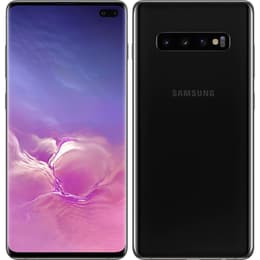
Galaxy S10
Galaxy S10
Starting at

Refurbished price:114.00

Versus €549.00 new

See options
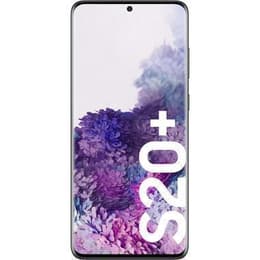
Galaxy S20+ 5G
Galaxy S20+ 5G
Starting at

Refurbished price:191.00

Versus €590.00 new

See options

Ratings

The Samsung Galaxy S10, released in March 2019, and the Samsung Galaxy S20 Plus 5G, launched in March 2020, represent two consecutive generations of Samsung's flagship smartphone line. While both devices offer a premium Android experience, the Galaxy S20 Plus 5G introduces advancements in display technology, camera capabilities, and connectivity, building upon the foundation laid by its predecessor.

Scores

Durability

When considering the practical lifespan of these devices, their release timelines and software support policies are key factors. Both phones have received their promised major Android operating system updates, but their support cycles have now concluded.

  • Release Timeline: The Galaxy S10 was released in March 2019, making it an older device compared to the Galaxy S20 Plus 5G, which launched in March 2020. This one-year difference impacts their respective software longevity.
  • Software Longevity: The Galaxy S10 received three major Android updates, concluding its OS update cycle around Android 12, with security updates ending around March 2023, though some bi-annual security patches might have extended into 2024. The Galaxy S20 Plus 5G, launching with Android 10, also received three major OS updates, reaching Android 13, and its software and security update support officially ended around April 2025.
  • Repairability: Both models received a low repairability score of 3 out of 10 from iFixit, indicating that repairs can be challenging due to the extensive use of adhesive, glued-down batteries, and in some cases, soldered components like the USB-C port on the S10.

Year of Release

2019

2020

Compatible with latest Update

No

No

OS

Android

Android

Foldable

No

No

Performance

The performance of a smartphone is largely determined by its internal components, affecting how smoothly applications run and how efficiently it handles demanding tasks. Both the Galaxy S10 and Galaxy S20 Plus 5G offer capable performance for their respective generations.

  • Processing Power: The Galaxy S10 is equipped with an octa-core processor that handles everyday applications and multitasking effectively. The Galaxy S20 Plus 5G features a newer generation octa-core processor, providing a noticeable improvement in speed and efficiency, particularly for more intensive applications and gaming.
  • Multitasking and Responsiveness: The Galaxy S10 typically comes with 8GB of RAM, which is sufficient for most multitasking needs. The Galaxy S20 Plus 5G generally offers 12GB of RAM, allowing for smoother transitions between numerous open applications and more demanding background processes.
  • Storage and Battery Behavior: Both devices offer various internal storage options, starting from 128GB, and support expandable storage via microSD cards. The Galaxy S10 has a 3400mAh battery, which users report can last a full day with light to medium usage. The Galaxy S20 Plus 5G has a larger 4500mAh battery; however, its higher refresh rate display can lead to similar or even shorter battery life for heavy users if the 120Hz mode is consistently enabled.

Memory (GB)

8 GB

8 GB

Screen quality

The visual experience on a smartphone is heavily influenced by its display technology, resolution, and refresh rate. Both the Galaxy S10 and Galaxy S20 Plus 5G feature high-quality Samsung displays, but with notable generational enhancements.

  • Display Technology and Clarity: The Galaxy S10 features a 6.1-inch Dynamic AMOLED display with a resolution of 1440x3040 pixels, offering sharp images and vibrant colors. The Galaxy S20 Plus 5G steps up to a larger 6.7-inch Dynamic AMOLED 2X display with a resolution of 1440x3200 pixels, providing a slightly more expansive viewing area and comparable clarity.
  • Refresh Rate and Smoothness: The Galaxy S10 has a standard 60Hz refresh rate, which provides a smooth viewing experience for most content. The Galaxy S20 Plus 5G introduces a 120Hz refresh rate option (at Full HD+ resolution), which results in noticeably smoother scrolling and more fluid animations, enhancing the overall user interaction. When set to its maximum resolution, the refresh rate reverts to 60Hz.
  • Brightness and Outdoor Visibility: Both displays offer excellent brightness levels and support HDR10+, ensuring good visibility in various lighting conditions and a rich contrast for HDR content. The S20 Plus 5G's display offers incremental improvements in peak brightness and reduced reflectivity.

Resolution

1440 x 3040

1440 x 3200

Screen type

Dynamic AMOLED

Dynamic AMOLED 2X

Audiovisual

Camera systems are a significant differentiator between smartphone generations, with continuous improvements in sensor technology and computational photography. The Galaxy S20 Plus 5G offers a more advanced camera setup compared to the Galaxy S10.

  • Rear Camera System: The Galaxy S10 features a versatile triple-camera system with a 12MP wide-angle lens, a 12MP telephoto lens with 2x optical zoom, and a 16MP ultrawide lens. The Galaxy S20 Plus 5G upgrades to a quad-camera system, including a 12MP wide-angle lens, a 64MP telephoto lens offering 3x hybrid optical zoom, a 12MP ultrawide lens, and a DepthVision sensor for enhanced depth perception.
  • Photography Performance: Both phones capture excellent photos in good lighting conditions. The S20 Plus 5G generally offers improved low-light performance and better zoom capabilities due to its higher-resolution telephoto sensor and larger pixels on the main sensor. The S20 Plus 5G's ultrawide camera also sees improvements in pixel size.
  • Video Recording and Audio: The Galaxy S10 can record video at 4K resolution at 60 frames per second. The Galaxy S20 Plus 5G expands on this by offering 8K video recording at 24 frames per second, in addition to 4K at 30/60 frames per second. Both devices feature stereo speakers tuned by AKG, providing a robust audio experience for media consumption.

Main camera

12 megapixels

12 megapixels

Front camera

10 megapixels

10 megapixels

Miscellaneous

Beyond the core specifications, several practical elements contribute to the overall user experience, including connectivity, physical design, and additional features.

  • Connectivity and Ports: A key distinction is the Galaxy S20 Plus 5G's support for 5G connectivity, offering faster mobile data speeds where available, while the Galaxy S10 is limited to 4G LTE. Both devices support modern Wi-Fi standards and Bluetooth 5.0. The Galaxy S10 retains a 3.5mm headphone jack, a feature absent on the Galaxy S20 Plus 5G, which relies solely on its USB-C port for wired audio and charging.
  • Biometric Security: Both models incorporate an ultrasonic in-display fingerprint sensor for secure unlocking, which users generally find reliable. They also offer face recognition capabilities.
  • Build and Handling: Both phones feature a premium construction with Gorilla Glass 6 on the front and back, and an aluminum frame, providing good durability and IP68 dust and water resistance. The Galaxy S20 Plus 5G is slightly larger and heavier than the standard Galaxy S10, which can impact one-handed use.

Weight

158 g

188 g

Screen size (in)

6.1

6.7

Network

4G

5G

SIM card

Physical SIM

Physical SIM + eSIM

Carrier compatibility

Unlocked

Unlocked

User feedback for both the Galaxy S10 and Galaxy S20 Plus 5G highlights their strengths and some common considerations. The Galaxy S10 is often praised for its compact design (compared to the S20 Plus 5G), the inclusion of a headphone jack, and its overall solid performance for its generation. Some users noted that its battery life, while adequate for many, could be a limiting factor for heavy usage. The camera system was generally well-regarded for everyday photography.

The Galaxy S20 Plus 5G is frequently lauded for its smoother 120Hz display, enhanced camera capabilities, particularly in low light and zoom, and the inclusion of 5G connectivity, making it more future-proof at the time of its release. However, some users observed that the 120Hz display, while visually appealing, could significantly impact battery endurance. The removal of the headphone jack was a point of contention for some.

For users who prioritize a more compact form factor, the convenience of a 3.5mm headphone jack, and a device that still offers reliable performance for daily tasks, the Galaxy S10 may be a suitable choice. Conversely, users who value a larger, higher refresh rate display, improved camera performance with advanced zoom features, and 5G connectivity for faster data speeds will likely find the Galaxy S20 Plus 5G better suited to their needs. Both devices, as quality-assured refurbished options, offer an eco-friendly alternative for consumers seeking premium smartphone experiences.


See all articles

Our recent comparisons