

Galaxy A56 Vs Xiaomi 12T

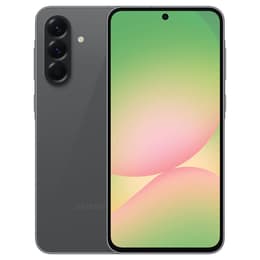
Galaxy A56
Galaxy A56
Starting at

Refurbished price:294.00

Versus €502.00 new

See options
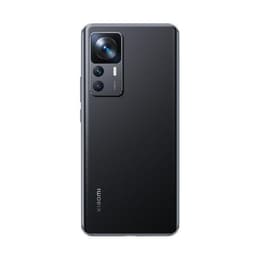
Xiaomi 12T
Xiaomi 12T
Starting at

Refurbished price:131.00

Versus €649.00 new

See options

Ratings

The Samsung Galaxy A56 and the Xiaomi 12T are both smartphones designed to offer a balanced experience for everyday users. While the Galaxy A56 was released in March 2025, the Xiaomi 12T entered the market earlier in October 2022. These devices present different strengths, particularly in their long-term software support and charging capabilities, catering to varying user priorities. Both operate on the Android platform, but their respective software ecosystems and update policies differ significantly.

Scores

Durability

When considering the long-term usability of a smartphone, software support and physical durability are key factors. The Galaxy A56, being a more recent release, offers a considerably longer support window compared to the Xiaomi 12T.

  • Software Longevity: The Samsung Galaxy A56 launched with Android 15 and is promised to receive six major Android OS upgrades and six years of security updates. Some reports even indicate an extension of security updates to seven years, lasting until March 2032. In contrast, the Xiaomi 12T, released with Android 12, was slated for three major Android OS updates (up to Android 15) and four years of security patches. As of March 2026, the Xiaomi 12 series, which includes the 12T, has reached its end-of-life for software support, meaning it will no longer receive HyperOS updates, security patches, or new features.
  • Physical Durability: The Galaxy A56 features an aluminum frame and is protected by Corning Gorilla Glass Victus+ on both its front and back, contributing to its robust build. It also carries an IP67 rating for dust and water resistance. The Xiaomi 12T utilizes Corning Gorilla Glass 5 for its front display protection.
  • Expected Lifespan: Users prioritizing extended software support and enhanced physical resilience against environmental elements will find the Galaxy A56 better suited for a longer practical lifespan.

Year of Release

2025

2022

Compatible with latest Update

Yes

Yes

OS

Android

Android

Foldable

No

No

Performance

The performance of a smartphone is largely determined by its internal processing unit and how efficiently it handles daily tasks, from app navigation to more demanding applications.

  • Processing Power: The Samsung Galaxy A56 is equipped with a newer generation processor, the Exynos 1580, which includes an Xclipse 540 graphics processing unit. This configuration is noted for offering improved efficiency and faster graphics performance compared to its predecessor. The Xiaomi 12T is powered by the MediaTek Dimensity 8100-Ultra processor, which was a capable chip at its release, designed to handle a variety of tasks smoothly.
  • Multitasking and Storage: Both devices offer configurations with 8GB or 12GB of RAM, paired with 128GB or 256GB of internal storage using UFS 3.1 technology, which contributes to faster data access. However, the Galaxy A56 does not support expandable storage via microSD, a feature present in some earlier A-series models.
  • Battery Behavior: Both smartphones house a 5000 mAh battery, providing ample power for a full day of typical use. A significant difference lies in charging speed: the Galaxy A56 supports 45W fast charging, while the Xiaomi 12T boasts a much faster 120W fast charging capability, allowing it to reach a full charge in approximately 19 minutes.

Memory (GB)

8 GB

8 GB

Screen quality

The display is a primary interface for smartphone interaction, and both the Galaxy A56 and Xiaomi 12T offer vibrant viewing experiences with distinct characteristics.

  • Display Technology and Clarity: Both devices feature AMOLED display technology, known for deep blacks and rich colors. The Galaxy A56 has a 6.7-inch Super AMOLED display with a resolution of 2340x1080 pixels (FHD+). The Xiaomi 12T offers a 6.67-inch AMOLED display with a slightly higher resolution of 2712x1220 pixels (FHD+), resulting in a marginally higher pixel density.
  • Brightness and Smoothness: Both phones support a 120 Hz refresh rate, contributing to smoother scrolling and more fluid animations. For outdoor visibility, the Galaxy A56 can reach a peak brightness of up to 1200 nits, while the Xiaomi 12T has a typical brightness of 500 nits and can achieve up to 900 nits in High Brightness Mode. Both displays support HDR10+ for enhanced contrast and color in compatible content.
  • Protection: The Galaxy A56's display is protected by Corning Gorilla Glass Victus+, offering a higher level of scratch and drop resistance compared to the Xiaomi 12T's Corning Gorilla Glass 5.

Resolution

1080 x 2340

1220 x 2712

Screen type

Super AMOLED

AMOLED

Audiovisual

For many users, the camera system is a crucial aspect of a smartphone, and both the Galaxy A56 and Xiaomi 12T provide capable setups for capturing moments.

  • Rear Camera Systems: The Samsung Galaxy A56 features a triple rear camera array consisting of a 50 MP main sensor with optical image stabilization (OIS), a 12 MP ultrawide lens, and a 5 MP macro lens. It includes AI capabilities such as enhanced subject detection in portrait mode and Object Eraser for photo editing. The Xiaomi 12T also has a triple rear camera setup, highlighted by a 108 MP main sensor with OIS, an 8 MP ultrawide lens, and a 2 MP macro lens.
  • Front Camera and Video Recording: For selfies, the Galaxy A56 is equipped with a 12 MP front camera, while the Xiaomi 12T offers a 20 MP front camera. Both devices are capable of recording video at up to 4K resolution at 30 frames per second with both their rear and front cameras.
  • Audio Experience: The Xiaomi 12T includes dual speakers with Dolby Atmos support, enhancing the media consumption experience. Information regarding the Galaxy A56's specific audio features beyond standard stereo speakers was not prominently detailed in the provided search results.

Main camera

4K@30fps

108 megapixels

Front camera

13 megapixels

20 megapixels

Miscellaneous

Beyond the core specifications, several practical elements contribute to the overall user experience and daily convenience of a smartphone.

  • Connectivity and Ports: Both the Galaxy A56 and Xiaomi 12T support 5G connectivity and modern Wi-Fi standards, including Wi-Fi 6, along with Bluetooth 5.3 (Xiaomi 12T) or 5.4 (Galaxy A56) and NFC for contactless payments. Both utilize a USB Type-C port for charging and data transfer.
  • Biometric Security: For secure unlocking, both smartphones incorporate an in-display fingerprint sensor. They also offer face recognition capabilities.
  • Design and Handling: The Galaxy A56 features an aluminum frame and Gorilla Glass Victus+ on both the front and back, contributing to a premium feel and enhanced durability. It measures 162.2 x 77.5 x 7.4 mm and weighs 198 g. The Xiaomi 12T has a Gorilla Glass 5 front and measures 163.1 x 75.9 x 8.6 mm, weighing 202 g. The Galaxy A56 is slightly thinner and lighter, which might contribute to a more comfortable grip for some users.

Weight

197 g

220 g

Screen size (in)

6.5

6.67

Network

5G

5G

SIM card

Dual Physical SIM + eSIM

Dual Physical SIM

Carrier compatibility

Unlocked

Unlocked

Connector

USB-C

USB-C

The Samsung Galaxy A56 and Xiaomi 12T cater to different user needs and priorities, largely influenced by their release timelines and the subsequent advancements in technology and software support policies. Users often praise the Galaxy A56 for its commitment to long-term software updates and its robust build quality, including an IP67 rating and Gorilla Glass Victus+ protection. Its display is also noted for its high brightness, making it suitable for various lighting conditions.

On the other hand, the Xiaomi 12T, while an older model, was well-regarded for its powerful processor at the time of its release and its exceptionally fast 120W charging capability, which remains a significant advantage for users who prioritize rapid power-ups. However, a frequent concern for the Xiaomi 12T is its limited software support, which has now reached its end-of-life, potentially impacting long-term security and access to new features.

Users prioritizing a device with a longer lifespan, guaranteed software updates, and enhanced physical durability will likely find the Samsung Galaxy A56 to be a more suitable choice. Its newer processor and advanced display protection also contribute to a more current user experience. Conversely, individuals who value extremely fast charging and a capable processor for its original release period, and are less concerned with ongoing software updates, might have found the Xiaomi 12T appealing at its launch. When considering either of these devices, exploring quality-assured refurbished options can provide an eco-friendly alternative for consumers looking to make a sustainable choice.


See all articles

Our recent comparisons