

Compare models
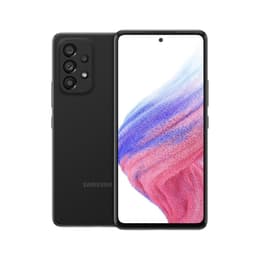
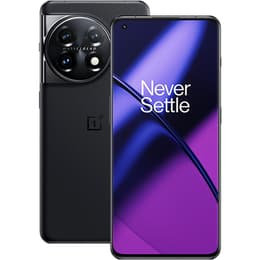
Galaxy A53 5G Vs OnePlus 11
- 1-year minimum warranty
- Free delivery on all orders
- Free 30-day returns
Differences at a glance
The Samsung Galaxy A53 5G, released in March 2022, and the OnePlus 11, launched globally in February 2023, are Android smartphones that cater to different user expectations. While the Galaxy A53 5G focuses on delivering a balanced experience with strong software support, the OnePlus 11 emphasizes high-end performance and rapid charging capabilities. Both devices run on the Android operating system, offering distinct user interfaces with Samsung's One UI and OnePlus's OxygenOS.
Available Models
Colour
Storage (GB)
Scores
Durability
The longevity of a smartphone is influenced by its release timeline, software support, and physical durability.
- Software Updates: Both devices offer four major Android OS upgrades and five years of security updates, providing comparable software longevity, with the OnePlus 11 starting its cycle later.
- Physical Durability: The Galaxy A53 5G has an IP67 rating and Gorilla Glass 5, while the OnePlus 11 features Gorilla Glass Victus and splash resistance, but has shown some vulnerability in extreme bend tests.
- Repairability: The OnePlus 11 has a repairability score of 6.75 out of 10, indicating a moderate ease of repair for certain components.
Year of Release
2022
2023
Compatible with latest Update
Yes
Yes
OS
Android
Android
Foldable
No
No
Performance
The performance of these two smartphones differs significantly, primarily due to their internal processing capabilities and storage technologies.
- Processing Power: The OnePlus 11 offers a significantly more powerful and responsive experience for demanding applications and gaming, while the Galaxy A53 5G is well-suited for general use but may show limitations with intensive tasks.
- Storage and RAM: The OnePlus 11 utilizes faster UFS 4.0 storage in its higher configurations and offers up to 16GB of RAM, whereas the Galaxy A53 5G provides expandable storage and up to 8GB of RAM.
- Battery Charging: The OnePlus 11 features exceptionally fast 100W wired charging, significantly quicker than the Galaxy A53 5G's 25W wired charging.
Screen quality
The visual experience on both devices is a key differentiator, with each offering distinct display technologies and characteristics.
- Display Technology: The Galaxy A53 5G uses a Super AMOLED panel, while the OnePlus 11 features an LTPO3 Fluid AMOLED display with adaptive refresh rate technology.
- Resolution and Clarity: The OnePlus 11 offers a sharper Quad HD+ resolution, providing more detailed visuals compared to the Galaxy A53 5G's Full HD+ display.
- Brightness and Features: Both displays offer good brightness for outdoor use, with the OnePlus 11 supporting advanced HDR formats like Dolby Vision. The OnePlus 11 also has a curved screen design.
Resolution
1080 x 2400
1440 x 3216
Screen type
Super AMOLED
LTPO3 Fluid AMOLED
Audiovisual
Both smartphones offer capable camera systems and audio experiences, though with different strengths and features.
- Rear Camera System: The OnePlus 11 offers a high-resolution telephoto lens and a strong ultrawide camera, benefiting from Hasselblad color calibration. The Galaxy A53 5G provides a versatile quad-camera setup with OIS on its main sensor.
- Low-Light and Video: The OnePlus 11's main camera excels in low-light conditions and offers higher video recording capabilities (8K, 4K@60fps). The Galaxy A53 5G delivers decent low-light performance and 4K@30fps video.
- Front Camera and Audio: Both devices feature capable front cameras for selfies and video calls, and both include stereo speakers for an immersive audio experience.
Main camera
64 megapixels
50 megapixels
Front camera
32 megapixels
16 megapixels
Miscellaneous
Beyond core features, several practical elements contribute to the overall user experience of these smartphones.
- Connectivity: The OnePlus 11 offers more advanced Wi-Fi standards (Wi-Fi 6/7-ready) and Bluetooth 5.3, while the Galaxy A53 5G uses Wi-Fi 5 and Bluetooth 5.1. Both support 5G.
- Ports and Biometrics: Both devices feature USB-C ports and in-display fingerprint sensors, but neither has a 3.5mm headphone jack.
- Build and Handling: The OnePlus 11 has a glass and metal construction with a slightly larger and heavier build, while the Galaxy A53 5G uses plastic and is lighter and slightly more compact.
Weight
189 g
205 g
Screen size (in)
6.5
6.7
Network
5G
5G
SIM card
Physical SIM
Dual Physical SIM + eSIM
Carrier compatibility
Unlocked
Unlocked
Connector
USB-C
USB-C
What the community thinks
User feedback for the Samsung Galaxy A53 5G often highlights its impressive battery life, vibrant Super AMOLED display, and reliable camera performance in good lighting conditions. Common criticisms revolve around its processor, which some users find to be less powerful for demanding tasks, leading to occasional sluggishness. The lack of a charging brick in the box and slower charging speeds are also frequently mentioned.
For the OnePlus 11, users consistently praise its exceptional performance, rapid charging capabilities, and high-quality, fluid display. The camera system, co-developed with Hasselblad, generally receives positive remarks for its balanced color science and low-light performance, particularly from the main sensor. Some users express minor concerns about the front camera's performance in challenging lighting and the device's durability in extreme bend tests. The absence of wireless charging and a full IP rating are also noted by some.
Users prioritizing a smooth, high-performance experience for gaming, demanding applications, and who value extremely fast charging will find the OnePlus 11 well-suited to their needs. Its advanced display and robust camera system also cater to those seeking a premium multimedia and photography experience. Conversely, users who prioritize extended battery life, expandable storage, and a more budget-conscious option with solid overall functionality for everyday tasks may lean toward the Galaxy A53 5G. Its IP67 rating also offers an advantage for those needing greater dust and water resistance. Both devices represent compelling choices within the Android ecosystem, and considering quality-assured refurbished options can provide an eco-friendly alternative for either model.










