

Galaxy A53 5G Vs Google Pixel 6A

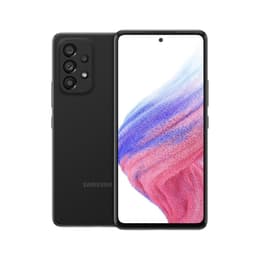
Galaxy A53 5G
Galaxy A53 5G
Starting at

Refurbished price:119.00

Versus €459.00 new

See options
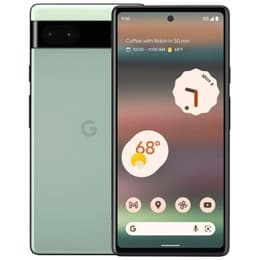
Google Pixel 6A
Google Pixel 6A
Starting at

Refurbished price:144.00

Versus €459.00 new

See options

Ratings

The Samsung Galaxy A53 5G, released in March 2022, and the Google Pixel 6A, launched in July 2022, are both Android smartphones designed to offer a balanced experience. While both devices provide 5G connectivity and a focus on user experience, they differentiate themselves primarily through their display technology, processing power, and camera philosophies. Both run on the Android operating system, offering a familiar interface for many users.

Scores

Durability

When considering the long-term usability of a smartphone, factors like software support and physical resilience are key. Both the Galaxy A53 5G and the Pixel 6A offer robust support timelines and a degree of physical protection.

  • Software Longevity: The Samsung Galaxy A53 5G is slated to receive four major Android OS upgrades and five years of security updates, extending its software support through Android 16. The Google Pixel 6A, released a few months later, benefits from Google's commitment to five years of both OS and security updates, with support expected until at least July 2027.
  • Physical Durability: Both devices carry an IP67 rating for dust and water resistance, meaning they can withstand submersion in up to one meter of water for 30 minutes. The Galaxy A53 5G features Corning Gorilla Glass 5 for screen protection, while the Pixel 6A uses Gorilla Glass 3.
  • Repairability: The Pixel 6A generally receives a slightly higher repairability score, with some assessments placing it around 7 out of 10, noting that its battery is relatively easy to remove and the display is attached with clips. The Galaxy A53 5G has a repairability score of approximately 6.75 to 7.5 out of 10, with its back cover and battery requiring some adhesive removal for access.

Year of Release

2022

2022

Compatible with latest Update

Yes

Yes

OS

Android

Android

Foldable

No

No

Performance

The performance of these devices is influenced by their internal components, impacting how smoothly applications run and how efficiently they handle daily tasks. Both offer capable performance for general use, but with different strengths.

  • Processing Capabilities: The Google Pixel 6A is equipped with a processor designed for flagship-level performance, which contributes to smooth operation and efficient handling of demanding applications and multitasking. The Samsung Galaxy A53 5G features an octa-core processor that provides smooth navigation for everyday tasks like browsing and video playback, though it may show occasional frame drops during intensive gaming.
  • System Responsiveness: Users of the Pixel 6A often report a highly responsive and fluid user experience, with quick app loading and seamless transitions. The Galaxy A53 5G also offers a generally smooth experience for typical smartphone usage.
  • Storage and RAM: Both devices typically come with 6GB of RAM and 128GB of internal storage. The Galaxy A53 5G offers expandable storage via a microSD card, providing flexibility for users who need more space for media and files. The Pixel 6A does not support expandable storage.

Memory (GB)

4 GB

6 GB

Screen quality

The visual experience on a smartphone is largely defined by its display, and these two models present different approaches to screen technology and features.

  • Display Technology and Size: The Samsung Galaxy A53 5G features a 6.5-inch Super AMOLED display, known for its vibrant colors and deep blacks. The Google Pixel 6A has a slightly smaller 6.1-inch OLED display, which also delivers rich colors and good contrast.
  • Refresh Rate and Smoothness: A key difference lies in the refresh rate. The Galaxy A53 5G offers a 120Hz refresh rate, contributing to smoother scrolling and a more fluid visual experience, particularly noticeable during fast-paced content or navigation. The Pixel 6A features a standard 60Hz refresh rate.
  • Brightness and Clarity: The Galaxy A53 5G's display can reach up to 800 nits of peak brightness, enhancing visibility in bright outdoor conditions. Both phones offer Full HD+ resolution (1080 x 2400 pixels), providing clear and sharp visuals for everyday viewing.

Resolution

1080 x 2400

1080 x 2400

Screen type

Super AMOLED

OLED

Audiovisual

For many users, the camera system is a primary consideration, and both the Galaxy A53 5G and the Pixel 6A offer capable photography experiences, albeit with different strengths and sensor configurations.

  • Rear Camera System: The Samsung Galaxy A53 5G is equipped with a quad-camera setup, including a 64MP main sensor with optical image stabilization (OIS), a 12MP ultrawide lens, and dedicated 5MP macro and depth sensors. The Google Pixel 6A features a dual-camera system with a 12.2MP main sensor (with OIS) and a 12MP ultrawide lens.
  • Photography Performance: The Pixel 6A is widely praised for its computational photography, delivering excellent image quality, particularly in challenging conditions like low light, and includes features like Magic Eraser and Night Sight. The Galaxy A53 5G performs well in daylight conditions, capturing detailed and vibrant photos, but its low-light performance is considered average.
  • Video Recording and Front Camera: Both devices are capable of recording 4K video at 30fps, with the Pixel 6A also offering 4K at 60fps. For selfies, the Galaxy A53 5G has a 32MP front camera, while the Pixel 6A features an 8MP front camera, which some users note can be less impressive in low-light scenarios.

Main camera

64 megapixels

12.2 megapixels

Front camera

32 megapixels

8 megapixels

Miscellaneous

Beyond the core features, several practical elements contribute to the overall user experience, from how a device connects to other technologies to its physical design.

  • Connectivity and Ports: The Google Pixel 6A supports Wi-Fi 6E and Bluetooth 5.2, offering faster and more stable wireless connections. The Samsung Galaxy A53 5G supports Wi-Fi 5 (802.11 a/b/g/n/ac) and Bluetooth 5.1. Both devices feature a USB-C port for charging and data transfer, with the Pixel 6A utilizing USB-C 3.1 and the A53 5G using USB-C 2.0. Neither phone includes a 3.5mm headphone jack.
  • Biometrics and Sensors: Both smartphones incorporate an in-display optical fingerprint sensor for secure unlocking. They also include standard sensors such as an accelerometer, gyroscope, and compass.
  • Design and Handling: The Pixel 6A is slightly more compact and lighter, weighing 178g with dimensions of 152.2 x 71.8 x 8.9 mm. The Galaxy A53 5G is larger and heavier at 189g and 159.6 x 74.8 x 8.1 mm. The Pixel 6A features an aluminum frame and a plastic back, while the A53 5G has a plastic back and frame.

Weight

189 g

178 g

Screen size (in)

6.5

6.1

Network

5G

5G

SIM card

Physical SIM

Physical SIM + eSIM

Carrier compatibility

Unlocked

Unlocked

Connector

USB-C

USB-C

The Samsung Galaxy A53 5G and the Google Pixel 6A each present a compelling package for different user priorities. User feedback for the Pixel 6A often highlights its exceptional camera performance, particularly its computational photography features, and its smooth software experience thanks to its powerful processor. Some common criticisms include its 60Hz display and slower charging speeds. Conversely, the Galaxy A53 5G is frequently praised for its vibrant 120Hz Super AMOLED display and its larger battery capacity, which often translates to longer usage times. However, some users note that its processor may not be as robust for intensive tasks, and its low-light camera performance is not as strong as some competitors.

Users prioritizing a highly responsive display for media consumption and general navigation, along with a larger battery for extended use, may find the Samsung Galaxy A53 5G well-suited to their needs. Its expandable storage also appeals to those who require more space for files. On the other hand, individuals who place a premium on advanced camera capabilities, especially for point-and-shoot photography in various lighting conditions, and a consistently fluid software experience, might lean towards the Google Pixel 6A. Its extended software support also offers peace of mind for long-term use. Both devices represent solid choices in the Android ecosystem, and considering a quality-assured refurbished option for either model can be an eco-friendly alternative to purchasing new.


See all articles

Our recent comparisons