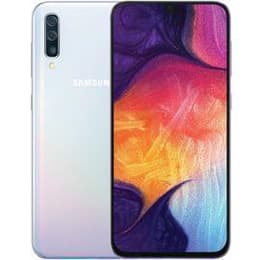
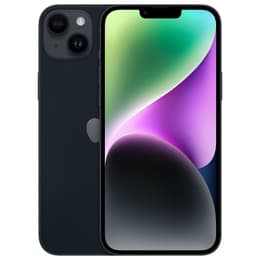


Galaxy A50 Vs iPhone 14 Plus

Galaxy A50
Galaxy A50
Starting at

Refurbished price:107.00

Versus €349.00 new

See options
iPhone 14 Plus
iPhone 14 Plus
Starting at

Refurbished price:317.00

Versus €879.00 new

See options

Ratings

The Samsung Galaxy A50, released in early 2019, and the Apple iPhone 14 Plus, launched in late 2022, represent distinct approaches to smartphone design and functionality. While both are smartphones, they operate on different ecosystems, Android and iOS respectively, and were introduced with a significant time gap between their releases. This comparison will highlight the practical differences that arise from their respective generations and design philosophies.

Scores

Durability

The lifespan of a smartphone is often influenced by its release date, software support, and physical resilience. The Galaxy A50 and iPhone 14 Plus show notable differences in these areas.

  • Release Timeline: The Galaxy A50 was introduced in February 2019, making it a considerably older device compared to the iPhone 14 Plus, which arrived in October 2022. This age difference directly impacts their expected software support.
  • Software Longevity: The Galaxy A50 launched with Android 9.0 Pie and received updates up to Android 11. In contrast, the iPhone 14 Plus launched with iOS 16 and is expected to receive major iOS updates for several more years, typically extending software support significantly longer than its Android counterpart. This means the iPhone 14 Plus will benefit from newer features and security patches for a more extended period.
  • Physical Durability: The Galaxy A50 features a plastic back and Gorilla Glass 3 for screen protection. The iPhone 14 Plus, however, incorporates a Ceramic Shield front cover, a glass back, and an aluminum frame, along with an IP68 rating for water and dust resistance, suggesting a more robust build against daily wear and tear.

Year of Release

2019

2022

Compatible with latest Update

No

Yes

OS

Android

iOS

Foldable

No

No

Performance

Performance is a key differentiator, especially given the generational gap between these two devices.

  • Processing Power: The iPhone 14 Plus offers a significantly more powerful and efficient processing unit. This translates to smoother app loading, more fluid multitasking, and a superior experience with demanding applications and graphics-intensive games. The Galaxy A50, while capable for everyday tasks at its release, will show limitations with newer, more resource-intensive apps.
  • Storage and RAM: Both devices offer various storage configurations. The Galaxy A50 came with 4GB or 6GB of RAM, while the iPhone 14 Plus features 6GB of RAM. This difference in RAM, combined with the more advanced processor in the iPhone 14 Plus, contributes to its ability to handle multiple applications simultaneously without slowdowns.
  • Battery Performance: The iPhone 14 Plus is known for its extended battery life, often lasting a full day or more for many users, even with moderate to heavy usage. The Galaxy A50, with its 4000 mAh battery, offered good battery life at its launch, but the overall efficiency of the iPhone's hardware and software typically results in longer practical usage times.

Memory (GB)

4 GB

6 GB

Screen quality

The display is a primary interface for any smartphone, and both devices offer distinct viewing experiences.

  • Display Technology and Size: Both the Galaxy A50 and iPhone 14 Plus feature Super AMOLED or OLED displays, known for deep blacks and vibrant colors. The Galaxy A50 has a 6.4-inch display, while the iPhone 14 Plus offers a larger 6.7-inch display, providing more screen real estate for content consumption.
  • Resolution and Clarity: The Galaxy A50 has a resolution of 1080x2340 pixels, and the iPhone 14 Plus features a 2778x1284-pixel resolution. Both offer sharp visuals for typical viewing distances, though the iPhone 14 Plus has a slightly higher pixel density.
  • Brightness and Refresh Rate: The iPhone 14 Plus provides significantly higher peak brightness levels, reaching up to 1200 nits for HDR content, which improves visibility in bright outdoor conditions. Both devices feature a standard 60Hz refresh rate, meaning the smoothness of scrolling and animations will be similar in this regard.

Resolution

1080 x 2340

1284 x 2778

Screen type

Super AMOLED

Super Retina XDR OLED

Audiovisual

Camera capabilities have evolved considerably, and the difference between these two models reflects that progression.

  • Rear Camera System: The Galaxy A50 features a triple-camera setup with a 25MP main sensor, an 8MP ultra-wide, and a 5MP depth sensor. The iPhone 14 Plus has a dual-camera system, comprising a 12MP main camera with sensor-shift optical image stabilization and a 12MP ultra-wide camera.
  • Photography Performance: The iPhone 14 Plus benefits from a larger main sensor, wider aperture, and advanced computational photography features like Photonic Engine and Smart HDR 4, which lead to improved detail, color accuracy, and significantly better low-light performance compared to the Galaxy A50. The iPhone 14 Plus also features autofocus on its front-facing camera for clearer selfies.
  • Video Recording: The iPhone 14 Plus offers advanced video capabilities, including 4K Dolby Vision HDR recording, Cinematic mode for shallow depth of field effects, and Action mode for stabilized video capture. The Galaxy A50 is limited to 1080p video recording.

Main camera

25 megapixels

12 megapixels

Front camera

25 megapixels

12 megapixels

Miscellaneous

Beyond core features, several practical elements contribute to the overall user experience.

  • Connectivity: The iPhone 14 Plus supports 5G cellular connectivity, Wi-Fi 6, and Bluetooth 5.3, offering faster wireless speeds and more reliable connections. The Galaxy A50 supports 4G LTE, Wi-Fi 5 (802.11ac), and Bluetooth 5.0.
  • Ports and Biometrics: The Galaxy A50 includes a USB-C port for charging and data transfer, along with a 3.5mm headphone jack and an in-display fingerprint sensor. The iPhone 14 Plus uses a Lightning port and relies on Face ID for secure authentication. It does not have a headphone jack.
  • Additional Features: The iPhone 14 Plus includes advanced safety features such as Crash Detection and Emergency SOS via satellite, which are not present in the Galaxy A50. It also features an Ultra Wideband chip for spatial awareness.

Weight

166 g

150 g

Screen size (in)

6.4

6.7

Network

4G

5G

SIM card

Dual Physical SIM

eSIM

Carrier compatibility

Unlocked

Unlocked

Connector

USB-C + Jack 3.5mm

Lightning

The Samsung Galaxy A50 and iPhone 14 Plus cater to different user expectations, largely due to their release dates and operating systems. Users often praised the Galaxy A50 for its vibrant AMOLED display and solid battery life at its price point when it was released. Some common criticisms included its plastic build and the camera's performance in challenging lighting conditions compared to more premium devices of its era.

The iPhone 14 Plus, on the other hand, has been widely recognized for its exceptional battery life, robust performance for demanding tasks, and advanced camera system, particularly for video recording. Some users noted that its display maintains a 60Hz refresh rate, unlike some higher-end smartphones, and that it uses a processor also found in the previous generation Pro models.

Users prioritizing a modern, long-supported device with advanced camera capabilities, strong performance, and robust durability features will find the iPhone 14 Plus well-suited to their needs. Its extended software support and safety features make it a compelling choice for those seeking a device with a longer practical lifespan. Conversely, individuals looking for a device that offers a headphone jack and a more open software ecosystem might consider the Galaxy A50, understanding that it represents an older generation of technology with more limited ongoing software support.

For those considering either device, exploring quality-assured refurbished options can provide an eco-friendly alternative, extending the life cycle of these products and offering a sustainable choice.
See all articles

Our recent comparisons