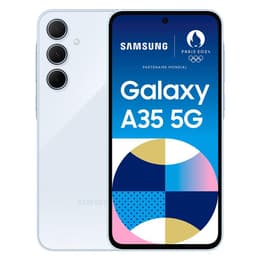
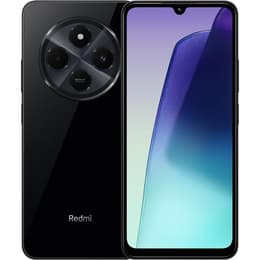


Galaxy A35 Vs Xiaomi Redmi 14C

Galaxy A35
Galaxy A35
Starting at

Refurbished price:206.00

Versus €431.43 new

See options
Xiaomi Redmi 14C
Xiaomi Redmi 14C
Starting at

Refurbished price:128.20

Versus €189.00 new

See options

Ratings

The Samsung Galaxy A35 (released March 2024) and the Xiaomi Redmi 14C (released August 2024) are both contemporary smartphones designed for everyday use. While both devices offer a large display and capable cameras for their segment, the Galaxy A35 distinguishes itself with a more vibrant screen technology and a stronger commitment to software longevity, whereas the Redmi 14C focuses on a large display size and a generous battery capacity.

Scores

Durability

When considering the long-term usability of these devices, their release timelines and software support policies are key factors. The Samsung Galaxy A35, launched in early 2024, benefits from Samsung's extended update commitment, while the Xiaomi Redmi 14C, released later in the same year, offers a standard update cycle for its category.

  • Software Support: The Galaxy A35 is projected to receive four major Android operating system upgrades and five years of security updates, ensuring a longer period of current features and protection. The Redmi 14C typically offers two years of OS updates and four years of security updates, providing a solid but shorter support window.
  • Update Frequency: Samsung provides quarterly security updates for the Galaxy A35, maintaining consistent protection against emerging threats. Information on the Redmi 14C's specific security update frequency is less detailed, though it is generally expected to receive regular updates within its support period.
  • Physical Durability: The Galaxy A35 features Gorilla Glass Victus+ on its front for enhanced screen protection and boasts an IP67 rating for dust and water resistance, contributing to its resilience against daily wear and tear. The Redmi 14C typically uses a glass front and back (or eco-leather back option) but does not specify an official IP rating for water and dust resistance.

Year of Release

2024

2024

Compatible with latest Update

Yes

Yes

OS

Android

Android

Foldable

No

No

Performance

Both smartphones are equipped to handle daily tasks, but they approach performance with different underlying hardware, impacting how smoothly they manage applications and multitasking.

  • Processing Power: The Galaxy A35 is powered by a processor that provides a responsive experience for general navigation, social media, and moderate gaming. Users generally report smooth operation, though some occasional lag might occur with very demanding applications. The Redmi 14C utilizes a processor designed for efficient performance in everyday activities like browsing, messaging, and casual gaming. While capable, it may show minor stutters when handling multiple apps simultaneously or more intensive tasks.
  • Multitasking and Storage: The Galaxy A35 is available with up to 8GB of RAM, which supports efficient multitasking and keeps more applications running in the background without needing to reload. It offers storage options up to 256GB, utilizing UFS 2.2 technology for faster data access, and includes a microSD card slot for further expansion up to 1TB. The Redmi 14C also comes with up to 8GB of RAM, often with additional virtual RAM expansion capabilities, and storage up to 256GB, though it uses eMMC 5.1 storage, which is generally slower than UFS. It also supports microSD card expansion up to 1TB.
  • Battery Behavior: The Galaxy A35 features a 5000mAh battery, providing approximately 1.5 days of typical use or around 7 hours of screen-on time for extensive activities. The Redmi 14C has a slightly larger 5160mAh battery, with users reporting similar endurance of about 1.5 days of moderate use or over 16 hours in Wi-Fi tests. Both devices support wired fast charging, with the Galaxy A35 at 25W and the Redmi 14C at 18W, though neither typically includes a charger in the box.

Memory (GB)

6 GB

4 GB

Screen quality

The visual experience on these two smartphones differs significantly due to their display technologies and specifications, influencing clarity, color reproduction, and outdoor visibility.

  • Display Technology and Clarity: The Samsung Galaxy A35 features a 6.6-inch Super AMOLED display with Full HD+ resolution (1080 x 2340 pixels), delivering deep blacks, vibrant colors, and sharp image quality. The Xiaomi Redmi 14C sports a larger 6.88-inch IPS LCD panel with HD+ resolution (720 x 1640 pixels). While offering a spacious viewing area, the lower resolution on a larger screen can result in a less sharp appearance for some content.
  • Brightness and Refresh Rate: The Galaxy A35 offers a peak brightness of 1000 nits in High Brightness Mode (HBM), coupled with Vision Booster technology, ensuring excellent visibility even in direct sunlight. It also provides a smooth 120Hz refresh rate for fluid scrolling and animations. The Redmi 14C reaches up to 600 nits peak brightness in HBM, which is adequate for indoor use but may be less visible in bright outdoor conditions. It also features a 120Hz refresh rate, contributing to a smooth user interface.
  • Eye Comfort: The Redmi 14C includes TÜV Rheinland Low Blue Light and Flicker Free certifications, along with DC dimming, designed to reduce eye strain during prolonged use. The Galaxy A35's Super AMOLED display also offers good eye comfort features, though specific certifications are not as prominently highlighted in comparison.

Resolution

1080 x 2340

720 x 1640

Screen type

Super AMOLED

IPS LCD

Audiovisual

Both devices offer multi-camera setups, but their capabilities for capturing photos and videos vary, particularly in challenging lighting conditions and video recording quality.

  • Rear Camera System: The Galaxy A35 is equipped with a versatile triple camera system, including a 50MP main sensor with Optical Image Stabilization (OIS), an 8MP ultrawide lens, and a 5MP macro camera. The OIS helps in capturing clearer photos and more stable videos. The Redmi 14C features a dual-camera setup with a 50MP primary sensor and an auxiliary lens, often a 2MP depth sensor. It lacks OIS, which can affect image sharpness in certain situations.
  • Photography Performance: In good lighting, the Galaxy A35 produces detailed images with vibrant, though sometimes slightly saturated, colors. Its low-light performance is decent for its category, but it may not match more expensive phones. The Redmi 14C also captures decent photos with good detail and colors in well-lit environments, but its performance significantly diminishes in low-light conditions, often resulting in blurrier and noisier images due to the absence of OIS.
  • Video Recording and Front Camera: The Galaxy A35 supports 4K video recording at 30 frames per second (fps) with its main rear camera and also with its 13MP front camera, offering good detail and stabilization. The Redmi 14C records videos at a maximum of 1080p at 30fps for both its 50MP rear and 13MP front cameras. The Galaxy A35's front camera is generally praised for natural skin tones, while the Redmi 14C's front camera performs well for video calls and basic selfies, often with beautification features.

Main camera

50 megapixels

50 megapixels

Front camera

13 megapixels

13 megapixels

Miscellaneous

Beyond core performance, several practical features and design elements differentiate these two smartphones, impacting daily convenience and user experience.

  • Connectivity and Ports: The Samsung Galaxy A35 supports 5G connectivity, offering faster mobile data speeds where available, along with Wi-Fi and Bluetooth 5.3. It features a USB-C port for charging and data transfer but omits a 3.5mm headphone jack. The Xiaomi Redmi 14C is a 4G LTE device, supporting dual-band Wi-Fi and Bluetooth 5.4. It includes a USB Type-C 2.0 port and retains the 3.5mm headphone jack, which can be convenient for users with wired audio accessories.
  • Biometric Security and Sensors: The Galaxy A35 incorporates an in-display fingerprint sensor for secure unlocking, alongside other sensors like an accelerometer, gyro, and compass. The Redmi 14C features a side-mounted fingerprint sensor, which is often quick and reliable, along with an accelerometer, compass, and virtual proximity sensing.
  • Build Materials and Handling: The Galaxy A35 presents a more premium feel with a glass front (Gorilla Glass Victus+) and a glass back, framed by plastic. It weighs around 209 grams. The Redmi 14C also uses a glass front and offers options for a glass or silicone polymer (eco-leather) back, with a plastic frame. It is slightly heavier, ranging from 204 to 211 grams, and its larger screen size contributes to its overall dimensions.

Weight

209 g

207 g

Screen size (in)

6.6

6.88

Network

5G

4G

SIM card

Dual Physical SIM

Dual Physical SIM

Carrier compatibility

Unlocked

Unlocked

Connector

USB-C

USB-C

User feedback for the Samsung Galaxy A35 often highlights its vibrant Super AMOLED display, reliable battery life with optimization, and capable camera performance in daylight as strong points. Some common criticisms include its slower charging speed and occasional performance lags with demanding applications. The Redmi 14C receives praise for its large 120Hz display, generally good battery life, and decent performance for everyday tasks. However, users sometimes note the HD+ resolution on a large screen can appear less sharp, and its camera struggles in low-light conditions.

Users prioritizing a superior display experience with vibrant colors, sharper resolution, and better outdoor visibility, along with a longer software support commitment and enhanced durability features like an IP rating and stronger glass, may find the Samsung Galaxy A35 more suitable. Its 5G connectivity and OIS-equipped main camera also offer advantages for those who value faster network speeds and more stable photography and videography. For individuals seeking a larger screen for media consumption, a 3.5mm headphone jack, and a device that handles daily tasks efficiently, the Xiaomi Redmi 14C could be a fitting choice. It provides a smooth scrolling experience and solid battery endurance for general use. Both devices offer a quality-assured refurbished option, providing a sustainable choice for consumers.


See all articles

Our recent comparisons