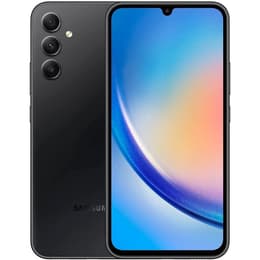
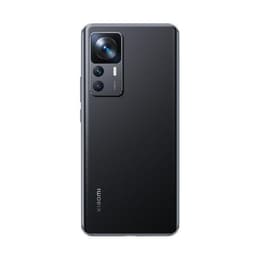


Galaxy A34 Vs Xiaomi 12T

Galaxy A34
Galaxy A34
Starting at

Refurbished price:135.00

Versus €399.00 new

See options
Xiaomi 12T
Xiaomi 12T
Starting at

Refurbished price:140.00

Versus €649.00 new

See options

Ratings

The Samsung Galaxy A34, released in March 2023, and the Xiaomi 12T, launched in October 2022, are both smartphones designed to offer a balanced experience for everyday users. While both devices feature vibrant displays and capable camera systems, they differentiate themselves through their approach to software longevity, processing power, and charging capabilities. Both run on the Android operating system, providing a familiar user experience with their respective custom interfaces.

Scores

Durability

When considering the long-term usability of a smartphone, factors like software support and physical resilience are key. The Galaxy A34 and Xiaomi 12T offer different commitments in these areas.

  • Software Updates: The Samsung Galaxy A34 was released with Android 13 and is promised to receive four generations of OS upgrades and five years of security updates, extending its software support until approximately 2027. The Xiaomi 12T, launched with Android 12 and MIUI 13, is expected to receive major OS updates up to Android 15 and four years of security patches.
  • Physical Durability: The Galaxy A34 features a glass front with Corning Gorilla Glass 5 protection, a plastic frame, and a plastic back, along with an IP67 rating for dust and water resistance, meaning it can withstand immersion in up to 1 meter of water for 30 minutes. The Xiaomi 12T also has a Gorilla Glass 5 front and an all-glass build with a plastic frame, but it lacks an official IP rating for water and dust resistance.
  • Expected Lifespan: Users prioritizing extended software support and certified water resistance may find the Galaxy A34 offers a slightly longer practical lifespan, while the Xiaomi 12T provides a solid, though less formally protected, build.

Year of Release

2023

2022

Compatible with latest Update

Yes

Yes

OS

Android

Android

Foldable

No

No

Performance

The performance of a smartphone impacts everything from app loading times to multitasking efficiency and gaming experiences. Both the Galaxy A34 and Xiaomi 12T are equipped with processors designed for smooth daily operation, but they approach power differently.

  • Processing Power: The Galaxy A34 is powered by an octa-core processor that handles general user interface navigation and common applications smoothly. However, some users have noted that it can experience stutters during intensive multitasking or with very demanding applications. The Xiaomi 12T features a different octa-core processor known for its snappy and responsive performance, capable of handling demanding games and applications with a near-flagship experience.
  • Memory and Storage: The Galaxy A34 is available with 6GB or 8GB of RAM and 128GB or 256GB of internal storage, with the added benefit of expandable storage via a microSD card up to 1TB. The Xiaomi 12T typically comes with 8GB of RAM and either 128GB or 256GB of internal storage, but it does not offer expandable storage.
  • Battery Behavior: Both devices house a 5000mAh battery. The Galaxy A34 generally offers good battery endurance, with some users reporting it can last up to two days with light usage. The Xiaomi 12T's 5000mAh battery provides solid endurance, though some reviews indicate it might just make it through a full day for heavy users, while others report good overall battery life.

Memory (GB)

6 GB

8 GB

Screen quality

The display is a primary interface for any smartphone, influencing everything from media consumption to daily interactions. Both the Galaxy A34 and Xiaomi 12T offer high-quality AMOLED panels with smooth refresh rates.

  • Display Technology and Size: The Samsung Galaxy A34 features a 6.6-inch Super AMOLED display, while the Xiaomi 12T comes with a slightly larger 6.67-inch AMOLED panel. Both technologies deliver vibrant colors and deep blacks, enhancing the viewing experience.
  • Resolution and Brightness: The Galaxy A34 has a Full HD+ resolution of 1080x2340 pixels and can reach a peak brightness of 1000 nits in High Brightness Mode, making it clearly visible outdoors. The Xiaomi 12T offers a higher resolution of 1220x2712 pixels and a typical brightness of 500 nits, with a peak of 900 nits, also providing good outdoor visibility and sharp visuals.
  • Refresh Rate and Smoothness: Both smartphones boast a 120Hz refresh rate, which contributes to smoother scrolling and a more fluid user experience, particularly noticeable in animations and compatible applications.

Resolution

1080 x 2340

1220 x 2712

Screen type

Super AMOLED

AMOLED

Audiovisual

For many users, the camera system is a crucial component of a smartphone, capturing everyday moments and special occasions. The Galaxy A34 and Xiaomi 12T offer different camera configurations and performance characteristics.

  • Rear Camera Systems: The Samsung Galaxy A34 features a triple rear camera setup, including a 48MP main sensor with Optical Image Stabilization (OIS), an 8MP ultrawide lens, and a 5MP macro lens. The Xiaomi 12T also has a triple rear camera system, highlighted by a 108MP main sensor, an 8MP ultrawide lens, and a 2MP macro lens.
  • Photography Performance: The Galaxy A34's main camera performs well in daylight, producing saturated images, though some noise can be present in low-light conditions, and the ultrawide camera may show some smudging. The Xiaomi 12T's 108MP main camera is capable, but its secondary ultrawide and macro cameras are considered less impressive.
  • Video and Audio: Both devices are capable of recording video at up to 4K resolution at 30 frames per second with their main rear cameras, and the Galaxy A34 also supports 4K@30fps for its front camera. Both phones feature stereo speakers, with the Galaxy A34 offering balanced and loud output suitable for videos, though with limited bass. The Xiaomi 12T's dual stereo speakers provide crisp and punchy audio, also with Dolby Atmos support, but some reviews note a lack of bass and inconsistent tonal balance.

Main camera

48 megapixels

108 megapixels

Front camera

13 megapixels

20 megapixels

Miscellaneous

Beyond the core specifications, several practical features contribute to the overall user experience, including connectivity, physical design, and biometric security.

  • Connectivity and Ports: Both the Galaxy A34 and Xiaomi 12T support 5G connectivity and modern Wi-Fi standards. The Galaxy A34 includes Bluetooth 5.3 and a USB-C port (USB 2.0 speed), but lacks a 3.5mm headphone jack and eSIM support. The Xiaomi 12T also features Bluetooth 5.3 and a USB-C port, but it does not have a 3.5mm headphone jack or expandable storage.
  • Biometric Security: Both smartphones incorporate optical in-display fingerprint sensors for secure unlocking. The Galaxy A34 also offers face recognition, though it is considered less secure.
  • Design and Handling: The Galaxy A34 weighs 199g and measures 161.3 x 78.1 x 8.2 mm, featuring a glass front and plastic frame/back. The Xiaomi 12T is slightly heavier at 202g and measures 163.1 x 75.9 x 8.6 mm, with an all-glass build and plastic frame. Both are generally considered two-handed devices due to their size.

Weight

199 g

220 g

Screen size (in)

6.6

6.67

Network

5G

5G

SIM card

Dual Physical SIM

Dual Physical SIM

Carrier compatibility

Unlocked

Unlocked

Connector

USB-C

USB-C

User feedback for the Samsung Galaxy A34 often praises its vibrant 120Hz AMOLED display, reliable battery life, and Samsung's commitment to long-term software updates. Common criticisms include its plastic build, the presence of some camera noise in challenging conditions, and the lack of a charger in the box. For the Xiaomi 12T, users frequently highlight its powerful processor, very fast 120W wired charging, and bright AMOLED screen as strong points. Conversely, some users express concerns about inconsistent battery life, the weaker performance of its secondary cameras, and the absence of an official IP rating or expandable storage.

Users prioritizing extended software longevity and certified water and dust resistance may find the Samsung Galaxy A34 to be a more suitable choice. Its expandable storage also appeals to those who need ample space for media and applications. On the other hand, individuals who value raw processing power for demanding tasks and exceptionally fast charging capabilities might lean towards the Xiaomi 12T. Its higher-resolution display also offers a slightly sharper visual experience. Both devices represent solid options, and choosing between them depends on whether your priorities align more with long-term software commitment and durability or with peak performance and rapid power replenishment. Exploring quality-assured refurbished options for either model can provide an eco-friendly alternative for consumers.


See all articles

Our recent comparisons