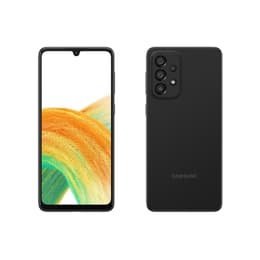
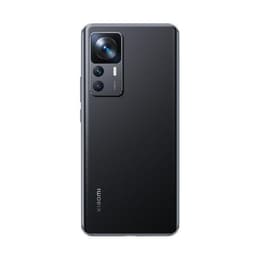


Galaxy A33 5G Vs Xiaomi 12T

Galaxy A33 5G
Galaxy A33 5G
Starting at

Refurbished price:100.00

Versus €389.00 new

See options
Xiaomi 12T
Xiaomi 12T
Starting at

Refurbished price:140.00

Versus €649.00 new

See options

Ratings

The Samsung Galaxy A33 5G, released in April 2022, and the Xiaomi 12T, launched in October 2022, are both Android smartphones designed for everyday use. While both devices offer 5G connectivity and capable camera systems, they diverge significantly in display technology, processing power, and charging capabilities, catering to different user priorities.

Scores

Durability

When considering the long-term usability of a smartphone, factors like software support, physical durability, and ease of repair play a crucial role. These aspects determine how long a device can remain functional and secure.

  • Release Timeline: The Samsung Galaxy A33 5G was released in April 2022, making it slightly older than the Xiaomi 12T, which launched in October 2022. This difference in release date can impact the duration of future software support.
  • Software Longevity: The Galaxy A33 5G benefits from Samsung's policy of providing four generations of Android OS upgrades and five years of security updates from its release date. This means it is expected to receive updates up to Android 16 and security patches until at least March 2027 or 2028. [10, 13, 22, 27, 30, 34, 35, 37, 42] In contrast, the Xiaomi 12T was initially promised three major Android OS updates (up to Android 15) and four years of security patches. [18, 31] However, recent reports indicate that the Xiaomi 12 series, including the 12T, reached its End of Life (EOL) for software updates in March 2026, meaning it will no longer receive HyperOS updates, security patches, or new features. [39, 41] This makes the Galaxy A33 5G a more suitable option for users prioritizing extended software support and security.
  • Physical Durability: The Galaxy A33 5G features an IP67 rating for dust and water resistance, meaning it can withstand immersion in up to 1 meter of fresh water for 30 minutes. [13, 30, 42] Its display is protected by Corning Gorilla Glass 5. [13, 42] The Xiaomi 12T offers an IP53 rating, providing protection against dust and light splashes. [19, 21] It also uses Corning Gorilla Glass 5 for screen protection and features a glass back with a plastic frame. [6, 9, 19, 24]
  • Repairability: The Samsung Galaxy A33 5G has a repairability score of 7.75 out of 10, indicating it is relatively easy to disassemble, with the battery being removable with the aid of isopropyl alcohol. [7, 16, 33] While a specific repairability score for the standard Xiaomi 12T was not readily available, the Xiaomi 12T Pro, a closely related model, received a score of 7.6 out of 10, suggesting a similar level of repairability. [32]

Year of Release

2022

2022

Compatible with latest Update

Yes

Yes

OS

Android

Android

Foldable

No

No

Performance

The performance of a smartphone is largely determined by its internal components, influencing how smoothly apps run, how quickly tasks are completed, and the overall responsiveness of the system.

  • Processor Capabilities: The Xiaomi 12T is equipped with a MediaTek Dimensity 8100-Ultra processor, which generally offers a higher level of performance, particularly for demanding applications and gaming. [4, 5, 6, 8, 9, 11, 14, 19, 24, 25, 29] The Galaxy A33 5G uses Samsung's Exynos 1280 processor, which provides capable performance for daily tasks and moderate multitasking. [1, 2, 10, 13, 20, 26, 36, 42] Users engaging in intensive gaming or heavy video editing may notice a more fluid experience on the Xiaomi 12T.
  • Multitasking and Responsiveness: Both devices offer configurations with 6GB or 8GB of RAM for the Galaxy A33 5G and 8GB of RAM for the Xiaomi 12T. [1, 3, 4, 6, 9, 10, 11, 12, 13, 14, 18, 19, 20, 24, 42] The higher RAM combined with the more powerful processor in the Xiaomi 12T contributes to smoother transitions between apps and more efficient handling of multiple applications simultaneously. The Galaxy A33 5G provides a responsive experience for typical smartphone usage, though some users have reported minor stutters when many apps are open. [26]
  • Storage Options: The Galaxy A33 5G comes with 128GB or 256GB of internal storage and supports expandable storage via a microSD card up to 1TB. [1, 3, 10, 12, 13, 15, 20, 26, 42] The Xiaomi 12T is available with 128GB or 256GB of internal storage but does not offer a microSD card slot for expansion. [4, 5, 6, 9, 11, 14, 18, 19, 24]
  • Battery Behavior: Both smartphones are equipped with a 5000mAh battery. [1, 2, 3, 4, 5, 6, 9, 10, 11, 15, 19, 24, 26, 29, 42] The Xiaomi 12T supports significantly faster 120W HyperCharge wired charging, capable of reaching a full charge in approximately 19 minutes. [4, 5, 6, 9, 11, 19, 21, 24, 25, 28, 29] The Galaxy A33 5G supports 25W fast charging. [10, 15, 26, 42] Users of the Galaxy A33 5G generally report dependable battery life, often lasting a full day or more with moderate use. [22, 30] The Xiaomi 12T also offers dependable battery life, with some users noting it can last an entire day even for heavy users. [24, 25, 28, 29]

Memory (GB)

6 GB

8 GB

Screen quality

The display is a primary interface for smartphone interaction, and its quality significantly impacts the user experience, from viewing content to navigating the interface.

  • Display Technology and Clarity: Both devices feature AMOLED displays, known for deep blacks and vibrant colors. The Galaxy A33 5G has a 6.4-inch Super AMOLED display with a resolution of 1080x2400 pixels (FHD+). [2, 3, 10, 12, 13, 15, 20, 23, 26, 36, 42] The Xiaomi 12T boasts a larger 6.67-inch CrystalRes AMOLED display with a higher resolution of 1220x2712 pixels, offering greater sharpness and detail. [4, 5, 6, 8, 9, 11, 19, 21, 24, 25, 29]
  • Refresh Rate and Smoothness: The Xiaomi 12T features a 120Hz refresh rate, providing a smoother visual experience, especially when scrolling through content or playing games. [4, 5, 6, 9, 19, 21, 24, 25, 29] The Galaxy A33 5G has a 90Hz refresh rate, which is an improvement over standard 60Hz displays and offers a fluid experience for most users. [3, 13, 20, 23, 26, 36, 42]
  • Brightness Levels: The Xiaomi 12T offers a typical brightness of 500 nits and can reach a peak brightness of 900 nits in high-brightness mode, making it suitable for outdoor visibility. [9, 19, 29] The Galaxy A33 5G can reach up to 800 nits of maximum brightness, providing good visibility in various lighting conditions. [36]
  • Viewing Experience: The Xiaomi 12T's larger screen size and higher resolution contribute to a more immersive viewing experience for media consumption and gaming. The Galaxy A33 5G features an Infinity-U notch for its front camera, while the Xiaomi 12T uses a punch-hole design, which some users may find less intrusive. [10, 23, 24]

Resolution

1080 x 2400

1220 x 2712

Screen type

Super AMOLED

AMOLED

Audiovisual

The camera system is a key consideration for many smartphone users, influencing the quality of photos and videos captured in various scenarios.

  • Rear Camera System: The Xiaomi 12T features a triple camera setup with a 108MP main sensor (f/1.7) with Optical Image Stabilization (OIS), an 8MP ultrawide lens (f/2.2) with a 120-degree field of view, and a 2MP macro lens (f/2.4). [4, 6, 8, 9, 11, 14, 19, 24, 25, 28] The Galaxy A33 5G also has a quad-camera system, including a 48MP main sensor (f/1.8) with OIS, an 8MP ultrawide lens (f/2.2), a 5MP macro lens (f/2.4), and a 2MP depth sensor (f/2.4). [2, 3, 10, 12, 15, 20, 26, 30, 42]
  • Photography Performance: Both devices offer OIS on their main cameras, which helps in capturing clearer photos, especially in challenging lighting conditions and for video recording. Users generally report that the main and ultrawide cameras on both phones perform well in good lighting, producing detailed images with good color accuracy. [23, 25, 26, 28, 30] The higher megapixel count of the Xiaomi 12T's main sensor can capture more detail, which can be beneficial for cropping. The macro cameras on both devices are generally considered functional but may not produce highly detailed results due to their lower resolution. [26, 28]
  • Video Recording Quality: Both the Galaxy A33 5G and Xiaomi 12T are capable of recording video at up to 4K resolution at 30 frames per second (fps) with their rear cameras. [2, 9, 11, 12, 19, 25, 26, 28, 30, 42] The Galaxy A33 5G's front camera records at 1080p@30fps, [12, 26, 42] while the Xiaomi 12T's front camera can record at 1080p@60fps. [19, 25, 28]
  • Audio Experience: The Xiaomi 12T features dual stereo speakers with Dolby Atmos support, providing a more immersive audio experience for media consumption. [6, 21, 24, 28] The Galaxy A33 5G also includes stereo speakers. [30] Both devices offer good microphone quality for calls and recording. [25, 28]

Main camera

48 megapixels

108 megapixels

Front camera

13 megapixels

20 megapixels

Miscellaneous

Beyond core performance and display, several practical features contribute to the overall user experience and daily convenience of a smartphone.

  • Connectivity and Ports: Both smartphones support 5G connectivity. [10, 13, 30, 42] The Xiaomi 12T supports Wi-Fi 6 (802.11ax) and Bluetooth 5.3, [9, 11, 21] while the Galaxy A33 5G supports Wi-Fi 5 (802.11 a/b/g/n/ac) and Bluetooth 5.1. [10, 12, 42] Both devices feature a USB-C port for charging and data transfer. [10, 12, 42] The Galaxy A33 5G notably lacks a 3.5mm headphone jack, a first for its series, [10] a trend also seen in the Xiaomi 12T. [5] The Xiaomi 12T includes an IR blaster, allowing it to function as a universal remote control. [28]
  • Biometric Security: Both phones incorporate in-display fingerprint sensors for secure unlocking. [3, 6, 9, 11, 21, 26, 42] They also offer face recognition for convenient access. [9, 36]
  • Build Materials and Handling: The Galaxy A33 5G has a plastic back and frame with a Gorilla Glass 5 front. [10, 13, 42] It weighs 186g and measures 159.7 x 74 x 8.1mm. [10, 13, 15] The Xiaomi 12T features a glass front (Gorilla Glass 5) and a glass back, with a plastic frame. [6, 9, 19, 21, 24] It weighs 202g and measures 163.1 x 75.9 x 8.6mm, making it slightly larger and heavier. [6, 9, 11, 24]
  • Additional Features: The Galaxy A33 5G offers expandable storage via a microSD card, which is absent in the Xiaomi 12T. [10, 12, 42] The Xiaomi 12T comes with a 120W charger included in the box, [6, 19, 25, 28] whereas the Galaxy A33 5G does not include a charger. [22]

Weight

186 g

220 g

Screen size (in)

6.4

6.67

Network

5G

5G

SIM card

Dual Physical SIM

Dual Physical SIM

Carrier compatibility

Unlocked

Unlocked

The Samsung Galaxy A33 5G and the Xiaomi 12T present distinct propositions for users seeking a capable Android smartphone. User feedback for the Galaxy A33 5G often highlights its dependable battery life, the inclusion of Optical Image Stabilization (OIS) on its main camera, and Samsung's commitment to extended software updates. [22, 23, 26, 30, 36] Criticisms sometimes point to its 90Hz display being less fluid than some competitors and the design, including the Infinity-U notch, being less modern. [22, 23, 26] Consensus opinions suggest it is a well-rounded device for casual users who prioritize software longevity and a balanced feature set.

For the Xiaomi 12T, common praise centers on its vibrant 120Hz AMOLED display, significantly faster 120W charging, and strong overall performance for demanding tasks and gaming. [21, 24, 25, 28, 29] Users also appreciate its loud stereo speakers with Dolby Atmos. [21, 24, 28] Frequent criticisms include a less impressive selfie camera, the absence of a metal frame, and the lack of expandable storage. [21, 28, 29] A significant concern for potential buyers is the recent announcement that the Xiaomi 12 series, including the 12T, has reached its End of Life for software updates as of March 2026, meaning it will no longer receive security patches or new Android versions. [39, 41]

Users prioritizing long-term software support and a higher level of water and dust resistance (IP67) may find the Samsung Galaxy A33 5G better suited to their needs. Its expandable storage is also a notable advantage for those who require more space for media and apps. Conversely, users who value a more powerful processor for gaming and demanding applications, a smoother 120Hz display, and exceptionally fast charging will likely lean towards the Xiaomi 12T. However, the Xiaomi 12T's limited ongoing software support is a critical factor to consider for future security and feature updates.

Both devices offer compelling features, and choosing between them depends on individual priorities. For those looking for an eco-friendly alternative, considering a quality-assured refurbished option for either model can provide excellent value while supporting sustainable choices.


See all articles

Our recent comparisons