

Compare models

Galaxy A33 5G Vs Galaxy S25 FE

  • 1-year minimum warranty
  • Free delivery on all orders
  • Free 30-day returns
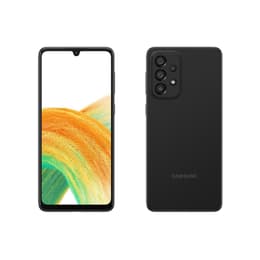
Galaxy A33 5G
Starting at

Refurbished price:€151.00

Versus €389.00 new

See options
Galaxy S25 FE
Starting at

Refurbished price:€390.00

Versus €750.00 new

See options

Differences at a glance

The Samsung Galaxy A33 5G (2022) and the Samsung Galaxy S25 FE (2025) represent different tiers and generations of Samsung's smartphone lineup. While the Galaxy A33 5G focuses on delivering everyday essentials in a mid-range format, the Galaxy S25 FE is positioned closer to flagship capability with updated internals, a more versatile camera array, and refined processing power.

Both devices run on Android with Samsung's custom interface, though their release years and hardware tiers create distinct user experiences. This comparison explores how their physical design, performance profiles, and features contrast to help users determine which model matches their individual daily requirements.

Available Models

Colour

Storage

Scores

Durability

When evaluating the physical and software longevity of these two smartphones, distinct differences emerge regarding their release timelines and subsequent support windows.

  • Release Timeline and Age: The Galaxy A33 5G launched in early 2022, whereas the Galaxy S25 FE arrived in late 2025, placing them several years apart in generational design and hardware maturity.
  • Software Support: The Galaxy S25 FE benefits from Samsung's modern extended update policy, offering significantly more years of major operating system upgrades compared to the older Galaxy A33 5G.
  • Practical Lifespan: Due to its newer release year and higher-tier components, the Galaxy S25 FE maintains software and security relevance further into the future, making it well-suited for long-term daily use.

Year of Release

2022

2025

Compatible with latest Update

Yes

Yes

OS

Android

Android

Foldable

No

No

Performance

System responsiveness and everyday operation differ notably due to the generational gap in processing hardware and memory management between the two models.

  • Everyday Responsiveness: The Galaxy S25 FE handles heavy multitasking, demanding applications, and high-end gaming smoothly with minimal stutter, while the Galaxy A33 5G is optimized for routine tasks like web browsing, messaging, and media streaming.
  • Storage and Memory: The Galaxy S25 FE features higher base RAM configurations that improve background app retention, whereas both devices offer standard storage capacities suitable for typical user files and photos.
  • Battery Behavior: Both devices are equipped with large battery capacities designed to comfortably last through a full day of standard use, though fast-charging speeds are more advanced on the newer Galaxy S25 FE.

Screen quality

Both smartphones feature vibrant display technologies, but differences in physical dimensions, refresh rates, and peak brightness levels shape their viewing experiences.

  • Display Technology: Both models utilize high-contrast OLED panels that deliver deep blacks and saturated colors, ensuring clear visibility for videos and photos.
  • Smoothness and Refresh Rate: The Galaxy S25 FE offers a high refresh rate that makes scrolling through web pages and navigating menus appear fluid, matching or exceeding the fluid motion standards set by the Galaxy A33 5G's 90Hz panel.
  • Size and Outdoor Visibility: The Galaxy S25 FE provides a slightly larger screen real estate paired with higher peak brightness levels, which aids readability under direct sunlight compared to the more compact Galaxy A33 5G.

Audiovisual

Imaging capabilities vary significantly, as the Galaxy S25 FE incorporates a more robust sensor suite than the mid-range configuration found on the Galaxy A33 5G.

  • Camera Array: The Galaxy S25 FE includes a dedicated telephoto lens for optical zoom alongside its main and ultra-wide sensors, whereas the Galaxy A33 5G relies on macro and depth sensors to complete its quad setup.
  • Low-Light and Video Performance: The Galaxy S25 FE captures sharper details and manages challenging lighting conditions more effectively, while the Galaxy A33 5G delivers dependable casual snapshots for everyday memories.
  • Media and Audio Output: Both devices feature stereo speakers suitable for casual video playback and hands-free calls, though the newer model provides richer acoustic depth during media consumption.

Miscellaneous

Physical construction, connectivity standards, and daily handling characteristics establish practical boundaries for how each device fits into a user's routine.

  • Build and Handling: The Galaxy A33 5G uses a plastic frame and back panel keeping it lightweight, while the Galaxy S25 FE incorporates more refined materials alongside robust water and dust resistance ratings.
  • Connectivity: Both models support modern 5G networks, Wi-Fi, and Bluetooth, though the newer Galaxy S25 FE integrates updated wireless standards for more stable peripheral connections.
  • Security Sensors: Both smartphones utilize biometric authentication features, including secure facial recognition and integrated fingerprint sensors for quick device unlocking.

Weight

186 g

190 g

Screen size (in)

6.4

6.7

Network

5G

5G

SIM card

Physical SIM

Physical SIM + eSIM

Carrier compatibility

Unlocked

Unlocked

Connector

USB-C

USB-C

What the community thinks

Deciding between the Galaxy A33 5G and the Galaxy S25 FE depends heavily on individual usage priorities and what tasks matter most to you. Users prioritizing high-end gaming performance, advanced camera versatility with optical zoom, and extended software support will find the Galaxy S25 FE well-suited to their needs. Conversely, users seeking a reliable, straightforward device for everyday communication, media streaming, and essential apps will find the Galaxy A33 5G meets those requirements without unnecessary complexity.

For those mindful of environmental impact, choosing a quality-assured refurbished option provides a sustainable choice that extends the lifecycle of these electronics. Ultimately, both devices cater to different expectations, allowing users to select the model that best aligns with their daily habits and technical preferences.