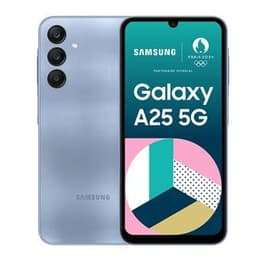



Galaxy A25 Vs Google Pixel 8 Pro

Galaxy A25
Galaxy A25
Starting at

Refurbished price:156.00

Versus €319.11 new

See options
Google Pixel 8 Pro
Google Pixel 8 Pro
Starting at

Refurbished price:293.00

Versus €1,099.00 new

See options

Ratings

The Samsung Galaxy A25, released in December 2023, and the Google Pixel 8 Pro, launched in October 2023, represent distinct offerings within the Android smartphone market. While both devices operate on the Android platform, they cater to different user expectations, primarily differing in their performance capabilities, camera systems, and overall user experience. The Galaxy A25 positions itself as a capable option for everyday use, whereas the Pixel 8 Pro is designed for users seeking advanced features and a premium experience.

Scores

Durability

When considering the long-term usability of these smartphones, both the Samsung Galaxy A25 and the Google Pixel 8 Pro offer substantial software support, though with differing durations. The Pixel 8 Pro, being a flagship device, generally receives a longer commitment to software and security updates from Google, extending its practical lifespan in terms of software features and security patches. The Galaxy A25 also provides a commendable update policy for its segment.

  • Software Support: The Google Pixel 8 Pro is expected to receive seven years of OS and security updates, offering an extended period of current software features and security. The Samsung Galaxy A25 is promised four years of OS updates and five years of security updates, which is robust for its category.
  • Physical Durability: The Pixel 8 Pro features a more premium build with Gorilla Glass Victus 2 on the front and back, coupled with an aluminum frame, and boasts an IP68 rating for dust and water resistance. The Galaxy A25 utilizes a plastic frame and back, and some sources indicate an IP67 rating, marking an improvement for its series.
  • Repairability: The Pixel 8 Pro generally receives moderate repairability scores, with some assessments noting challenges in battery replacement due to strong adhesives. While specific repairability scores for the A25 are less widely publicized, Pixel phones are often highlighted for their relative ease of repair compared to some other brands.

Year of Release

2023

2023

Compatible with latest Update

Yes

Yes

Foldable

No

No

Performance

The performance distinction between the Galaxy A25 and the Pixel 8 Pro is notable, reflecting their different market segments. The Pixel 8 Pro is engineered for demanding tasks and advanced computational features, while the Galaxy A25 provides reliable performance for daily activities.

  • Processing Power: The Google Pixel 8 Pro is powered by Google's Tensor G3 processor, which is optimized for artificial intelligence and machine learning tasks, enabling smooth handling of complex applications and advanced features. The Samsung Galaxy A25 features an Exynos 1280 processor, which delivers sufficient power for everyday use, including browsing, social media, and light gaming, but may show limitations with more intensive multitasking or graphically demanding games.
  • Memory and Storage: The Pixel 8 Pro comes with 12GB of RAM, supporting seamless multitasking and efficient app management. It offers various internal storage options, including 128GB, 256GB, 512GB, and a 1TB option in some regions, without expandable storage. The Galaxy A25 is available with 6GB or 8GB of RAM and 128GB or 256GB of internal storage, with the added flexibility of microSD card expansion up to 1TB.
  • System Responsiveness: Users of the Pixel 8 Pro can expect a highly responsive and fluid experience across the operating system and applications, particularly benefiting from its AI-driven optimizations. The Galaxy A25 offers a generally smooth experience for typical usage, though some users might observe occasional stutters during heavy loads or when switching between numerous applications.

Memory (GB)

6 GB

12 GB

Screen quality

Both devices offer vibrant displays, but they differ in technology, resolution, and brightness, impacting the overall visual experience for users.

  • Display Technology and Clarity: The Google Pixel 8 Pro features a 6.7-inch LTPO OLED display with a resolution of 2992x1344 pixels, providing exceptional sharpness and detail. The Samsung Galaxy A25 comes with a 6.5-inch Super AMOLED display with a Full HD+ resolution of 1080 x 2340 pixels, offering rich colors and good clarity for its class.
  • Brightness and Refresh Rate: The Pixel 8 Pro's display can reach a peak brightness of up to 2000 nits (or 2400 nits in some specifications), making it highly visible even in bright outdoor conditions, and features a dynamic refresh rate that scales from 1Hz to 120Hz for power efficiency and smooth scrolling. The Galaxy A25 offers a peak brightness of up to 1000 nits in High Brightness Mode (HBM) and a consistent 120Hz refresh rate, ensuring a fluid visual experience.
  • Design Elements: The Pixel 8 Pro has a more modern display design with a smaller cutout for the selfie camera. The Galaxy A25 features a teardrop notch for its front camera and has noticeably larger bezels, which is common for devices in its segment.

Resolution

1080x2340

1344 x 2992

Screen type

Super AMOLED

LTPO OLED

Audiovisual

The camera systems on the Galaxy A25 and Pixel 8 Pro cater to different photographic needs, with the Pixel 8 Pro emphasizing advanced computational photography and versatile hardware.

  • Rear Camera Capabilities: The Google Pixel 8 Pro boasts a triple rear camera setup, including a 50MP main sensor, a 48MP ultrawide lens, and a 48MP telephoto lens with 5x optical zoom, excelling in detail, dynamic range, and low-light performance through its computational photography. The Samsung Galaxy A25 features a triple camera system with a 50MP main sensor with OIS, an 8MP ultrawide, and a 2MP macro lens, providing competent results in good lighting conditions, though low-light performance is more average.
  • Video Recording and Front Camera: The Pixel 8 Pro supports video recording up to 4K at 60 frames per second (fps) on both its rear and front cameras, offering excellent stabilization and quality. Its 10.5MP front camera includes autofocus. The Galaxy A25 can record video up to 4K at 30fps, but stabilization is more effective at 1080p 30fps with EIS and OIS. Its 13MP front camera delivers good selfies.
  • Audio Experience: Both devices feature stereo speakers for an immersive media consumption experience. The Galaxy A25 retains a 3.5mm headphone jack, offering a traditional wired audio option, which is absent on the Pixel 8 Pro.

Main camera

50 megapixels

50 megapixels

Front camera

13 megapixels

10.5 megapixels

Miscellaneous

Beyond core features, several practical elements differentiate the user experience and connectivity options of these two smartphones.

  • Connectivity and Ports: Both devices support 5G connectivity for fast mobile data. The Google Pixel 8 Pro features Wi-Fi 7 and USB Type-C 3.2, offering advanced wireless and wired data transfer speeds. The Samsung Galaxy A25 supports Wi-Fi 5 (802.11ac) and USB Type-C 2.0. Both include Bluetooth v5.3 and NFC for contactless payments and connections.
  • Biometric Security: The Pixel 8 Pro offers both an under-display fingerprint sensor and secure Face Unlock, which can be used for banking and payment apps. The Galaxy A25 features a side-mounted fingerprint sensor for convenient unlocking.
  • Physical Attributes: The Pixel 8 Pro measures 162.6 x 76.5 x 8.8mm and weighs 213g, providing a substantial feel. The Galaxy A25 is slightly more compact and lighter at 161 x 76.5 x 8.3mm and 197g, which may appeal to users preferring a less weighty device.

Weight

197 g

213 g

Screen size (in)

6.5

6.7

Network

5G

5G

SIM card

Physical SIM

Physical SIM + eSIM

Carrier compatibility

Unlocked

Unlocked

The Samsung Galaxy A25 and Google Pixel 8 Pro cater to distinct user needs, as reflected in their design, performance, and camera capabilities. Users frequently praise the Pixel 8 Pro for its exceptional camera performance, particularly its computational photography features and low-light capabilities, as well as its long-term software support and fluid user experience. Some common criticisms for the Pixel 8 Pro have included its battery life being average compared to some rivals and its processor, while excellent for AI, not always matching the raw benchmark scores of some competitors.

The Galaxy A25 is often lauded for its vibrant Super AMOLED display, extensive battery life that can last a full day of heavy use, and solid software support for its segment. Users appreciate its inclusion of a 3.5mm headphone jack and expandable storage. Criticisms sometimes point to its performance for demanding tasks and its camera's average low-light performance.

Users prioritizing a top-tier camera experience, extended software longevity, and advanced AI features will find the Google Pixel 8 Pro well-suited to their needs. Its premium build and high-resolution display also contribute to a flagship experience. Conversely, users seeking a reliable smartphone for everyday tasks, with excellent battery life, a vibrant display, and the flexibility of expandable storage and a headphone jack, may lean toward the Samsung Galaxy A25. Both devices offer compelling features, and choosing between them depends on individual priorities and usage patterns. For those considering a more sustainable choice, quality-assured refurbished options for both models are available, providing an eco-friendly alternative.


See all articles

Our recent comparisons