

Compare models

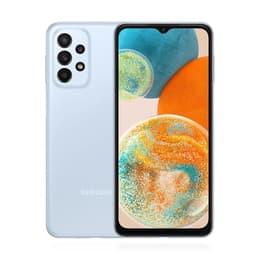
Galaxy A23 5G Vs Xiaomi Redmi Note 13 4G

  • 1-year minimum warranty
  • Free delivery on all orders
  • Free 30-day returns
Galaxy A23 5G
Starting at

Refurbished price:€164.00

Versus €600.00 new

See options
Xiaomi Redmi Note 13 4G
Starting at

Refurbished price:€174.00

Versus €340.00 new

See options

Differences at a glance

The Samsung Galaxy A23 5G (2022) and the Xiaomi Redmi Note 13 4G (2024) are popular mid-range smartphones tailored for everyday mobile users. While both devices cater to budget-conscious consumers seeking reliable daily performance, they differ notably in cellular connectivity, display technology, and release generation. Choosing between them depends on whether network speed or media consumption features take priority.

Available Models

Colour

Storage

Scores

Durability

The Samsung Galaxy A23 5G and Xiaomi Redmi Note 13 4G offer different timelines for software support and physical longevity, influenced by their respective release dates and manufacturer policies.

  • Software Support: The Xiaomi model launched later and generally receives software updates further into its lifecycle, whereas the older Samsung model is closer to completing its main security update window.
  • Build Durability: Both devices feature robust plastic builds with varying levels of scratch and drop resistance, though user maintenance heavily dictates their practical operational lifespan.
  • Expected Lifespan: Choosing a quality-assured refurbished option provides a sustainable choice that extends the active life cycle of either device without compromising reliability.

Year of Release

2022

2024

Compatible with latest Update

Yes

Yes

OS

Android

Android

Foldable

No

No

Performance

Both smartphones handle standard daily tasks like web browsing, social media, and messaging smoothly, though their underlying processing hardware and connectivity capabilities diverge.

  • Multitasking and App Loading: Both handle routine applications and moderate multitasking effectively, though heavy gaming or intensive graphics processing can cause occasional stuttering on standard configurations.
  • Battery Behavior: Each device packs a large capacity power cell capable of lasting through a full day of typical usage, supported by moderate-speed charging capabilities.
  • Connectivity Support: The Samsung model features next-generation cellular data capabilities, whereas the Xiaomi alternative focuses exclusively on wide-coverage 4G networks.

Screen quality

Visual experiences differ significantly between the two models due to contrasting display panels and panel brightness capabilities.

  • Display Technology: The Xiaomi device utilizes an AMOLED panel offering deep contrast levels and vivid colors, while the Samsung model relies on a standard LCD screen with a smooth high refresh rate.
  • Outdoor Visibility: The Xiaomi panel achieves higher peak brightness levels, making content easier to read under direct sunlight compared to its competitor.
  • Viewing Comfort: Both screens support fluid scrolling for daily navigation, though media consumers often favor the deeper black levels provided by the AMOLED technology.

Resolution

1080 x 2408

1080 x 2400

Screen type

PLS LCD

AMOLED

Audiovisual

Photography capabilities vary based on sensor resolution and image processing software integrated into each mobile unit.

  • Main Camera Output: The Xiaomi device features a high-resolution primary sensor that captures sharp daylight photos, while the Samsung model balances its multi-lens setup with optical image stabilization.
  • Video and Low Light: Both handle standard 1080p video recording adequately, though low-light performance requires steady hands to avoid blur on both models.
  • Audio and Media: Speaker output on both phones handles hands-free calls and casual video watching well, complemented by the inclusion of a traditional headphone jack.

Main camera

50 megapixels

108 megapixels

Front camera

8 megapixels

16 megapixels

Miscellaneous

Physical design choices and sensor layouts affect how each smartphone feels during regular, everyday handling.

  • Handling and Weight: Both models feature comfortable ergonomics with slim profiles, though minor differences in weight and bezel thickness alter one-handed usability.
  • Security Sensors: Each device utilizes a responsive side-mounted fingerprint scanner integrated into the power button for quick unlocking.
  • Storage Expansion: Both options support expandable storage via a microSD card slot, allowing users to keep large media libraries locally.

Weight

197 g

189 g

Screen size (in)

6.6

6.67

Network

5G

4G

SIM card

Dual Physical SIM

Dual Physical SIM

Carrier compatibility

Unlocked

Unlocked

Connector

USB-C + Jack 3.5mm

USB-C

What the community thinks

User feedback from online communities highlights distinct preferences for each device depending on daily usage patterns. Owners of the Samsung Galaxy A23 5G frequently praise its dependable battery endurance and inclusion of next-generation cellular connectivity. Conversely, users of the Xiaomi Redmi Note 13 4G highlight its vibrant display panel and modern design aesthetic as standout daily benefits. Common criticisms for both models involve occasional sluggishness during heavy system updates or intensive background tasks.

Users prioritizing faster network speeds and standard display smoothness may prefer the Samsung Galaxy A23 5G. Meanwhile, users prioritizing vibrant screen colors for media consumption and higher outdoor visibility may lean toward the Xiaomi Redmi Note 13 4G. Exploring a quality-assured refurbished option allows consumers to acquire either device as an eco-friendly alternative that reduces electronic waste while supporting practical technology choices.