

Compare models

Galaxy A23 5G Vs Galaxy S21 5G

  • 1-year minimum warranty
  • Free delivery on all orders
  • Free 30-day returns
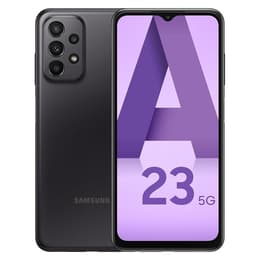
Galaxy A23 5G
Galaxy A23 5G
Starting at

Refurbished price:109.00

Versus €600.00 new

See options
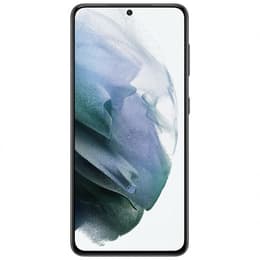
Galaxy S21 5G
Galaxy S21 5G
Starting at

Refurbished price:157.00

Versus €932.00 new

See options

Differences at a glance

The Samsung Galaxy A23 5G, released in late 2022, and the Samsung Galaxy S21 5G, launched in early 2021, represent different segments within Samsung's smartphone lineup. While both offer 5G connectivity, the S21 5G was a flagship device at its release, focusing on premium features and performance, whereas the A23 5G is positioned as a more accessible option. This comparison will highlight their core differences in design, capabilities, and overall user experience to help you determine which device aligns best with your needs.

Available Models

Colour

Storage (GB)

Scores

Durability

When considering the longevity of a smartphone, factors like release timeline, software support, and physical resilience are key. The Galaxy A23 5G and Galaxy S21 5G offer distinct profiles in these areas.

  • Release and Software Support: The Galaxy S21 5G, released in January 2021, benefits from Samsung's extended software support policy, typically receiving four major Android OS updates and five years of security updates. The Galaxy A23 5G, launched in August/September 2022, started with Android 12 and is expected to receive fewer major OS updates, though it is upgradable to Android 14. This means the S21 5G will likely receive software support for a longer period.
  • Physical Durability: The Galaxy S21 5G features an aluminum frame and Gorilla Glass Victus on the front, along with an IP68 rating for dust and water resistance, indicating a higher level of protection against environmental elements. The Galaxy A23 5G, while featuring Gorilla Glass 5 on the front, has a plastic frame and back, and generally lacks an official IP rating, making it less resistant to water and dust exposure.
  • Repairability: Both devices are designed with modern smartphone construction, which can make user-level repairs challenging. Information on specific repairability scores varies, but generally, flagship devices like the S21 5G might have more readily available parts and repair guides due to their wider market presence and longer support cycles.

Year of Release

2022

2021

Compatible with latest Update

Yes

Yes

OS

Android

Android

Foldable

No

No

Performance

The performance of these two devices reflects their original market positioning, with the Galaxy S21 5G offering a more robust experience for demanding tasks compared to the Galaxy A23 5G.

  • Processing Power: The Galaxy S21 5G is equipped with a high-end processor (Exynos 2100 or Snapdragon 888 depending on region), which provides substantial power for intensive applications, advanced gaming, and seamless multitasking. The Galaxy A23 5G utilizes a mid-range processor (Snapdragon 695 5G), which handles everyday tasks smoothly and supports 5G connectivity, but may show limitations with graphically demanding games or heavy multitasking.
  • Memory and Storage: The Galaxy S21 5G typically comes with 8GB of RAM and offers internal storage options of 128GB or 256GB, without expandable storage. This configuration supports efficient multitasking and ample space for applications and media. The Galaxy A23 5G offers various RAM configurations (4GB, 6GB, or 8GB) and 64GB or 128GB of internal storage, with the added flexibility of a microSD card slot for storage expansion up to 1TB.
  • Battery Behavior: The Galaxy A23 5G features a larger 5000 mAh battery, which, combined with its more power-efficient processor and display technology, generally translates to extended battery life, often lasting more than a full day of heavy use. The Galaxy S21 5G has a 4000 mAh battery, which provides sufficient power for a full day for most users, but may require more frequent charging with intensive use.

Screen quality

The visual experience on these two Samsung smartphones differs significantly due to their display technologies and specifications.

  • Display Technology and Clarity: The Galaxy S21 5G features a 6.2-inch Dynamic AMOLED 2X display, known for its vibrant colors, deep blacks, and excellent contrast. It offers a resolution of 1080 x 2400 pixels, providing a sharp and detailed viewing experience. The Galaxy A23 5G comes with a larger 6.6-inch PLS LCD display with a resolution of 1080 x 2408 pixels. While it offers good clarity, PLS LCD technology does not achieve the same level of contrast or color vibrancy as AMOLED.
  • Brightness and Refresh Rate: The S21 5G's AMOLED display can reach higher peak brightness levels, making it more comfortable to view in bright outdoor conditions. Both devices feature a 120Hz refresh rate, contributing to smoother scrolling and a more fluid user interface experience. The S21 5G's adaptive refresh rate can adjust dynamically to content, potentially saving battery.
  • Viewing Experience: The S21 5G's smaller size and superior display technology make it ideal for users who prioritize a premium, immersive viewing experience in a more compact form factor. The A23 5G's larger screen is well-suited for users who prefer more screen real estate for media consumption or productivity, even if the display technology is less advanced.

Resolution

1080 x 2408

1080 x 2400

Screen type

PLS LCD

Dynamic AMOLED 2X

Audiovisual

Both the Galaxy A23 5G and Galaxy S21 5G offer multi-lens camera systems, but their capabilities and resulting image quality cater to different user expectations.

  • Rear Camera System: The Galaxy S21 5G boasts a versatile triple-camera setup, including a 12 MP main sensor with optical image stabilization (OIS), a 12 MP ultrawide lens, and a 64 MP telephoto lens with OIS and 3x hybrid zoom. This configuration allows for a wide range of photographic styles, from expansive landscapes to detailed zoomed-in shots. The Galaxy A23 5G features a quad-camera system with a 50 MP main sensor (with OIS), a 5 MP ultrawide, and two 2 MP sensors for macro and depth. While the higher megapixel count on the main sensor can capture detailed images, the auxiliary lenses are less capable than those on the S21 5G.
  • Photography Performance: The S21 5G generally delivers superior image quality across various lighting conditions, with better dynamic range, color accuracy, and low-light performance, especially with its dedicated telephoto lens. The A23 5G's main camera performs well in good lighting, and users often praise its quality. However, its ultrawide and macro lenses are more basic, and low-light performance is less refined compared to the S21 5G.
  • Video Recording and Front Camera: The Galaxy S21 5G supports high-resolution video recording up to 8K at 24fps and 4K at 30/60fps, along with a 10 MP front camera capable of detailed selfies and video calls. The Galaxy A23 5G records video at 1080p at 30fps, as its processor does not support 4K video capture. Its 8 MP front camera provides good quality for everyday selfies and video calls.

Main camera

50 megapixels

12 megapixels

Front camera

8 megapixels

10 megapixels

Miscellaneous

Beyond the core specifications, several other features contribute to the overall user experience and practical utility of these smartphones.

  • Connectivity and Ports: Both devices support 5G connectivity for fast mobile data. The Galaxy S21 5G features Wi-Fi 6 and Bluetooth 5.0, offering faster and more stable wireless connections. The Galaxy A23 5G supports Wi-Fi 5 and Bluetooth 5.1. For physical connections, the S21 5G uses a USB-C port and lacks a 3.5mm headphone jack, while the A23 5G includes both a USB-C port and a traditional 3.5mm headphone jack.
  • Biometric Security and Design: The Galaxy S21 5G incorporates an ultrasonic under-display fingerprint sensor and face recognition for secure unlocking. Its design features an aluminum frame and a more compact form factor, weighing 169g. The Galaxy A23 5G uses a side-mounted fingerprint sensor integrated into the power button. It has a larger footprint and weighs 197g, with a build primarily of plastic.
  • Additional Features: The S21 5G includes features like wireless charging and reverse wireless charging, which are absent on the A23 5G. The A23 5G's expandable storage via microSD card is a notable advantage for users who require more storage than the internal options provide.

Weight

197 g

169 g

Screen size (in)

6.6

6.2

Network

5G

5G

SIM card

Dual Physical SIM

Physical SIM + eSIM

Carrier compatibility

Unlocked

Unlocked

Connector

USB-C + Jack 3.5mm

USB-C

What the community thinks

The Samsung Galaxy A23 5G and Galaxy S21 5G cater to different user priorities, reflecting their distinct positions in the market. User feedback for the Galaxy A23 5G often highlights its strong battery life, capable main camera, and smooth 120Hz display as key advantages. Some users note its plastic build and the limitations of its auxiliary cameras as areas for improvement. The Galaxy S21 5G is frequently praised for its powerful performance, vibrant AMOLED display, and versatile camera system, though some users might find its battery life average compared to larger devices, and the absence of expandable storage can be a drawback for those with extensive media libraries.

Users prioritizing a long-lasting battery, a larger screen for media consumption, and expandable storage will find the Galaxy A23 5G well-suited to their needs. It offers a solid everyday experience with modern connectivity. Conversely, users who value a premium build, a more compact design, superior camera capabilities, and top-tier performance for demanding applications will likely lean towards the Galaxy S21 5G. Both devices offer a gateway to the Android ecosystem, and choosing a quality-assured refurbished option for either model can be a sustainable choice for consumers.