

Galaxy A23 5G Vs iPhone 13 Pro

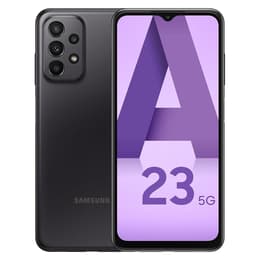
Galaxy A23 5G
Galaxy A23 5G
Starting at

Refurbished price:108.00

Versus €600.00 new

See options
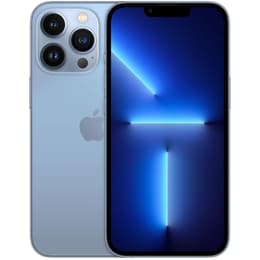
iPhone 13 Pro
iPhone 13 Pro
Starting at

Refurbished price:313.00

Versus €1,149.00 new

See options

Ratings

The Samsung Galaxy A23 5G and the iPhone 13 Pro are distinct smartphones catering to different user expectations and priorities. Released in late 2022, the Galaxy A23 5G offers a large display and a versatile camera system within the Android ecosystem. In contrast, the iPhone 13 Pro, launched in September 2021, represents Apple's premium offering with a focus on advanced performance, a sophisticated camera array, and a refined user experience within iOS.

Scores

Durability

The practical lifespan of a smartphone is influenced by its release timeline, software support, and physical resilience.

  • Release Timeline and Software Support: The iPhone 13 Pro, released in September 2021, typically receives major iOS updates for approximately 5-6 years from its launch, extending its software relevance well into the future. The Galaxy A23 5G, launched in late 2022, runs on Android and generally receives about four years of operating system updates and five years of security updates from Samsung, providing a solid, though shorter, support window compared to its Apple counterpart.
  • Physical Durability: The iPhone 13 Pro features a Ceramic Shield front cover and a matte glass back, coupled with an IP68 rating for dust and water resistance, indicating a high level of protection against environmental elements. The Galaxy A23 5G utilizes a plastic back with a matte finish and a Gorilla Glass 5 front, offering a good level of screen protection but lacking an official IP rating for water and dust resistance.
  • Repairability: The iPhone 13 Pro received an iFixit repairability score of 5 out of 10. While display and battery replacements are considered priorities in its design, software limitations can complicate third-party repairs, particularly concerning Face ID functionality. Information on the Galaxy A23 5G's specific repairability score is less readily available, but Android devices in its category often present a more straightforward repair process for common components, though the overall build might be less robust than premium devices.

Year of Release

2022

2021

Compatible with latest Update

Yes

Yes

OS

Android

iOS

Foldable

No

No

Performance

Performance in daily use is a key differentiator, impacting how smoothly applications run and how efficiently tasks are handled.

  • Processing Power: The iPhone 13 Pro is equipped with a powerful processor that delivers robust performance, ensuring demanding applications, complex games, and intensive multitasking run with considerable fluidity. The Galaxy A23 5G features a processor designed for efficient performance, capably handling everyday tasks, web browsing, and most common applications smoothly.
  • Multitasking and Responsiveness: With 6GB of RAM, the iPhone 13 Pro offers ample memory for seamless app switching and maintaining multiple applications in the background without noticeable slowdowns. The Galaxy A23 5G comes with various RAM configurations, including 4GB, 6GB, and 8GB, which allows for competent multitasking, though performance may vary slightly depending on the specific RAM variant and the intensity of usage.
  • Storage Options: The iPhone 13 Pro offers internal storage options ranging from 128GB up to 1TB, providing substantial space for apps, media, and large files without the possibility of expansion. The Galaxy A23 5G provides 64GB or 128GB of internal storage, with the added flexibility of expanding storage up to 1TB using a microSD card, which is beneficial for users who prefer physical storage expansion.

Memory (GB)

4 GB

6 GB

Screen quality

The visual experience is largely defined by the display technology, resolution, and refresh rate of each device.

  • Display Technology and Clarity: The iPhone 13 Pro features a 6.1-inch Super Retina XDR OLED display, known for its deep blacks, high contrast, and vibrant color reproduction, offering a resolution of 2532 x 1170 pixels at 460 pixels per inch (ppi). The Galaxy A23 5G sports a larger 6.6-inch PLS LCD Infinity-V display with a resolution of 2408x1080 pixels, providing a clear and expansive viewing area.
  • Brightness and Outdoor Visibility: The iPhone 13 Pro's display can reach up to 1000 nits of typical brightness and 1200 nits for HDR content, ensuring excellent visibility even in bright outdoor conditions. The Galaxy A23 5G offers adequate brightness for most indoor and outdoor scenarios, though it may not match the peak brightness levels of the iPhone 13 Pro's OLED panel.
  • Refresh Rate and Smoothness: A key feature of the iPhone 13 Pro is its ProMotion technology, offering an adaptive refresh rate that can dynamically adjust from 10Hz to 120Hz. This results in exceptionally smooth scrolling and responsive interactions while conserving battery life when high refresh rates are not needed. The Galaxy A23 5G also boasts a 120Hz refresh rate, providing a noticeably smoother visual experience during scrolling and gaming compared to standard 60Hz displays.

Resolution

1080 x 2408

1170 x 2532

Screen type

PLS LCD

Super Retina XDR OLED

Audiovisual

The camera systems of both devices offer distinct capabilities for capturing photos and videos.

  • Rear Camera System: The iPhone 13 Pro features a versatile triple 12MP camera system, including a wide (f/1.5), ultrawide (f/1.8 with autofocus and macro capabilities), and a telephoto lens with 3x optical zoom (f/2.8). It also incorporates a LiDAR scanner for enhanced depth sensing and improved low-light autofocus. The Galaxy A23 5G comes with a quad-camera setup, highlighted by a 50MP main sensor with Optical Image Stabilization (OIS), a 5MP ultrawide lens, and two 2MP sensors for macro and depth. The 50MP main camera typically uses pixel-binning to produce 12.5MP images.
  • Photography Performance: The iPhone 13 Pro excels in various lighting conditions, offering strong low-light performance, detailed images, and advanced computational photography features like Smart HDR 4 and Deep Fusion. Its macro photography mode, utilizing the ultrawide lens, allows for close-up shots. The Galaxy A23 5G's main camera delivers good results in well-lit conditions, with OIS helping to reduce blur. However, its ultrawide and other auxiliary lenses may show reduced detail and performance, particularly in challenging lighting.
  • Video Recording Capabilities: The iPhone 13 Pro offers advanced video features, including Cinematic Mode for shallow depth-of-field effects (1080p at 30fps) and the ability to record in ProRes (up to 4K at 30fps on models with 256GB storage or more), providing high-quality video suitable for professional editing. The Galaxy A23 5G records video at up to 1080p at 30 frames per second from both its main and selfie cameras.

Main camera

50 megapixels

12 megapixels

Front camera

8 megapixels

12 megapixels

Miscellaneous

Beyond core features, several practical elements contribute to the overall user experience and device utility.

  • Connectivity: Both devices support 5G connectivity for faster mobile data speeds. The iPhone 13 Pro includes Wi-Fi 6 and Bluetooth 5.0. The Galaxy A23 5G supports Wi-Fi 5 (802.11 a/b/g/n/ac) and Bluetooth 5.1.
  • Ports and Biometrics: The iPhone 13 Pro uses Apple's proprietary Lightning port for charging and data transfer and relies on Face ID for secure facial recognition. The Galaxy A23 5G features a USB-C port, retains a 3.5mm headphone jack, and incorporates a side-mounted fingerprint sensor for biometric authentication.
  • Design and Handling: The iPhone 13 Pro has a premium build with a stainless steel frame, Ceramic Shield front, and a textured matte glass back, weighing 204 grams. Its dimensions are 146.7 x 71.5 x 7.65 mm. The Galaxy A23 5G features a plastic construction with a matte finish on its back, weighing around 195-197 grams, and measures 165.4 x 76.9 x 8.4 mm, offering a larger form factor.

Weight

197 g

203 g

Screen size (in)

6.6

6.1

Network

5G

5G

SIM card

Dual Physical SIM

Physical SIM + eSIM

Carrier compatibility

Unlocked

Unlocked

Connector

USB-C + Jack 3.5mm

Lightning

The Samsung Galaxy A23 5G and the iPhone 13 Pro offer distinct experiences, each with its own set of strengths and considerations based on user needs and preferences.

Users often praise the iPhone 13 Pro for its exceptional camera capabilities, particularly its low-light performance, advanced video features like Cinematic Mode and ProRes, and the overall fluidity of the iOS operating system. The ProMotion display is frequently highlighted for its smooth visuals and responsiveness. Criticisms sometimes point to its proprietary Lightning port and the higher repair costs associated with its premium components.

The Galaxy A23 5G is generally well-regarded for its large, smooth 120Hz display, long-lasting battery life, and the inclusion of a 3.5mm headphone jack and expandable storage, which are practical benefits for many users. Some common criticisms include the performance of its auxiliary cameras in challenging conditions and the plastic build quality compared to more premium devices.

Users prioritizing a highly refined user experience, top-tier camera performance, and robust processing power for demanding applications will find the iPhone 13 Pro well-suited to their needs. Its extended software support also appeals to those seeking long-term device relevance. Conversely, users who value a larger display, extensive battery life, the flexibility of expandable storage, and a traditional headphone jack will likely lean towards the Galaxy A23 5G. This device is a practical choice for everyday communication and media consumption.

Both devices, whether new or as quality-assured refurbished options, provide a pathway to informed and sustainable choices in mobile technology.


See all articles

Our recent comparisons