

Galaxy A16 Vs Google Pixel Fold

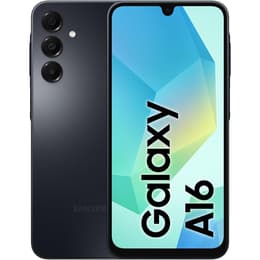
Galaxy A16
Galaxy A16
Starting at

Refurbished price:134.00

Versus €250.00 new

See options
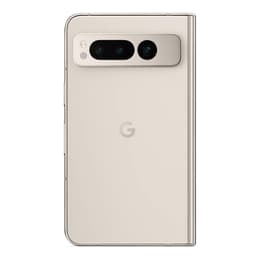
Google Pixel Fold
Google Pixel Fold
Starting at

Refurbished price:454.00

Versus €1,750.29 new

See options

Ratings

The Samsung Galaxy A16, released in late 2024, is a traditional smartphone designed for everyday use, focusing on core functionalities and a straightforward experience. In contrast, the Google Pixel Fold, launched in mid-2023, represents a different approach, offering a foldable design that transforms from a compact smartphone into a larger tablet-like display. These devices cater to distinct user preferences, with the A16 providing a conventional form factor and the Pixel Fold introducing the versatility of a dual-screen experience, both running on the Android operating system.

Scores

Durability

When considering the long-term usability of these devices, their release timelines and software support policies are key differentiators.

  • Software Longevity: The Samsung Galaxy A16, released in late 2024, is set to receive six generations of OS upgrades and six years of security updates, extending its support until October 2030. This provides a substantial period of software relevance. The Google Pixel Fold, launched in June 2023, offers up to five major Android upgrades, ensuring a robust software lifespan, though slightly shorter in total years compared to the A16's stated policy.
  • Physical Durability: The Pixel Fold features Gorilla Glass Victus on its cover display for enhanced scratch resistance and boasts an IPX8 water resistance rating, indicating protection against immersion in water. Its hinge is marketed for durability. The Galaxy A16, as a conventional smartphone, typically offers a solid build for daily handling, though specific advanced durability ratings like IPX8 are not highlighted in the same way as for the foldable device.
  • Expected Lifespan: Users prioritizing the longest possible software support will find the Galaxy A16's extended update commitment appealing. For those valuing advanced physical protection against water and a robust hinge design in a foldable form factor, the Pixel Fold offers specific advantages.

Year of Release

2024

2023

OS

Android

Android

Foldable

No

Yes

Performance

The performance capabilities of the Galaxy A16 and Pixel Fold reflect their different design philosophies and target user experiences.

  • Everyday Responsiveness: The Google Pixel Fold is equipped with a current-generation processor and 12GB of RAM, enabling smooth operation across demanding applications, efficient multitasking, and fluid gaming experiences. The Galaxy A16, depending on the region, utilizes either a Mediatek Helio G99 or an Exynos 1330/Dimensity 6300 processor, paired with 4GB, 6GB, or 8GB of RAM. This configuration supports daily tasks, web browsing, and common applications with reliable performance.
  • Storage and Multitasking: The Pixel Fold offers storage options of 256GB or 512GB, utilizing UFS 3.1 technology for faster data access, alongside its substantial 12GB of RAM, which benefits users who frequently switch between many applications. The Galaxy A16 provides 128GB or 256GB storage options and includes a microSDXC card slot for expandable storage, offering flexibility for users who need more space for media and files.
  • Battery Behavior: The Galaxy A16 features a 5000 mAh battery, supporting extended usage throughout the day for typical activities. The Pixel Fold has a 4821 mAh battery, which is notable for a foldable device, designed to power its dual displays and advanced features. Both devices support wired fast charging, with the Pixel Fold offering 30W and the A16 supporting 25W.

Memory (GB)

4 GB

12 GB

Screen quality

The display experience is a primary distinction between these two devices, with the Pixel Fold offering a unique dual-screen setup compared to the A16's single, conventional display.

  • Display Technology and Size: The Samsung Galaxy A16 features a 6.7-inch Super AMOLED display, providing vibrant colors and deep blacks, with a resolution of 1080 x 2340 pixels. The Google Pixel Fold offers two OLED displays: a 5.8-inch cover display and a larger 7.6-inch internal foldable display. The internal display's larger area is suitable for tasks like reading, viewing documents, or consuming media.
  • Clarity and Smoothness: Both the Galaxy A16's display and the Pixel Fold's displays offer a 90Hz refresh rate for the A16 and 120Hz variable refresh rate for the Pixel Fold, contributing to smoother scrolling and more fluid animations. The Pixel Fold's cover display has a pixel density of 408 ppi, while its internal display is 380 ppi, and the A16 is around 396 ppi, all providing clear visuals for text and images.
  • Brightness and Viewing: The Pixel Fold's displays offer high peak brightness levels, reaching up to 1550 nits on the cover display and 1450 nits on the internal display, which aids visibility in bright outdoor conditions. The Galaxy A16's Super AMOLED display also provides good brightness, with 800 nits in high brightness mode, ensuring comfortable viewing in various environments.

Resolution

1080x2340

1840 x 2208

Screen type

Super AMOLED

Foldable OLED

Audiovisual

The camera systems of the Galaxy A16 and Pixel Fold are designed to capture different types of photographic experiences, reflecting their respective market segments.

  • Rear Camera Capabilities: The Google Pixel Fold features a versatile triple-camera system on the rear, including a 48MP main sensor with optical image stabilization (OIS), a 10.8MP ultrawide lens, and a 10.8MP telephoto lens. This setup allows for detailed wide shots, expansive ultrawide scenes, and zoomed-in images. The Samsung Galaxy A16 comes with a 50MP main camera, a 5MP ultrawide camera, and a 2MP macro camera. This configuration is well-suited for capturing everyday moments and close-up details.
  • Front and Internal Cameras: For selfies and video calls, the Pixel Fold includes a 9.5MP camera on its cover display and an 8MP camera on its internal display. The Galaxy A16 has a 13MP front-facing camera.
  • Video Recording and Low Light: The Pixel Fold supports 4K video recording at 30 or 60 frames per second, offering higher resolution and smoother video capture. Its larger sensor and OIS on the main camera contribute to better performance in challenging lighting conditions. The Galaxy A16 records video at 1080p at 30 frames per second.
  • Audio Experience: The Pixel Fold provides a robust media consumption experience with its speakers. The Galaxy A16 also offers a standard audio output for calls and media.

Miscellaneous

Beyond core specifications, several practical elements contribute to the overall user experience and differentiate these two devices.

  • Connectivity and Ports: Both devices support modern connectivity standards. The Galaxy A16 offers 5G connectivity (on 5G variants), Wi-Fi 802.11 a/b/g/n/ac, and Bluetooth 5.3. It uses a USB Type-C 2.0 port. The Pixel Fold supports Wi-Fi 6 and features a USB Type-C 3.2 Gen 2 port, offering faster data transfer speeds.
  • Biometric Security: Both smartphones incorporate fingerprint scanners for secure unlocking and authentication. The Pixel Fold also includes face recognition capabilities.
  • Physical Design and Handling: The Galaxy A16 presents a traditional smartphone form factor, with dimensions and weight typical for its screen size. The Pixel Fold, when folded, is designed to be compact, though thicker than a standard smartphone. When unfolded, it provides a larger screen area, but its weight of 283 grams is more substantial than most conventional phones.
  • Build Materials: The Pixel Fold incorporates Gorilla Glass Victus on its cover display for durability and features an IPX8 water resistance rating. The Galaxy A16 uses materials common for its segment, offering a durable build for daily use.

Weight

200 g

283 g

Screen size (in)

6.7

7.6

Network

4G

5G

SIM card

Physical SIM

Physical SIM + eSIM

Carrier compatibility

Unlocked

Unlocked

Connector

USB-C

USB-C

The Samsung Galaxy A16 and Google Pixel Fold cater to distinct user needs, primarily differentiated by their form factor and performance tiers. Users frequently praise the Pixel Fold for its innovative foldable design, offering the utility of a large tablet screen in a pocketable device, and its powerful processing capabilities for demanding tasks. Its robust camera system and premium build are also common points of appreciation. However, some users have noted its weight and thickness when folded as considerations.

The Galaxy A16 is often lauded for its extended software support, large Super AMOLED display, and reliable battery life, making it a practical choice for everyday communication and media consumption. Its conventional design and focus on core features appeal to users seeking a straightforward smartphone experience without the complexities of a foldable device.

Users prioritizing a versatile device for productivity, media consumption, and advanced photography, who also appreciate cutting-edge technology and are comfortable with a more substantial device, may find the Google Pixel Fold well-suited to their needs. Conversely, users who value a long-lasting, conventional smartphone with excellent software support, a vibrant display, and dependable performance for daily tasks will likely lean towards the Samsung Galaxy A16. Both devices offer a pathway to informed, sustainable choices, especially when considering quality-assured refurbished options.


See all articles

Our recent comparisons