

Compare models

Galaxy S21 Ultra 5G Vs Xiaomi Redmi Note 13 4G

  • 1-year minimum warranty
  • Free delivery on all orders
  • Free 30-day returns
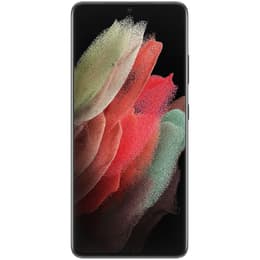
Galaxy S21 Ultra 5G
Starting at

Refurbished price:292.00

Versus €1,297.00 new

See options
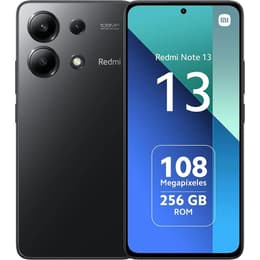
Xiaomi Redmi Note 13 4G
Starting at

Refurbished price:200.00

Versus €340.00 new

See options

Differences at a glance

The Samsung Galaxy S21 Ultra 5G (2021) and the Xiaomi Redmi Note 13 4G (2024) represent two different approaches to mobile technology, bridging distinct release years and market tiers. While the Galaxy S21 Ultra 5G launched as a high-end flagship device with advanced capabilities, the Xiaomi Redmi Note 13 4G arrived three years later as a streamlined option focused on everyday functionality. These devices differ significantly in their core design philosophies, processing infrastructure, and overall feature sets, operating on customized software interfaces built on top of the Android operating system.

Available Models

Colour

Storage (GB)

Scores

Durability

Evaluating the longevity and structural support of these models reveals key differences in release timelines and software update schedules. Users can expect varying degrees of long-term software maintenance and physical resilience depending on the device's age and tier.

  • Software update support: The Galaxy S21 Ultra 5G benefits from an extensive multi-year software commitment typical of high-tier flagships, whereas the Xiaomi Redmi Note 13 4G receives standard security patches and system updates aligned with its mid-tier release schedule.
  • Build resilience: The Galaxy S21 Ultra 5G utilizes high-grade Gorilla Glass and aluminum framing designed to withstand heavy daily use, while the Xiaomi Redmi Note 13 4G employs standard protective glass and composite materials suited for general handling.
  • Expected lifespan: The higher initial specifications of the Galaxy S21 Ultra 5G allow it to maintain long-term viability for demanding workloads, whereas the Xiaomi Redmi Note 13 4G serves users well for standard daily communication and media consumption tasks.

Year of Release

2021

2024

Compatible with latest Update

Yes

Yes

OS

Android

Android

Foldable

No

No

Performance

Performance capabilities vary notably between these two smartphones, driven by different processing configurations, internal memory allocations, and storage options. Each device handles daily workloads through distinct technical architectures.

  • Multitasking and responsiveness: The Galaxy S21 Ultra 5G manages demanding applications and rapid task-switching smoothly due to its robust hardware configuration, while the Xiaomi Redmi Note 13 4G handles everyday messaging, web browsing, and social media apps with steady reliability.
  • Battery behavior: Both devices feature large battery capacities designed to last through a full day of standard use, though power management differs when running graphics-heavy applications or navigating continuously with cellular data.
  • Storage capacity: The Galaxy S21 Ultra 5G offers generous internal storage tiers without expandable memory, whereas the Xiaomi Redmi Note 13 4G frequently includes expandable storage via a microSD card slot for added media flexibility.

Screen quality

Display characteristics shape the visual experience of each device, influencing clarity, outdoor readability, and motion smoothness during daily use. Both models employ advanced panel technology to ensure sharp rendering.

  • Display technology and clarity: The Galaxy S21 Ultra 5G features a large AMOLED panel with high resolution and deep contrast, while the Xiaomi Redmi Note 13 4G utilizes a vibrant AMOLED screen optimized for sharp text and clear media rendering.
  • Brightness and outdoor visibility: Both displays offer high peak brightness levels, ensuring that content remains legible under direct sunlight or bright ambient lighting conditions.
  • Refresh rate: Both models support high refresh rate capabilities, resulting in fluid scrolling through web pages, smooth menu navigation, and responsive touch interactions throughout the user interface.

Resolution

1440 x 3200

1080 x 2400

Screen type

Dynamic AMOLED 2X

AMOLED

Audiovisual

Imaging and audio hardware define the multimedia capabilities of these smartphones, offering distinct configurations for photography, video recording, and sound output. Users will find different strengths depending on their recording habits.

  • Camera versatility: The Galaxy S21 Ultra 5G incorporates a versatile multi-lens system featuring advanced optical zoom and a high-resolution main sensor, whereas the Xiaomi Redmi Note 13 4G focuses on a high-megapixel primary shooter supplemented by basic utility lenses.
  • Low-light and video performance: The Galaxy S21 Ultra 5G captures detailed low-light photographs and supports high-resolution video recording with advanced stabilization, while the Xiaomi Redmi Note 13 4G performs adequately in standard daylight settings for casual snapshots.
  • Audio output: Both devices feature stereo speaker configurations suitable for hands-free calling, casual video viewing, and listening to audio media without external headphones.

Main camera

108 megapixels

108 megapixels

Front camera

40 megapixels

16 megapixels

Miscellaneous

Practical physical and connectivity features dictate how comfortably these devices integrate into daily routines, including physical dimensions, port layouts, and network compatibility.

  • Connectivity and ports: The Galaxy S21 Ultra 5G supports advanced 5G networks and Wi-Fi standards alongside a USB-C port, while the Xiaomi Redmi Note 13 4G focuses primarily on 4G LTE connectivity, a USB-C port, and a traditional headphone jack.
  • Physical dimensions and weight: The Galaxy S21 Ultra 5G has a heavier, more substantial footprint due to its advanced camera modules and larger battery, whereas the Xiaomi Redmi Note 13 4G maintains a lighter and slimmer profile for easier one-handed grip.
  • Security sensors: Both models incorporate secure biometric authentication options, utilizing under-display fingerprint sensors and facial recognition capabilities for rapid device unlocking.

Weight

227 g

175 g

Screen size (in)

6.8

6.67

Network

5G

4G

SIM card

Physical SIM + eSIM

Dual Physical SIM

Carrier compatibility

Unlocked

Unlocked

Connector

USB-C

USB-C

What the community thinks

Community feedback from forums and consumer reviews indicates that users appreciate the Galaxy S21 Ultra 5G for its comprehensive feature set, robust build quality, and versatile camera capabilities. At the same time, common discussions note its heavier physical footprint and older release date. Conversely, the Xiaomi Redmi Note 13 4G receives praise for its reliable everyday battery life, lightweight handling, and modern display clarity, though users frequently mention its limitation to 4G connectivity and basic secondary camera performance. Choosing between these two models depends closely on individual usage patterns and daily priorities.

Users who prioritize advanced photography, robust processing power, and extensive multi-year software longevity may prefer the Galaxy S21 Ultra 5G. Meanwhile, users who prioritize lightweight daily handling, modern display responsiveness, and straightforward communication tools often lean toward the Xiaomi Redmi Note 13 4G. Exploring a quality-assured refurbished option provides an eco-friendly alternative for acquiring either model while reducing electronic waste. Weighing these distinct hardware traits ensures an informed decision that aligns with personal technology needs.