

Galaxy A16 Vs Galaxy S25

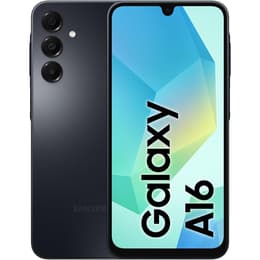
Galaxy A16
Galaxy A16
Starting at

Refurbished price:134.00

Versus €250.00 new

See options
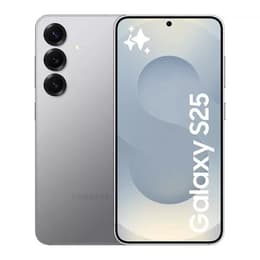
Galaxy S25
Galaxy S25
Starting at

Refurbished price:489.60

Versus €910.00 new

See options

Ratings

The Samsung Galaxy A16, released in late 2024 and early 2025, and the Samsung Galaxy S25, launched in early 2025, represent distinct offerings within Samsung's smartphone portfolio. While both operate on the Android platform, the Galaxy A16 is positioned as a capable device for everyday use, emphasizing longevity and essential features. In contrast, the Galaxy S25 is a flagship model, delivering premium performance, advanced camera capabilities, and a more refined user experience.

Scores

Durability

When considering the long-term usability of these devices, both offer substantial software support, though with differing timelines that reflect their respective market segments.

  • Software Updates: The Galaxy S25 is designed for extended relevance, receiving seven years of major Android operating system updates and security patches, with support projected to continue until 2032. The Galaxy A16 also provides a commendable commitment with six years of OS and security updates, ensuring its software remains current until October 2030.
  • Build Durability: The Galaxy S25 features a more robust construction, incorporating Gorilla Glass Victus 2 on both the front and back, complemented by an aluminum frame, and boasts an IP68 rating for significant dust and water resistance. The Galaxy A16 typically utilizes a plastic build, which offers resilience against everyday impacts, and includes an IP54 rating, providing protection against dust and moderate water splashes.
  • Practical Lifespan: Users prioritizing the latest software features and a highly durable physical design will find the Galaxy S25 offers a longer practical lifespan before feeling outdated. The Galaxy A16 provides excellent value for its expected lifespan, particularly for users who do not require the absolute latest features or the most premium materials.

Year of Release

2024

2025

OS

Android

Android

Foldable

No

No

Performance

The performance capabilities of the Galaxy A16 and Galaxy S25 cater to different user demands, with a notable distinction in their responsiveness and handling of various applications.

  • Everyday Responsiveness: The Galaxy S25 is equipped with a top-tier processor, ensuring exceptionally smooth navigation, rapid application launches, and seamless multitasking, even with demanding applications and advanced AI features. The Galaxy A16, featuring a capable mid-range processor, handles daily tasks such as browsing, social media, and light gaming efficiently, though it may exhibit occasional delays or stutters with very intensive applications or heavy multitasking.
  • Multitasking and Storage: The Galaxy S25 comes standard with 12GB of RAM, providing ample capacity for extensive multitasking and ensuring applications remain active in the background without frequent reloading. It also utilizes faster UFS 4.0 storage. The Galaxy A16 offers various RAM configurations, including a base 4GB model, which can lead to more frequent application refreshes when managing multiple tasks. Its storage is UFS 2.2.
  • Battery Behavior: Despite having a smaller 4000mAh battery compared to the Galaxy A16's 5000mAh unit, the Galaxy S25 often delivers excellent battery life, lasting a full day even with heavy use, thanks to its highly efficient processor. The Galaxy A16's larger battery capacity, combined with its less demanding hardware, contributes to a long battery life, often extending to two days of typical use.

Memory (GB)

4 GB

12 GB

Screen quality

The visual experience on these two devices differs significantly, impacting clarity, vibrancy, and usability in various lighting conditions.

  • Display Technology and Clarity: The Galaxy S25 features a 6.2-inch Dynamic LTPO AMOLED 2X display, known for its deep blacks, vibrant colors, and exceptional contrast, offering a sharp 2340 x 1080 resolution. The Galaxy A16 comes with a larger 6.7-inch Super AMOLED display, providing good color reproduction and clarity for its class with a 1080 x 2340 resolution.
  • Brightness and Refresh Rate: The Galaxy S25 boasts a peak brightness of 2600 nits, ensuring excellent visibility even under direct sunlight, and features a 120Hz adaptive refresh rate for smooth scrolling and responsive interactions. The Galaxy A16 offers a 90Hz refresh rate for a smoother experience than standard displays and reaches 800 nits in high brightness mode, which is suitable for most indoor and outdoor conditions, though it lacks HDR support.
  • Viewing Experience: The Galaxy S25's display provides a more compact and pixel-dense viewing experience, ideal for users who prefer a smaller form factor without compromising on visual fidelity. The Galaxy A16's larger screen offers an expansive viewing area, which can be beneficial for media consumption and general browsing.

Resolution

1080x2340

1080x2340

Screen type

Super AMOLED

Dynamic LTPO AMOLED 2X

Audiovisual

The camera systems on the Galaxy A16 and Galaxy S25 are designed for different levels of photographic versatility and image quality.

  • Rear Camera System: The Galaxy S25 features a versatile triple-camera setup, including a 50MP main sensor with optical image stabilization (OIS), a 12MP ultrawide lens with a 120-degree field of view, and a 10MP telephoto lens offering 3x optical zoom. This configuration allows for a wide range of photographic scenarios, from expansive landscapes to detailed close-ups. The Galaxy A16 also has a triple-camera system, comprising a 50MP main sensor, a 5MP ultrawide, and a 2MP macro lens.
  • Photography Performance: The Galaxy S25 delivers generally very good photos across its lenses, with the main sensor producing high-quality images, and benefits from advanced AI-powered editing tools. Its low-light performance is also robust. The Galaxy A16's main camera performs well in daylight conditions, producing sharp and vibrant images, but its secondary cameras are considered less capable, and its low-light performance is more limited.
  • Video Recording and Front Camera: The Galaxy S25 supports video recording up to 8K resolution and includes features like Log video and Audio Eraser, along with a 12MP front-facing camera for clear selfies and video calls. The Galaxy A16 records video at 1080p at 30fps and features a 13MP front camera, suitable for everyday video capture and selfies.

Miscellaneous

Beyond core specifications, several practical elements differentiate the user experience between the Galaxy A16 and Galaxy S25.

  • Connectivity and Ports: The Galaxy S25 supports the latest Wi-Fi standards (Wi-Fi 6e/7) and Bluetooth 5.4, offering advanced and faster wireless connections, and features a USB Type-C port. The Galaxy A16 supports Wi-Fi 5 (802.11ac) and Bluetooth 5.3, and also uses a USB Type-C 2.0 port. The Galaxy A16 may retain a 3.5mm headphone jack, which is typically absent on the Galaxy S25.
  • Biometrics and Design: The Galaxy S25 incorporates an advanced in-display ultrasonic fingerprint sensor and sophisticated facial recognition for secure unlocking. Its design is compact and lightweight, with premium materials. The Galaxy A16 often features a side-mounted fingerprint sensor. It has a larger screen size but is built with plastic materials.
  • Weight and Dimensions: The Galaxy S25 is designed to be a more compact device, measuring 146.9 x 70.5 x 7.2 mm and weighing 162g, making it comfortable for one-handed use. The Galaxy A16 is larger at 164.4 x 76.3 x 7.9 mm and weighs 193g, offering a more expansive screen but a less pocketable form factor.

Weight

200 g

162 g

Screen size (in)

6.7

6.2

Network

4G

5G

SIM card

Physical SIM

Physical SIM + eSIM

Carrier compatibility

Unlocked

Unlocked

User feedback for the Galaxy A16 often highlights its impressive battery life, vibrant display for its category, and Samsung's commitment to long-term software updates as significant advantages. However, some users note that its performance can be sluggish with demanding applications, and the camera system, while capable in good lighting, has limitations in versatility and low-light conditions. The absence of stereo speakers and 4K video recording are also common points of criticism.

For the Galaxy S25, common praise centers on its top-tier performance, excellent display quality with high brightness and a smooth refresh rate, and its robust camera system, particularly the main sensor and telephoto capabilities. Users also appreciate its compact design and the extended software support. Criticisms sometimes point to its iterative design compared to previous flagships and the battery life, while good for its size, not matching larger models.

Users prioritizing a device with extensive software support, a large display for media consumption, and exceptional battery longevity for everyday tasks may find the Galaxy A16 well-suited to their needs. It serves as a reliable option for those who value a long-lasting device without requiring the absolute highest performance or advanced camera features. Conversely, users who demand cutting-edge performance for demanding applications and gaming, a premium and compact design, a highly versatile camera system, and the longest possible software support will likely lean towards the Galaxy S25. It is designed for those who seek a top-tier smartphone experience with advanced features and a refined build.

For those considering either model, exploring quality-assured refurbished options can provide an eco-friendly alternative to acquiring these devices.


See all articles

Our recent comparisons